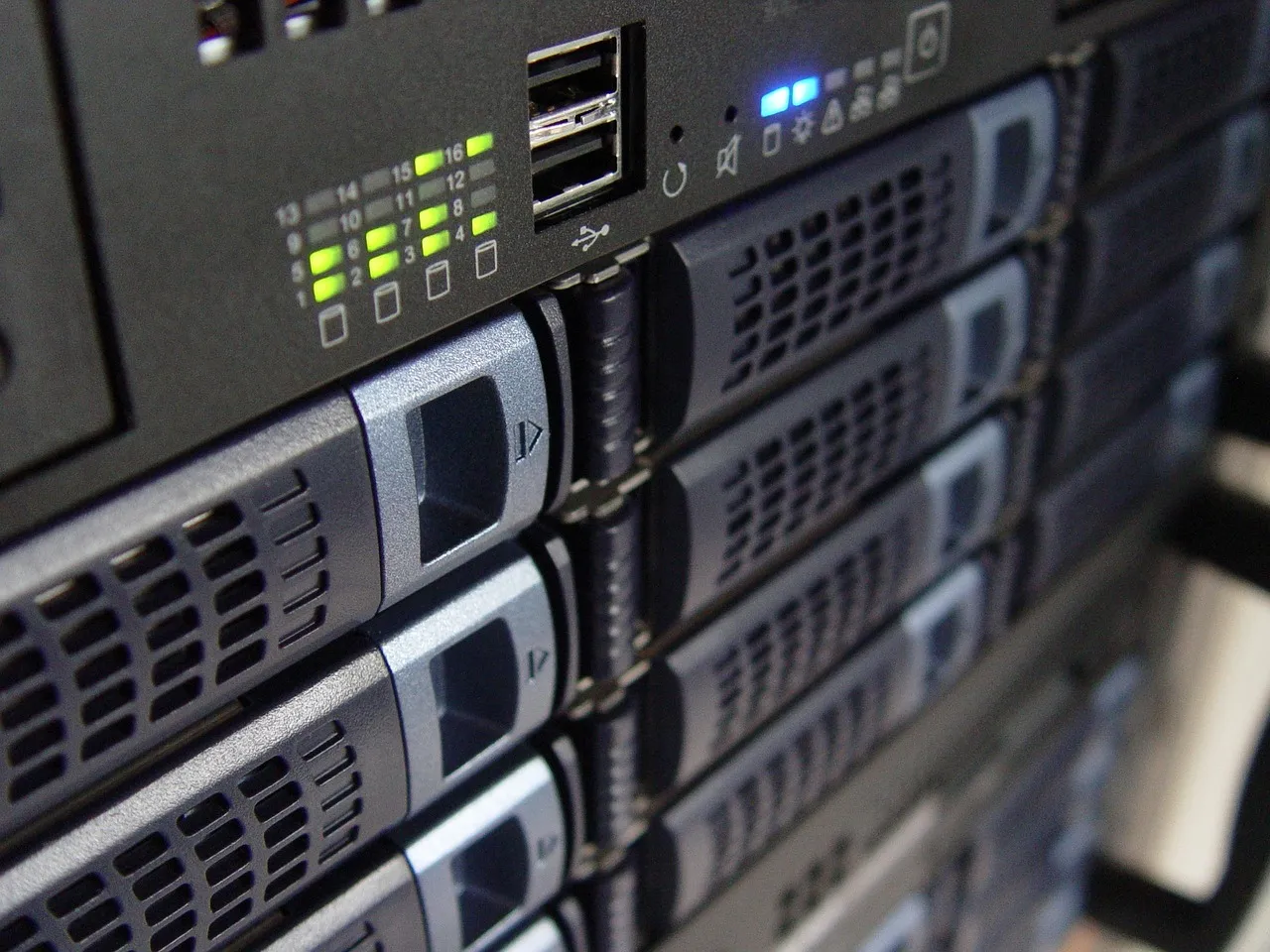
When you sign up for a web hosting plan, one of the most overlooked yet critically important components is the type of storage your hosting provider uses. Storage determines how quickly your website's files, images, databases, and scripts are retrieved and delivered to visitors. In the landscape of ssd vs nvme vs hdd hosting, each technology represents a fundamentally different approach to data storage, and the choice between them has a direct and measurable impact on your website's performance. Most beginners focus on bandwidth, RAM, or the number of websites allowed on a plan, but storage type is arguably the single biggest performance differentiator between a sluggish site and a lightning-fast one. Understanding what these storage technologies are, how they differ, and which one is appropriate for your specific needs is essential before committing to any hosting plan in 2026.
The hosting industry has undergone a dramatic transformation over the past decade. Hard Disk Drives (HDDs), which were once the universal standard for data centers and shared hosting environments, have been steadily replaced by Solid State Drives (SSDs). More recently, NVMe (Non-Volatile Memory Express) storage has emerged as the premium tier, pushing performance boundaries even further. Each step up the storage ladder brings significant improvements in speed, reliability, and overall user experience. If you are still on a hosting plan that uses traditional spinning-disk HDD technology, you are leaving performance on the table and potentially harming your search engine rankings, as Google explicitly considers page speed and Core Web Vitals as ranking factors. This article will walk you through everything you need to know to make an informed decision.
Technical Differences: HDD vs SSD vs NVMe Architecture
To appreciate why storage type matters so much in a hosting context, you need to understand what physically happens inside each type of drive when your website receives a request. A Hard Disk Drive (HDD) relies on mechanical components: one or more spinning magnetic platters and a read/write head that moves across those platters to find and retrieve data. This mechanical process introduces latency because the drive head must physically travel to the correct position on the disk before data can be read. The fastest enterprise-grade HDDs spin at 15,000 RPM, but even those are constrained by the laws of physics: the time it takes for the platter to rotate to the correct sector (rotational latency) and for the head to move to the correct track (seek time) adds up to milliseconds of delay. In a shared hosting environment where dozens or hundreds of websites may be reading from the same physical disk simultaneously, these mechanical limitations compound significantly.
A Solid State Drive (SSD), by contrast, has no moving parts whatsoever. SSDs use NAND flash memory chips to store data, which means information can be accessed electronically rather than mechanically. This eliminates seek time and rotational latency entirely, resulting in dramatically faster random access speeds. Traditional SATA SSDs connect through the same SATA III interface that HDDs use, which limits their theoretical throughput to about 600 MB/s. While this is a massive upgrade over any mechanical drive, the SATA interface itself becomes the bottleneck. NVMe (Non-Volatile Memory Express) drives solve this problem by connecting directly to the motherboard through PCI Express (PCIe) lanes, bypassing the SATA controller and its bandwidth limitations entirely. NVMe was designed from the ground up for flash storage, using a streamlined command set and deep queue depths that allow it to handle parallel operations far more efficiently than either SATA SSD or HDD technologies. In practice, this architectural advantage makes NVMe the clear performance leader for database-heavy workloads, high-traffic websites, and any application where storage I/O is the primary constraint.
The protocol-level differences are equally important to understand. The AHCI (Advanced Host Controller Interface) protocol that SATA drives use was designed in 2004, long before flash storage was mainstream, and it can only handle a single command queue with 32 commands. NVMe, by contrast, supports up to 65,535 command queues, each capable of handling 65,536 commands simultaneously. This massive parallelism is what allows NVMe drives to excel at the kind of random, small-block read and write operations that dominate web hosting workloads. When your WordPress site executes a database query, serves a cached page, or processes a WooCommerce transaction, it is almost always performing many small, scattered reads and writes rather than one large sequential transfer. NVMe's architecture is purpose-built for exactly this pattern of usage.
Illustration: What Is Website Hosting Storage Type: SSD vs NVMe vs HDDRead/Write Speed Benchmarks and IOPS Comparison
Raw numbers tell a compelling story in the ssd vs nvme vs hdd hosting debate. A traditional 7200 RPM HDD delivers sequential read and write speeds in the range of 80 to 160 MB/s under ideal conditions, with random read/write operations falling to a fraction of that speed. A SATA SSD typically achieves sequential speeds between 500 and 550 MB/s, representing a roughly 3x to 5x improvement over an HDD in sequential transfers and a far greater improvement in random operations. NVMe drives, depending on the generation and number of PCIe lanes, can deliver sequential speeds from 2,000 MB/s on older Gen3 drives to over 7,000 MB/s on the latest Gen4 and Gen5 drives. These numbers represent an order-of-magnitude improvement over SATA SSDs and a staggering 40x to 80x improvement over traditional HDDs. For a busy website that serves thousands of concurrent visitors, these speed differences translate directly into faster page load times, quicker database responses, and a more responsive user experience.
While sequential read/write speeds are the figures most commonly advertised by hosting companies, IOPS (Input/Output Operations Per Second) is the metric that matters most for real-world hosting performance. IOPS measures how many individual read or write operations a drive can complete in one second, which is far more representative of how a web server actually uses storage. A typical 7200 RPM HDD manages around 75 to 100 random read IOPS. A SATA SSD jumps to approximately 90,000 to 100,000 random read IOPS, a roughly 1,000x improvement. An NVMe drive pushes this to anywhere from 300,000 to over 1,000,000 random read IOPS, depending on the specific model and configuration. This exponential increase in IOPS capability is what makes NVMe hosting so transformative for database-driven applications. Every time a visitor loads a WordPress page, dozens or even hundreds of database queries may fire. With HDD storage, the drive head physically seeks to each piece of data sequentially, creating a queue that grows longer with each concurrent visitor. With NVMe storage, those thousands of tiny operations are handled in parallel with almost no perceptible delay, ensuring consistent performance even under heavy load conditions.
Why IOPS Matters More Than Sequential Speed for Hosting
Sequential speed benchmarks are easy to market: a provider can advertise that their NVMe servers deliver 7,000 MB/s reads, and that number is undeniably impressive. But web hosting workloads are overwhelmingly random, not sequential. When a visitor lands on your homepage, the server must fetch the HTML template, query the database for recent posts, load widget data, retrieve images and CSS files, and process PHP scripts, all from different physical locations on the storage medium. Each of these is a small, random operation. A drive that can perform 500,000 of these random operations per second (NVMe) will keep your site snappy even during traffic spikes, while a drive limited to 75 operations per second (HDD) will cause visible slowdowns as soon as more than a handful of visitors arrive simultaneously. This is also why SSD hosting, even the older SATA variety, represents such a meaningful upgrade over HDD hosting: the jump from double-digit IOPS to six-figure IOPS is far more significant for web performance than the jump from 500 MB/s to 7,000 MB/s sequential speed.
How Storage Type Affects Website Speed and Core Web Vitals
Google's Core Web Vitals have elevated website speed from a nice-to-have feature to a critical ranking signal, and your hosting storage type plays a direct role in every Core Web Vital metric. Largest Contentful Paint (LCP) measures how long it takes for the largest visible element on a page to load; a slow storage backend adds latency to every resource request, pushing LCP higher and potentially failing Google's threshold of 2.5 seconds or less. First Input Delay (FID) and its successor Interaction to Next Paint (INP) measure how quickly a page responds to user interactions, which is heavily influenced by how fast the server can process JavaScript execution and database writes. Cumulative Layout Shift (CLS) is less directly affected by storage type, but a slow-loading site that renders progressively (images popping in late, fonts swapping) directly contributes to layout instability. Time to First Byte (TTFB), while not officially a Core Web Vital, is a closely watched metric that measures server responsiveness; it is one of the metrics most directly improved by switching from HDD to SSD or NVMe storage.
The practical impact on page load times can be dramatic. A WordPress site hosted on an HDD-based server might have a TTFB of 600 to 1,200 milliseconds, meaning the server takes over a second just to start sending data back to the browser. The same site on an SSD-based server typically sees TTFB drop to 200 to 400 milliseconds, while an NVMe-hosted site can achieve TTFB values of 100 milliseconds or less with proper optimization. These improvements cascade through every subsequent metric: a faster TTFB means resources begin downloading sooner, the page renders faster, and the user perceives the site as more responsive. For e-commerce sites running WooCommerce or similar platforms, the effect is even more pronounced because each product page, cart update, and checkout step involves multiple database operations that directly depend on storage I/O speed. A two-second delay in page load time can reduce e-commerce conversion rates by up to 4%, according to multiple industry studies, making storage type a direct contributor to revenue, not just a technical specification.
Caching layers, including server-side caches like Varnish and Redis, can partially mask the performance gap between storage types for anonymous visitors hitting cached pages. However, logged-in users, first-time visitors, and any page that requires real-time database queries (search results, filtered product listings, member dashboards) bypass the cache and hit the storage layer directly. Additionally, the WordPress admin dashboard, where you and your team spend hours creating content and managing the site, is almost never cached and is notoriously slow on HDD-based hosting. Upgrading to NVMe or SSD storage improves not only your visitors' experience but also your own workflow efficiency as a site owner. If you are evaluating hosting providers, understanding how to choose a web host with the right storage infrastructure should be near the top of your checklist.
Matching Storage Types to Real-World Use Cases
Not every website needs the absolute fastest storage available, and understanding where your project falls on the performance spectrum will help you avoid overpaying for speed you do not need or, conversely, under-provisioning a site that demands high IOPS. A basic blog or brochure-style website with mostly static content, a lightweight theme, and modest traffic (a few hundred to a few thousand visitors per month) can perform perfectly well on a quality SATA SSD hosting plan. The storage speed of even a basic SSD far exceeds what such a site requires under normal conditions, and the cost savings compared to NVMe hosting can be meaningful for a hobby project or a small business just establishing its online presence. If you are running a site targeting beginners or a local audience, such as those exploring web hosting in India, SSD-based shared hosting typically provides excellent value and adequate performance for the first year or two of growth.
A WooCommerce store, membership site, forum, or any platform with dynamic content, user accounts, and frequent database writes benefits significantly from NVMe storage. E-commerce transactions involve multiple database tables (products, inventory, orders, customer data, payment records), and every click generates a flurry of read and write operations. An NVMe-hosted WooCommerce site will feel noticeably faster during product browsing, cart operations, and checkout than the same site on a SATA SSD, and the difference becomes exponential compared to HDD hosting. High-traffic content sites, news portals, and viral blogs that serve tens or hundreds of thousands of visitors per day should also prioritize NVMe hosting. When traffic spikes (from a social media mention, a newsletter blast, or a search ranking jump), NVMe's ability to handle massive parallel I/O operations prevents the database slowdowns and timeouts that plague HDD and even SATA SSD servers under sudden load. For these use cases, the price premium for NVMe hosting is almost always justified by the improved user experience, higher conversion rates, and better search engine visibility.
Cost Breakdown: What to Expect in 2026
Storage costs have evolved considerably, and as of 2026, the price gap between storage tiers has narrowed to the point where HDD hosting is rarely the bargain it appears to be once you account for the performance deficit. Entry-level shared hosting plans based on HDD storage can still be found for as low as $1 to $3 per month, primarily from legacy providers that have not upgraded their infrastructure. SSD-based shared hosting typically ranges from $3 to $8 per month for a starter plan that includes a free SSL certificate, email accounts, and a website builder. NVMe shared hosting has moved firmly into the mainstream, with plans starting between $5 and $12 per month, a price point that was reserved for SSD hosting just two or three years ago. Managed WordPress hosting plans, which almost universally use NVMe storage in 2026, typically start at $15 to $30 per month and include premium features like automatic updates, staging environments, and enhanced security.
VPS and cloud hosting follow a similar pricing pattern. An HDD-based VPS with 2 GB of RAM and 50 GB of storage might cost $5 to $10 per month, while the equivalent SSD VPS runs $10 to $20 per month, and an NVMe VPS typically commands $15 to $30 per month. Dedicated servers show the widest spread: an HDD dedicated server can be rented for $50 to $80 per month (though fewer providers offer them in 2026), an SSD dedicated server ranges from $80 to $150 per month, and an NVMe dedicated server starts around $120 and can exceed $300 per month depending on CPU, RAM, and storage capacity. What is most important to understand is that renewal pricing often diverges significantly from introductory rates. Many hosting providers advertise a low first-term price that triples on renewal, so you should always check the standard rate before committing. The cost section of this article uses current 2026 pricing data, but specific rates will vary by provider, geography, and the features bundled into each plan tier.
How to Audit Your Hosting Storage and Make the Switch
Before changing hosting providers or upgrading your plan, you should determine what type of storage your current host is using, because many providers are deliberately vague on this point. The most direct approach is to check your hosting control panel (cPanel, Plesk, or a custom dashboard) for server information or system status pages that list hardware details. If the control panel does not reveal the storage type, you can open a support ticket and ask directly: "What type of storage does my hosting plan use: HDD, SATA SSD, or NVMe SSD?" A reputable provider should answer this question clearly and without hesitation. Providers that evade the question or respond with vague marketing terms like "high-performance storage" or "solid-state technology" without specifying the interface type are often running older SATA SSD or even HDD infrastructure that they prefer not to disclose. This transparency check alone can be a useful filter when comparing hosting companies.
For those with SSH access to their hosting environment, you can run diagnostic commands to identify the storage hardware directly. On Linux servers, the command lsblk -d -o name,rota returns a value of 1 for rotational (HDD) drives and 0 for non-rotational (SSD or NVMe) drives. To distinguish between SATA SSD and NVMe, check the device naming convention: NVMe drives appear as /dev/nvme0n1, /dev/nvme1n1, and so forth, while SATA drives appear as /dev/sda, /dev/sdb. You can also run cat /sys/block/sda/queue/rotational (replacing sda with the appropriate device name) for a definitive answer: 0 means SSD, 1 means HDD. The decline of HDD hosting has accelerated to the point where in 2026, any provider still deploying customer-facing websites on spinning disks is either cutting corners on infrastructure investment or operating legacy hardware that should have been retired years ago. If your current host falls into this category, migrating to an SSD or NVMe provider should be a priority, not an option.
The Decline of HDD Hosting and NVMe as the New Standard
The era of HDD-based web hosting is effectively over for any use case where performance matters. Ten years ago, HDDs were the default in data centers because SSDs were prohibitively expensive at the capacities required for web hosting. Today, the cost-per-gigabyte of flash storage has dropped so dramatically that continuing to deploy HDDs for customer-facing workloads is difficult to justify on either technical or economic grounds. Major cloud providers, including AWS, Google Cloud, and Azure, have been systematically migrating their block storage offerings to SSD and NVMe tiers, and the major shared hosting brands have followed suit. Hosting providers that cling to HDD technology in 2026 are typically budget operators competing exclusively on price, and they rely on the assumption that their customers do not understand or care about the performance implications of storage type. As this article has demonstrated, that assumption is dangerous for anyone who values their website's speed, search engine rankings, and visitor experience.
NVMe has emerged as the new standard for modern hosting, and the trend is only accelerating. What was once a premium feature reserved for enterprise dedicated servers and high-end cloud instances has trickled down to shared hosting, WordPress hosting, and even budget VPS plans. The PCIe Gen5 NVMe drives entering the market in 2025 and 2026 push sequential speeds past 10,000 MB/s and IOPS into the multi-million range, further widening the gap between NVMe and even the best SATA SSDs. For anyone launching a new website or considering a hosting migration, the recommendation is straightforward: avoid HDD hosting entirely, treat SATA SSD as the acceptable minimum, and choose NVMe whenever your budget allows. The marginal cost difference between SSD and NVMe hosting in 2026 is small enough that, for most use cases beyond the simplest static sites, opting for NVMe is the smarter long-term investment. The web is only getting more dynamic and performance-sensitive, and your hosting infrastructure should be ready for the demands of tomorrow, not just the requirements of today.
Frequently Asked Questions
What is the most important thing to know about SSD vs NVMe vs HDD hosting?
This guide covers the practical decision points — pricing, performance, and when it makes sense for your situation — based on current 2026 data.
How much does this typically cost in 2026?
Pricing varies by provider and plan tier; see the cost breakdown section above for current ranges and what's actually included at each price point.
What should beginners check before making a decision?
Look closely at uptime guarantees, renewal pricing (not just the first-year discount), and how responsive support actually is — all covered in detail in this article.
Billy Wallson is a senior operations director with over 15 years of experience scaling remote teams and implementing lean business strategies.
Frequently Asked Questions
This guide covers the practical decision points — pricing, performance, and when it makes sense for your situation — based on current 2026 data.
Pricing varies by provider and plan tier; see the cost breakdown section above for current ranges and what's actually included at each price point.
Look closely at uptime guarantees, renewal pricing (not just the first-year discount), and how responsive support actually is — all covered in detail in this article.
Hosting Captain has been exceptional for my e-commerce store in Pune. The NVMe SSD speed is
noticeable, and their support team responds within minutes. Highly recommended for any
Indian business!
Ryan John, Pune
Great Value for Money
Switched from a US-based host to Hosting Captain and my website loads 3x faster for Indian
visitors. The free SSL and cPanel are great, and the pricing is unbeatable. Very satisfied
customer!
Priya Mehta, Mumbai
Reliable VPS Hosting
I've been using their VPS plan for 2 years now. 99.9% uptime is not just a claim — it's
reality. My client projects run without interruption. The KVM virtualization gives me full
control I need.
Amit Kumar, Bangalore
Excellent 24/7 Support
The support team helped me migrate my entire WordPress site at 2 AM without any downtime.
This level of service is rare in Indian hosting. Worth every rupee!
Sunita Patel, Ahmedabad
Perfect for Startups
As a startup, budget matters. Hosting Captain's Business plan covers everything we need —
multiple websites, free SSL, daily backups — at a fraction of what international hosts
charge.
Vikram Singh, Delhi
Professional Dedicated Server
Our high-traffic news portal needed a dedicated server. Hosting Captain's DS Business plan
handles 100K+ daily visitors effortlessly. Their team provisioned everything within 4 hours!
Meena Krishnaswamy, Chennai
Trusted Technologies & Partners
Start Your Website with Hosting Captain
From personal blogs to enterprise solutions, we've got you covered!