Billy Wallson
Senior DirectorBilly Wallson is a senior operations director with over 15 years of experience scaling remote teams and implementing lean business strategies.


Think of web hosting as renting space on the internet. Just like you need a physical plot of land to build a house, you need a piece of a server to store your website's files so people can visit it. Without web hosting, your website simply has nowhere to live — it would exist only on your personal computer, invisible to the rest of the world. This is the most fundamental concept in web hosting explained for anyone who has ever wondered how websites actually appear when they type an address into their browser. The server that hosts your site is essentially a powerful computer that stays connected to the internet 24 hours a day, 7 days a week, ready to serve your website's pages to anyone who requests them. When someone types your domain name into their browser, their computer sends a request across the internet to your hosting server, which then responds by sending back the files that make up your website. That entire exchange — from the moment a visitor hits enter to the moment your homepage appears on their screen — typically happens in under two seconds, a remarkable feat of modern technology that most of us take for granted every single day.
You might wonder why you cannot simply leave your laptop running and host a website directly from your own device. Technically, you could — but the practical realities make it an almost universally terrible idea for anyone running a real business or public-facing site. Your home internet connection is not designed for the kind of constant, reliable uptime that a website demands, and most residential internet service providers explicitly prohibit running servers on their consumer-grade connections. Even if your connection stayed up perfectly, your upload speeds are typically a fraction of your download speeds, meaning your visitors would experience painfully slow page loads. Then there is the matter of security: opening your personal computer to incoming traffic from the entire internet is a massive risk that exposes your private files, financial information, and personal data to attackers around the world. Professional web hosting companies invest millions of dollars in enterprise-grade hardware, redundant power supplies, multiple internet backbone connections, cooling systems, fire suppression, physical security, and round-the-clock monitoring — infrastructure that simply cannot be replicated in a home or small office environment. This is why web hosting explained always begins with understanding that hosting is a service provided by specialized companies whose entire business depends on keeping your site online, fast, and secure at all times.
Every website that exists on the internet today relies on three distinct but interconnected components working together seamlessly. The first is the domain name, which serves as your website's address — the human-readable text that people type into their browsers to find you, like hostingcaptain.com. The second is web hosting, the physical or virtual server space where your website's files, images, databases, and code actually reside and run. The third is the website itself, which consists of the HTML, CSS, JavaScript, images, videos, and other assets that together create the experience your visitors see and interact with. Think of it this way: the domain name is the street address on the envelope, the hosting server is the physical mailbox where mail gets delivered, and your website files are the actual letter inside. All three must work together, and if any one of them fails — if your domain expires, if your hosting goes down, or if your website code breaks — your entire online presence disappears from public view. This foundational understanding is at the heart of any thorough web hosting explained guide, and it is the starting point for every decision you will make about your online presence going forward.
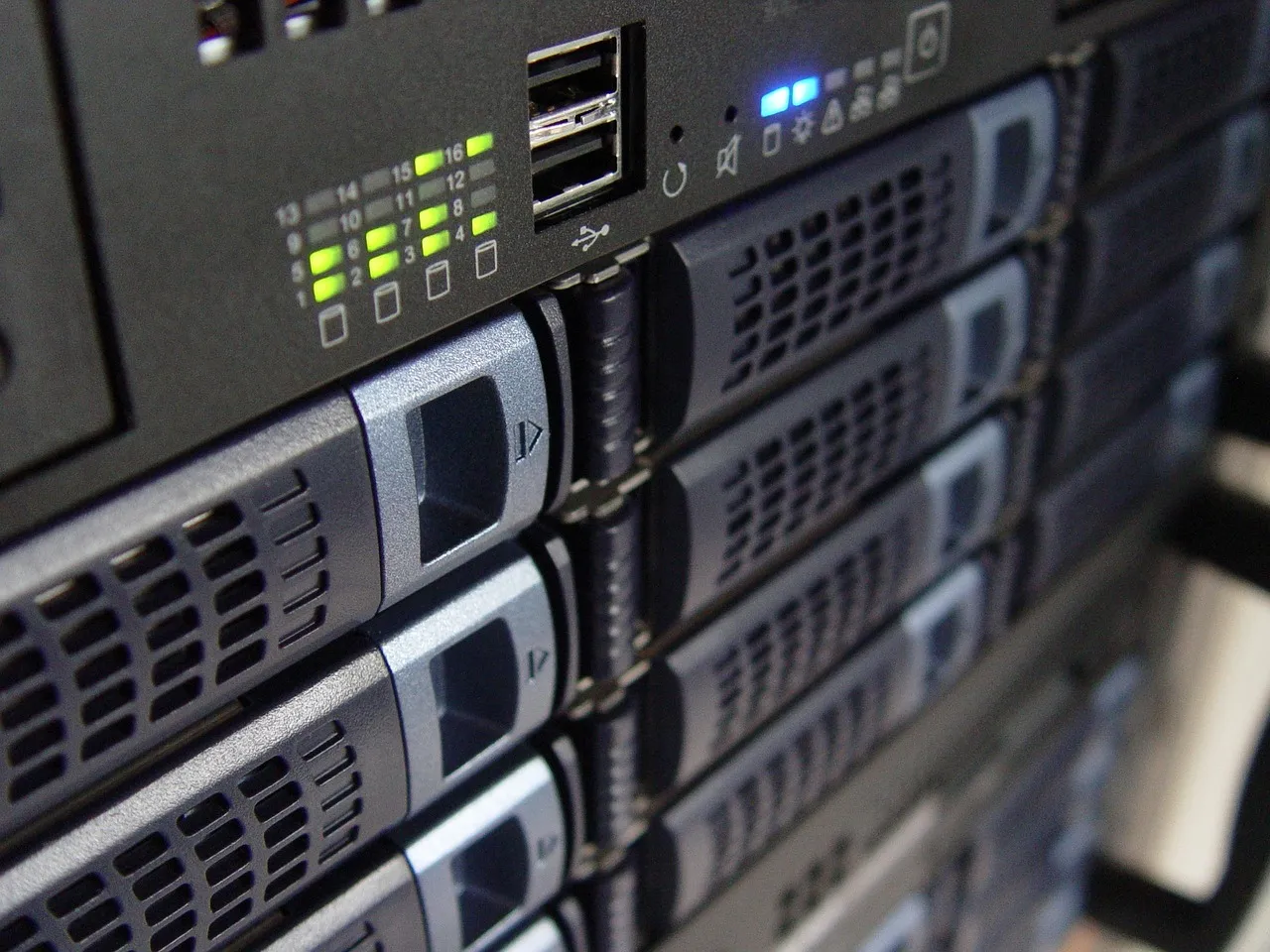
When we strip away the jargon, a server is simply a computer — but one purpose-built for a single job: responding to requests from other computers across a network. Unlike your laptop or desktop, which is designed to run a graphical interface, play media, and support a wide range of user applications, a server strips away everything unnecessary and focuses all of its resources on processing and delivering data as quickly and efficiently as possible. Most web hosting servers run on the Linux operating system, not Windows or macOS, because Linux is open-source, highly configurable, and exceptionally stable under heavy, continuous workloads. These machines typically live in massive facilities called data centers, which are climate-controlled buildings filled with rows upon rows of rack-mounted servers, each one humming quietly as it processes millions of requests every hour. The physical hardware inside a hosting server includes multiple high-performance processors (often with dozens of cores), enormous amounts of error-correcting RAM (frequently 128 GB or more), and arrays of enterprise-grade solid-state drives configured in redundant RAID arrays so that no single drive failure can cause data loss. Everything about a server's physical design prioritizes reliability, speed, and fault tolerance, because even a few minutes of downtime can cost a hosting company thousands of dollars and permanently damage its reputation in an industry where trust is everything.
Understanding the request-response cycle demystifies the entire concept of web hosting explained and reveals exactly what happens in the fraction of a second between clicking a link and seeing a webpage. When a visitor types your domain name into their browser and presses enter, the browser first checks its local cache to see if it already knows the IP address associated with that domain. If it does not, the browser contacts a DNS resolver — essentially the internet's phonebook — which traces through a hierarchical chain of nameservers until it locates the authoritative nameserver for your domain and retrieves the corresponding IP address. With that IP address in hand, the browser opens a connection to your hosting server using the HTTP or HTTPS protocol, sending a GET request that essentially says "please send me the contents of this specific page." Your hosting server receives that request, processes it through its web server software (most commonly Apache or Nginx), which may need to execute server-side code (like PHP or Python), query a database (like MySQL or PostgreSQL), and assemble a complete HTML page on the fly. The server then packages that HTML — along with any referenced CSS, JavaScript, images, and other assets — and sends it all back to the visitor's browser as an HTTP response. The browser receives the response, parses the HTML, discovers and requests any additional assets it needs, renders everything into a visual layout, and finally displays the finished page to the user — all in a process that typically completes in under two seconds from start to finish.
One aspect of web hosting explained that beginners frequently overlook is the physical location of the server that hosts their website. The speed of light is fast, but it is not infinite — and every mile that data must travel between your server and your visitors adds measurable latency to every single request. If your target audience is primarily in the United Kingdom, hosting your website on a server in Singapore means every page load must cross continents and oceans, adding potentially hundreds of milliseconds of unavoidable delay. In an era where Google uses page speed as a ranking factor and where studies consistently show that visitors abandon sites that take more than three seconds to load, those milliseconds matter enormously. Beyond raw speed, server location can also have legal and regulatory implications: different countries have different laws regarding data privacy, content restrictions, and intellectual property, and where your server physically resides can determine which jurisdiction's laws apply to your data. Many hosting providers operate data centers on multiple continents and allow you to choose your server location during signup, a feature that Hosting Captain recommends every beginner take seriously. The closer your server sits to your primary audience, the faster your site will load for the people who matter most to your business.
Shared hosting is the most affordable and accessible entry point into the world of web hosting, and it is where the vast majority of website owners begin their journey. In a shared hosting environment, dozens, hundreds, or sometimes even thousands of websites all reside on the same physical server, sharing its CPU, RAM, storage, and bandwidth just like roommates sharing the rent and utilities in an apartment. This arrangement allows hosting companies to offer plans at extremely low price points — often just a few dollars per month — because the cost of the server hardware, software licenses, data center space, and technical staff is distributed across many paying customers. However, the shared nature of the environment also means that your website's performance can be affected by the activity of your neighbors on the same server; if another site experiences a sudden traffic spike or runs poorly optimized code, it can consume a disproportionate share of resources and slow down every other site on that machine. For small personal blogs, portfolio sites, local business pages, and other low-to-moderate traffic websites, shared hosting remains an excellent choice that balances cost and capability effectively. For a deeper dive into this topic, check out our complete guide to shared hosting, which covers plan selection, performance expectations, and when you should consider upgrading.
Virtual Private Server (VPS) hosting represents a significant step up from shared hosting, offering a middle ground that combines greater control and guaranteed resources with a price point that remains accessible to growing businesses. A VPS uses virtualization technology to partition a single physical server into multiple isolated virtual machines, each running its own operating system instance with dedicated allocations of CPU cores, RAM, and storage that no other account on the same hardware can touch. This isolation means that a traffic spike on your neighbor's VPS has zero impact on your own website's performance — a guarantee that shared hosting simply cannot make. VPS hosting also gives you root access to your virtual server, allowing you to install custom software, configure advanced security settings, and fine-tune server parameters in ways that shared hosting environments prohibit for security reasons. The trade-off is that VPS hosting requires more technical knowledge to manage effectively, though many providers now offer managed VPS plans where their support team handles server administration, updates, and security patches on your behalf. For businesses that have outgrown shared hosting but do not yet need the raw power and expense of a dedicated server, VPS hosting hits the sweet spot of performance, control, and cost.
Dedicated hosting is the premium tier of traditional web hosting, where you lease an entire physical server exclusively for your own use with no other customers sharing any of its resources. This arrangement provides the maximum possible performance, the highest level of security, and complete administrative control over every aspect of the server's configuration — from the choice of operating system down to the specific hardware components installed in the machine. Dedicated servers are the go-to solution for large e-commerce operations processing thousands of transactions per day, media companies streaming high-bandwidth video content to global audiences, enterprise applications handling sensitive financial or healthcare data, and any scenario where performance, compliance, and reliability are non-negotiable business requirements. The cost of dedicated hosting reflects its premium position: plans typically start at around $100 per month and can easily exceed $500 or more for high-specification machines with advanced management services. This price point puts dedicated hosting firmly out of reach for most small websites and beginners, but for the businesses that need it, the investment pays for itself many times over in speed, stability, and peace of mind. Hosting Captain has long observed that the businesses most satisfied with dedicated hosting are those whose revenue depends directly on their website's uptime and responsiveness.
Cloud hosting represents a fundamental shift in how hosting infrastructure is organized and delivered, moving away from the single-server model toward a distributed network of interconnected servers working together as one unified system. Instead of your website residing on one specific physical machine, cloud hosting spreads your data and processing across multiple servers — often located in different data centers — creating redundancy that makes your site far more resilient to hardware failures. If one server in the cloud network goes offline due to a power outage or hardware malfunction, your website automatically fails over to another server in the cluster, often with no detectable interruption in service for your visitors. Cloud hosting also introduces true pay-as-you-go pricing in many cases, where you are billed only for the actual computing resources your site consumes rather than a fixed monthly fee for a predetermined allocation that you may or may not fully utilize. This elasticity makes cloud hosting particularly attractive for websites with variable or unpredictable traffic patterns, such as seasonal businesses, viral content sites, and applications that experience rapid growth. As someone with over fifteen years in this industry, I can confidently say that cloud hosting has been the single most transformative development in web hosting explained over the past decade, and its influence continues to grow as traditional hosting models increasingly adopt cloud-like features and architectures.
A domain name is fundamentally a human-friendly label that maps to a machine-friendly Internet Protocol address, translating something like "hostingcaptain.com" into a string of numbers that computers use to locate each other on the network. Every device connected to the internet — every server, every smartphone, every smart TV — has an IP address, but expecting people to remember strings like "198.51.100.42" for every website they want to visit is clearly impractical. The Domain Name System solves this problem by providing a distributed, hierarchical directory that converts memorable names into the numeric addresses that networks actually use to route traffic. When you register a domain name, you are not buying the name itself in any permanent sense — you are leasing the exclusive right to use that name for a specified period, typically one to ten years, after which you must renew or risk losing it. This is a crucial distinction that many beginners misunderstand, and it is why every web hosting explained guide emphasizes the importance of keeping your domain registration current and your contact information accurate with your registrar. For a thorough technical explanation of how domain names work at the protocol level, Mozilla's domain name guide is an excellent resource that walks through the entire system in accessible detail.
The Domain Name System operates through a cascading chain of resolution that begins the moment someone types your domain into their browser and continues until the correct IP address is found and returned. At the top of this hierarchy sit the root nameservers, thirteen clusters of servers distributed around the world that know where to find the authoritative nameservers for every top-level domain like .com, .org, and .net. When a DNS resolver receives a query it cannot answer from its cache, it starts at the root and works its way down: first asking the root servers which nameservers handle .com, then asking those .com nameservers which authoritative nameservers handle your specific domain, and finally querying your domain's nameservers for the exact IP address associated with the hostname being requested. This entire multi-step process involves multiple round trips across the internet but typically completes in under 100 milliseconds thanks to aggressive caching at every level of the hierarchy. Your hosting provider or domain registrar usually operates the authoritative nameservers for your domain, which is why many companies bundle domain registration and hosting together — it simplifies the DNS configuration and ensures that everything works together from day one without requiring manual record edits.
Behind every domain name lies a collection of DNS records — structured entries in a zone file that tell the internet exactly how to handle traffic for your domain. The most important record for web hosting is the A record, which maps your domain name directly to the IPv4 address of your hosting server. Its newer counterpart, the AAAA record, does the same thing for IPv6 addresses, which are becoming increasingly important as the world exhausts its supply of IPv4 addresses. The CNAME record creates an alias, allowing you to point one hostname (like "www.yourdomain.com") to another hostname rather than directly to an IP address, which is useful when you want multiple subdomains to follow the same destination without maintaining separate A records for each. MX records handle email routing, telling the internet which servers should receive email addressed to your domain — a critical configuration if you plan to use professional email addresses like info@yourdomain.com rather than a free Gmail or Yahoo address. TXT records store arbitrary text data and are most commonly used for domain ownership verification with services like Google Search Console and for configuring email authentication mechanisms like SPF, DKIM, and DMARC that protect your domain from being used in spam and phishing attacks. Understanding these basic record types transforms DNS from a mysterious black box into a tool you can confidently manage, and it is knowledge that pays dividends throughout the entire lifecycle of your website.
Bandwidth in the context of web hosting explained refers to the amount of data that can be transferred between your hosting server and your visitors' browsers within a given time period, typically measured on a monthly basis in gigabytes or terabytes. Think of bandwidth like the width of a highway: a narrow two-lane road can only accommodate so many cars per hour before traffic slows to a crawl, while a wide twelve-lane expressway can handle massive volumes of vehicles moving at full speed simultaneously. Every time someone visits your website, their browser downloads your HTML files, CSS stylesheets, JavaScript code, images, fonts, and other assets — and each of those downloads consumes a portion of your monthly bandwidth allocation. A simple text-heavy blog with optimized images might only transfer a few hundred kilobytes per page view, allowing a modest bandwidth allocation to support tens of thousands of monthly visitors without issue. However, a media-heavy site with high-resolution photography, embedded videos, or downloadable files can consume gigabytes of bandwidth from relatively few visitors, making bandwidth limits a critical consideration when choosing a hosting plan. Most shared hosting plans include "unmetered" bandwidth, which means there is no hard cap on data transfer but does place reasonable limits on server resource usage to prevent any single account from degrading performance for others on the same server.
The type of storage your hosting provider uses has a direct and measurable impact on how quickly your website loads, because every file your server delivers must first be read from its storage drives. Traditional hard disk drives store data on spinning magnetic platters accessed by a mechanical arm — a technology that is cheap and capacious but fundamentally limited by the laws of physics governing how fast physical components can move. Solid-state drives, by contrast, store data on interconnected flash memory chips with no moving parts whatsoever, allowing them to read and write data orders of magnitude faster than even the fastest spinning hard drives. The practical difference for your website is significant: a server running on SSDs can typically serve pages two to five times faster than an otherwise identical server using HDDs, a gap that widens further under heavy concurrent load when the mechanical drive's read head must physically jump between different areas of the platter to service multiple simultaneous requests. Beyond raw speed, SSDs consume less power, generate less heat, and are more resistant to physical shock and vibration — all factors that contribute to better reliability over the lifetime of the server. In 2026, SSD storage has become the standard for virtually all reputable hosting providers, and Hosting Captain strongly advises against any plan that still relies on spinning hard drives for website storage, regardless of how attractive the price might appear.
Website performance depends on the interplay of three primary server resources: the central processing unit, which executes the actual code that generates your pages; random access memory, which holds actively used data for near-instant retrieval; and input/output capacity, which governs how quickly data can move between storage, memory, and the network. When someone visits a dynamic website built with a content management system like WordPress, the server's CPU must execute the PHP code that queries the database, assembles the template, and constructs the final HTML page — a workload that becomes significantly heavier as your site grows to include more plugins, more complex themes, and more concurrent visitors. RAM serves as the server's short-term memory, caching frequently accessed database queries, pre-compiled code, and other reuseable data so that the CPU does not have to redundantly recalculate the same results for every single page request. I/O throughput determines how fast the server can read the original PHP files from storage, write log entries, back up your database, and shuttle data between its various subsystems without creating bottlenecks that slow everything else down. Understanding this performance triangle helps you make informed decisions when comparing hosting plans: a plan with generous storage but inadequate RAM will struggle under load just as surely as one with powerful CPUs but slow mechanical drives.
The single most common mistake I have observed in fifteen years of guiding beginners through their first hosting purchase is paying for resources they will never use while overlooking limitations that will constrain them within months. Before you even open a hosting provider's pricing page, take thirty minutes to honestly assess what you are building and what it genuinely needs. If you are launching a simple WordPress blog, a portfolio site with a handful of static pages, or a small local business website, your needs are modest: shared hosting with a few gigabytes of SSD storage, a free SSL certificate, and automatic WordPress installation will serve you perfectly well for at least the first year. If you are building an e-commerce store that will process payments, store customer data, and potentially handle hundreds of simultaneous shoppers during sales events, you should start at the VPS level at minimum to ensure you have the dedicated resources and security isolation that handling sensitive transactions demands. The key insight here is that hosting plans are designed to be upgradeable — starting small and scaling up when your traffic and revenue justify the expense is almost always smarter than overcommitting to expensive infrastructure that will sit mostly idle for months or years. Hosting Captain builds its recommendations around this principle, ensuring that your hosting budget aligns with your actual stage of growth rather than hypothetical future needs that may never materialize.
The web hosting industry is fiercely competitive, and in that competition, some providers resort to tactics that look appealing on the surface but hide significant drawbacks beneath the marketing gloss. The most pervasive of these is the deep first-year discount paired with steep renewal pricing: a plan advertised at $2.99 per month may renew at $11.99 per month after the initial term, a quadrupling of cost that can blindside budget-conscious beginners who did not read the fine print. Another common red flag is the promise of "unlimited everything" — unlimited storage, unlimited bandwidth, unlimited websites — which is physically impossible on a shared server and invariably comes with buried acceptable-use clauses that allow the provider to suspend your account if your site becomes "resource intensive" by their unilateral determination. Look also for providers that charge separately for features that should be standard in 2026: SSL certificates should be free and auto-renewing, domain privacy protection should be included at no extra cost, and automated daily backups should not require a premium add-on. The hosting companies that invest in transparent pricing, honest resource descriptions, and genuinely included features tend to build the most loyal customer bases, and those are the providers that Hosting Captain consistently recommends to readers at every experience level.
No matter how carefully you plan, no matter how well-built your website, and no matter how reputable your hosting provider, something will eventually go wrong — and when it does, the quality of your provider's support team becomes the single most important factor in how quickly and painlessly you recover. A server might develop a hardware fault at 2:00 AM local time. A WordPress plugin update might introduce a compatibility issue that breaks your site's layout. Your SSL certificate might fail to auto-renew for reasons that are completely opaque to you as a non-technical user. In each of these scenarios, the difference between a provider with 24/7 live chat and phone support staffed by actual engineers versus one with a ticket system that promises responses within 24 to 48 hours is the difference between minutes of downtime and days of frustration. Before signing up with any provider, test their support channels yourself: open a pre-sales chat and ask a specific technical question about their infrastructure, note how long it takes to get a real human response, and evaluate whether the answer demonstrates genuine knowledge or just parrots scripted marketing copy. This ten-minute exercise will tell you more about what your experience will actually be like than any number of polished testimonial pages or review-site rankings ever could.
A surprisingly common beginner misstep is registering a domain name with one company and purchasing hosting from an entirely different provider, then struggling to manually configure DNS records to connect the two services. While keeping your domain and hosting separate is technically possible and even preferred by some advanced users for strategic reasons, it introduces unnecessary complexity into a process that should be as smooth and automatic as possible for someone just starting out. When your domain and hosting are with the same company, the DNS configuration is typically handled automatically — your domain is pre-configured to point to your hosting server the moment your account is activated, and you can start building your website within minutes of completing your purchase. When the services are split across providers, you must log into your domain registrar's control panel, locate the DNS management section, update the nameservers to point to your hosting provider's servers, and then wait anywhere from a few minutes to 48 hours for the change to propagate across the global DNS system. For beginners who are still learning what terms like "nameserver" and "A record" even mean, this technical hurdle can turn what should be an exciting launch day into a frustrating exercise in troubleshooting. Starting with a single provider for both domain and hosting eliminates this friction entirely, and you can always transfer your domain to a different registrar later once you have gained more experience and developed specific preferences about where you want your domain portfolio managed.
An SSL certificate is the technology that enables the padlock icon and "https://" prefix in your visitors' browser address bar, indicating that the connection between their computer and your server is encrypted and secure. In the early days of the web, SSL was considered optional for all but e-commerce and banking sites, but that era is long gone: modern browsers now display prominent "Not Secure" warnings on any site served over plain HTTP, and Google has confirmed that HTTPS is a ranking signal in its search algorithm. Despite these well-publicized changes, I still encounter beginners who launch their sites without SSL, only to discover the problem when a friend or customer sends them a screenshot of the alarming warning that appears before their homepage even loads. The good news is that SSL certificates have become dramatically easier and cheaper to obtain than they were even five years ago. The Let's Encrypt project, now integrated into virtually every major hosting control panel, provides free, auto-renewing SSL certificates that require zero technical configuration from the site owner — often enabled by a single checkbox during the initial setup process. There is simply no defensible reason in 2026 to launch a website without HTTPS, and any reputable hosting provider will include free SSL as a standard feature rather than an upsell.
Price-sensitive beginners naturally gravitate toward the lowest advertised monthly rate, and hosting companies know this — which is precisely why the most prominently displayed prices almost always reflect introductory promotional rates that double, triple, or even quadruple upon renewal. A plan listed at $1.99 per month might seem like an unbeatable deal until you discover in month thirteen that the actual rate is $9.99, and that you prepaid for three years at the discounted rate, locking yourself into a relationship with a provider you may have outgrown long before the term expires. The smarter approach is to price your hosting decision based on the renewal rate, not the introductory rate, and to ask yourself whether you would still be satisfied with the plan if you were paying the full price from day one. Also scrutinize what is actually included at the base price versus what requires paid add-ons: some providers advertise rock-bottom rates that exclude essentials like SSL certificates, automated backups, malware scanning, and email hosting, each of which appears as a separate line item during checkout and can easily double the total cost. The most cost-effective hosting plan is rarely the one with the lowest sticker price — it is the one that includes everything you actually need at a transparent renewal rate from a provider whose support team you trust to be there when problems arise.
After you complete your hosting purchase, the provider's automated provisioning system swings into action, allocating server resources, creating your account, configuring your control panel access, and — if you registered your domain through the same company — establishing the DNS records that connect your domain to your new hosting space. This process is typically fully automated and completes within minutes, though during periods of unusually high demand or when additional fraud verification is required, it can occasionally take several hours. Once provisioning is complete, you will receive a welcome email containing your control panel URL, your account credentials, your FTP or SFTP connection details, and the temporary URL that allows you to view your site before your domain's DNS has fully propagated. The temporary URL is particularly valuable because it lets you begin building and previewing your site immediately, rather than waiting for DNS propagation, which can take up to 48 hours in rare cases. Your first action after logging in should be to enable your free SSL certificate — usually a single click in the control panel's security section — so that your site is served over HTTPS from the very first moment it goes live, avoiding the "Not Secure" browser warning entirely.
The vast majority of beginners build their websites using a content management system rather than hand-coding HTML files, and modern hosting control panels make installing these platforms almost trivially easy. cPanel, the most widely used hosting control panel, includes an application installer called Softaculous or Installatron that can deploy WordPress, Joomla, Drupal, and dozens of other platforms with a few clicks and a simple form that asks for your site name, admin username, and password. The installer handles all the technical heavy lifting: creating the MySQL or MariaDB database, configuring the database user with appropriate permissions, downloading and extracting the latest version of the platform's files, running the initial setup wizard, and securing the default configuration against common attack vectors. What used to require an hour of manual configuration and command-line work now literally takes under two minutes, a democratization of web publishing that has enabled millions of non-technical entrepreneurs, artists, and small business owners to establish professional online presences. After installation, your immediate next step should be to log into your CMS dashboard, update to the latest version if the installer did not grab it, delete any default content or sample pages that were created during installation, and begin configuring your site's core settings including the site title, tagline, timezone, and permalink structure — small details that collectively make a significant difference in how search engines and visitors perceive your site.
The moment when your website transitions from a private development project to a publicly accessible destination is called "going live," and it happens when you update your domain's DNS records to point at your hosting server. If your domain and hosting are with the same provider, this step is usually handled automatically during provisioning, and your site is effectively live immediately — though you may still need to wait for DNS propagation before it is reachable from every corner of the internet. DNS propagation is the time it takes for the updated records to spread from your provider's nameservers to the thousands of recursive resolvers operated by internet service providers, mobile carriers, and corporate networks around the world. Before you announce your launch to the world, run through a quick pre-flight checklist: verify that your SSL certificate is active and that all pages load correctly over HTTPS, test your site on both desktop and mobile viewports to ensure responsive design is functioning, submit your sitemap to Google Search Console and Bing Webmaster Tools to accelerate indexing, and confirm that any contact forms, shopping carts, or other interactive features are working as expected. With those checks complete, your website is officially live — the culmination of everything this web hosting explained guide has walked you through, from understanding basic concepts to executing your launch with confidence.
This guide covers the practical decision points — pricing, performance, and when it makes sense for your situation — based on current 2026 data. The hosting landscape evolves quickly, and what was true even two or three years ago may no longer reflect the reality of today's market, which is why staying informed with up-to-date resources like those published by Hosting Captain ensures you are making decisions based on the most current information available.
Pricing varies by provider and plan tier; see the cost breakdown section above for current ranges and what's actually included at each price point. Shared hosting plans suitable for beginners generally range from approximately $3 to $15 per month at renewal rates, VPS plans from roughly $20 to $80 per month depending on resource allocation and management level, and dedicated servers from about $100 to well over $500 per month for high-end configurations with premium support packages.
Look closely at uptime guarantees, renewal pricing (not just the first-year discount), and how responsive support actually is — all covered in detail in this article. Additionally, verify that essentials like SSL certificates, automated backups, and malware protection are included at no extra cost, that the provider operates data centers in geographic regions relevant to your audience, and that their terms of service do not contain vague language that could allow them to suspend your account for resource usage they deem excessive without providing clear, objective thresholds.

Billy Wallson is a senior operations director with over 15 years of experience scaling remote teams and implementing lean business strategies.

Hosting Captain has been exceptional for my e-commerce store in Pune. The NVMe SSD speed is noticeable, and their support team responds within minutes. Highly recommended for any Indian business!
Switched from a US-based host to Hosting Captain and my website loads 3x faster for Indian visitors. The free SSL and cPanel are great, and the pricing is unbeatable. Very satisfied customer!
I've been using their VPS plan for 2 years now. 99.9% uptime is not just a claim — it's reality. My client projects run without interruption. The KVM virtualization gives me full control I need.
The support team helped me migrate my entire WordPress site at 2 AM without any downtime. This level of service is rare in Indian hosting. Worth every rupee!
As a startup, budget matters. Hosting Captain's Business plan covers everything we need — multiple websites, free SSL, daily backups — at a fraction of what international hosts charge.
Our high-traffic news portal needed a dedicated server. Hosting Captain's DS Business plan handles 100K+ daily visitors effortlessly. Their team provisioned everything within 4 hours!








From personal blogs to enterprise solutions, we've got you covered!

© 2026 Hosting Captain. All Rights Reserved by 'Apollo Hosting'.