Billy Wallson
Senior DirectorBilly Wallson is a senior operations director with over 15 years of experience scaling remote teams and implementing lean business strategies.
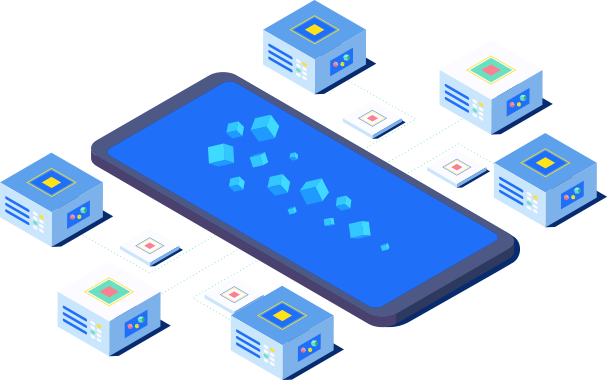

Website hosting redundancy is the practice of designing your hosting infrastructure so that no single component failure can take your website offline. In practical terms, redundancy means having backup systems — extra servers, duplicate power supplies, mirrored storage arrays, and alternative network paths — that automatically take over when a primary component fails, ideally without any visitor ever noticing the disruption. The concept originates from mission-critical engineering disciplines such as aviation, telecommunications, and data center design, where the cost of failure is measured in lives or millions of dollars per minute. For website owners, redundancy is the difference between a hosting environment that stays online through hardware failures, power outages, and network disruptions, and one that goes dark the moment a single component malfunctions. Understanding hosting redundancy is essential whether you are running a personal blog that you want to keep accessible or an e-commerce store where every minute of downtime translates directly to lost revenue.
The two most common redundancy models in the hosting industry are N+1 redundancy and 2N redundancy, and knowing the difference between them can save you from making an expensive hosting mistake. N+1 redundancy means that for every N components required to keep the system running, there is one additional spare component — one extra power supply, one extra server, or one extra network uplink — ready to take over if any single component fails. For example, if a data center needs three generators to power its server racks, an N+1 design would include a fourth generator that can carry the load if any of the three fails. 2N redundancy, also called full redundancy, goes significantly further by providing a complete duplicate of every component in the system, meaning the entire infrastructure can sustain a failure of an entire system half without interruption. A 2N data center has two completely independent power distribution paths, two entirely separate cooling systems, and two fully isolated network backbones, any one of which could run the facility on its own. Hosting Captain's infrastructure employs N+1 redundancy as a baseline across all service tiers and 2N redundancy for critical power and network paths, a design philosophy that has proven its value through years of uninterrupted operation during component-level failures that would have taken lesser hosting setups offline.
It is important to understand that redundancy is not a binary yes-or-no feature — it exists on a spectrum, and providers use the term with varying degrees of rigor. Some budget hosting providers claim "redundant" infrastructure when they have nothing more than RAID-configured storage and a single backup generator, while enterprise-grade providers invest millions of dollars in fully redundant power distribution, multi-homed BGP network architectures, and geographic server distribution across multiple physically isolated data centers. The depth of redundancy directly correlates with cost, which is why a shared hosting plan at $3 per month cannot possibly include the same level of infrastructure resilience as a managed dedicated server or cloud platform at $300 per month. When evaluating any hosting provider's redundancy claims, including those made by Hosting Captain, you should look past the marketing language and ask specific questions about what happens when — not if — a power supply fails, a network switch dies, a storage array degrades, or an entire data center goes offline due to a natural disaster.
Power-related failures remain one of the leading causes of hosting downtime, which is why serious hosting providers build multiple layers of electrical redundancy into their data centers. The chain begins at the utility feed: enterprise data centers are connected to at least two independent power grids with separate substations, so that a transformer failure or a localized grid outage on one feed does not affect the facility. Incoming utility power passes through automatic transfer switches that can redirect the load from a failed feed to an active one in milliseconds, often fast enough that servers do not reboot. Behind the utility feeds sits a battery-backed uninterruptible power supply system that bridges the gap between the moment utility power fails and the moment backup generators start producing stable electricity, which typically takes 10 to 30 seconds. The UPS batteries filter out power anomalies such as voltage sags and harmonic distortion that can damage sensitive server hardware even when the lights stay on. Finally, backup diesel or natural gas generators — with on-site fuel storage sufficient for 24 to 72 hours of continuous operation and refueling contracts with multiple suppliers — provide long-term power in the event of an extended grid outage.
This layered approach to power redundancy has prevented countless outages at Hosting Captain's partner data centers, where individual component failures in the power chain have occurred without any customer-facing impact. A generator might fail to start during a routine monthly test, but because it is an N+1 design with an additional generator beyond the minimum required, the load transfers to the spare and the defective unit is repaired before the next testing cycle. A UPS battery string might degrade, but the parallel redundant UPS modules absorb the load without interruption while the faulty battery is replaced under the provider's maintenance program. These are not hypothetical scenarios — they happen regularly in every data center, and the only question is whether the facility's redundancy design catches them silently or whether they cascade into customer-visible outages. For website owners evaluating hosting providers, the single most telling indicator of power redundancy quality is whether the provider can produce recent, third-party-verified SOC 2 or Tier III certification reports that document the actual uptime performance and maintenance rigor of their facility's power infrastructure.
Network redundancy operates on the same principles as power redundancy but applies them to the data pathways that connect your website to its visitors across the internet. A hosting provider with robust network redundancy maintains multiple upstream internet connections — typically from at least two different Tier 1 transit providers — and uses the Border Gateway Protocol to dynamically route traffic around failed links. BGP, the routing protocol that powers the entire internet, continuously monitors the health of each upstream connection and automatically withdraws routes through a failed provider while advertising routes through the remaining healthy connections. This failover happens in seconds to minutes, which is not instantaneous but is fast enough to prevent the prolonged outages that occur when a provider relies on a single upstream connection that goes dark due to a fiber cut, a peering dispute, or a routing misconfiguration. Beyond multi-homed BGP, serious hosting providers also ensure that their multiple fiber uplinks enter the data center through physically diverse entry points and follow geographically separated paths to different carrier meet-me rooms, so that a backhoe cutting a single fiber bundle does not sever all connectivity simultaneously.
At the server level, network redundancy extends to the data center's internal switching fabric, where redundant top-of-rack switches, redundant aggregation switches, and redundant core routers ensure that no single network device failure isolates a rack of servers from the rest of the network. Leaf-spine network architectures, which have become the standard in modern data centers, provide multiple equal-cost paths between any two points in the network, meaning traffic can continue flowing even if multiple switches or links fail simultaneously. Hosting Captain's network engineers have designed the company's infrastructure with redundant 10 Gbps uplinks at every layer, from the individual server's bonded network interface card through the top-of-rack switches, the aggregation layer, and the border routers that connect to upstream transit providers. This design has been validated through years of real-world operation, during which individual switch failures, fiber cuts, and upstream provider outages have occurred without triggering a single customer-visible service interruption — exactly the outcome that proper network redundancy is meant to deliver.
Disk drives fail. It is not a matter of if but when — every hard drive and every SSD has a finite operational lifespan, and in a data center with thousands of drives spinning 24 hours a day, drive failures are a daily occurrence. RAID, which stands for Redundant Array of Independent Disks, is the technology that prevents individual drive failures from causing data loss or service interruption by distributing data across multiple physical drives in a way that tolerates the failure of one or more of them. RAID 1, the simplest redundant configuration, mirrors data identically across two drives, so that if either drive fails, the surviving drive continues serving data without interruption while the failed drive is replaced and the mirror is rebuilt. RAID 1 provides excellent read performance because data can be read from both drives simultaneously, but it costs 50% of the total raw storage capacity in redundancy overhead — a 2 TB RAID 1 array delivers only 1 TB of usable space.
For hosting environments that need to balance storage efficiency with redundancy, RAID 5 and RAID 6 are the most common choices. RAID 5 stripes data across a minimum of three drives and distributes parity information — mathematical checksums that allow any single failed drive's data to be reconstructed — across all drives in the array, meaning a RAID 5 array can survive the complete failure of one drive without data loss. The storage efficiency of RAID 5 is far better than RAID 1: in a four-drive array, 75% of the raw capacity is usable, with the remaining 25% consumed by parity. RAID 6 extends this concept by calculating and distributing two independent parity blocks, allowing the array to survive the simultaneous failure of any two drives — a critical safety margin during rebuild operations, when the remaining drives are under heavy read stress and a second failure becomes statistically more likely. The trade-off for RAID 6's additional protection is reduced write performance due to the dual parity calculation overhead and slightly lower storage efficiency. For database-heavy hosting workloads where write performance is critical, many providers — including Hosting Captain for its managed VPS and dedicated server plans — deploy RAID 10, which combines mirroring and striping to deliver both high redundancy and high performance at the cost of 50% storage overhead.
The transition from spinning hard drives to solid-state storage, and more recently to NVMe SSDs, has changed the redundancy conversation in important ways. NVMe drives fail far less frequently than traditional HDDs — annualized failure rates for enterprise NVMe drives are typically below 0.5%, compared to 2% to 5% for consumer-grade spinning drives — but when they do fail, they tend to fail catastrophically and without the gradual degradation warning signs that spinning drives often exhibit. This reality makes RAID protection for NVMe storage arguably more important, not less, because the failure mode leaves no window for emergency data migration. Additionally, the extreme speed of NVMe drives — capable of millions of IOPS and several gigabytes per second of sequential throughput — means that RAID rebuild times are dramatically shorter than they were in the HDD era. A 2 TB NVMe RAID 6 array can rebuild a failed drive in under an hour, compared to the 12 to 48 hours that were typical for large HDD arrays, dramatically reducing the window of vulnerability during which a second drive failure could cause data loss. Hosting Captain deploys all production storage on NVMe-based RAID 10 arrays with hot-swap drive bays and automated monitoring that triggers immediate support team notification and replacement drive dispatch the moment a drive shows any sign of degradation, long before it actually fails.
No amount of power redundancy, network redundancy, or storage redundancy within a single data center can protect your website against a disaster that affects the entire facility — a major earthquake, a flood, a fire, a prolonged regional power outage, or a human error that cascades through the facility's core infrastructure. Geographic redundancy addresses this vulnerability by distributing your hosting infrastructure across multiple physically separated data centers, typically in different cities, different states, or even different continents. When your website is deployed across multiple geographic locations and one data center goes offline entirely, traffic is automatically redirected to the surviving locations, and your visitors may experience slightly higher latency but no interruption in service. This is the highest level of hosting redundancy available, and it is the standard for websites and applications where downtime carries extreme financial, reputational, or safety consequences — banking platforms, healthcare systems, government services, and major e-commerce operations.
Geographic redundancy can be implemented in two primary architectures: active-passive and active-active. In an active-passive configuration, one data center serves all production traffic while a secondary data center maintains a synchronized copy of the environment — servers, databases, file storage — ready to be activated if the primary site fails. The failover process might involve a DNS change that redirects traffic to the secondary site's IP addresses, which can take anywhere from a few minutes to an hour depending on DNS time-to-live settings and propagation delays. Active-active configurations run both data centers simultaneously, serving traffic from both locations under normal conditions and simply removing a failed site from the routing rotation when it goes down. Active-active setups provide faster failover and better resource utilization but are significantly more complex and expensive to implement because they require real-time data synchronization between sites, application architectures that support multi-master database configurations, and traffic routing systems that can make intelligent, latency-aware decisions about which data center should serve each incoming request. For most small to medium businesses, a well-engineered active-passive geographic redundancy setup — or even automated backups replicated to a secondary region with a documented, tested disaster recovery procedure that can be executed in under four hours — represents the practical sweet spot between protection and cost.
DNS failover is the mechanism that makes geographic redundancy work in practice by monitoring the health of your primary hosting location and automatically updating DNS records to point to a backup location when the primary fails. Advanced DNS failover services, such as those offered by AWS Route 53, Cloudflare, and NS1, continuously probe your server endpoints from multiple geographic vantage points and can trigger a failover within 60 to 300 seconds of detecting a failure. This is far faster than manual intervention and sufficient for most business websites, though it is not instantaneous — some visitors may experience a brief period of inaccessibility while DNS caches expire and new records propagate. More sophisticated global traffic management systems combine DNS-level failover with anycast routing and application-level health checks to achieve near-instantaneous failover, but these solutions add considerable complexity and cost. The relationship between domain names and server addresses is, of course, why understanding how DNS works is fundamental to grasping geographic redundancy — for anyone looking to solidify that foundational knowledge, Mozilla's domain name guide provides an excellent technical overview of how domain resolution works at the protocol level.
A content delivery network, or CDN, is a globally distributed network of edge servers that cache and serve your website's static content — images, CSS files, JavaScript, fonts, and even entire HTML pages — from locations geographically close to each visitor. While CDNs are primarily marketed as performance-enhancing tools that reduce page load times by shortening the physical distance data must travel, they also function as a powerful and often overlooked form of hosting redundancy. When your website is fronted by a CDN, a visitor's request for a cached resource never reaches your origin server at all — it is fulfilled entirely by the nearest CDN edge node. If your origin server goes offline due to a hosting failure, the CDN can continue serving cached content to visitors, keeping your website partially or even fully accessible depending on how aggressively the CDN caches your content and how much of your site is dynamic versus static. This is not a replacement for proper server-level redundancy, but it is a valuable additional layer of resilience that can buy you the hours needed to restore your origin server without your visitors seeing an error page.
Modern CDNs have evolved far beyond simple static asset caching and now offer features that enhance redundancy in ways that were previously only available through complex custom infrastructure. CDN providers like Cloudflare, Fastly, and Akamai offer always-online modes that serve stale cached content when your origin server is unreachable, workers and edge compute platforms that can run application logic at the edge even when the origin is down, and load balancing services that can automatically route traffic away from failed origin servers across multiple data centers. Some CDNs can even cache dynamically generated HTML pages for short periods — 30 seconds to a few minutes — which is often long enough to absorb a brief origin server outage without any visitor noticing. For Hosting Captain customers, CDN integration is a standard component of our managed hosting stack, configured to cache static assets aggressively and serve stale content in the event of an origin failure, providing an extra redundancy layer that has repeatedly proven its value during unexpected server maintenance events and minor infrastructure disruptions.
Despite their power, CDNs should not be mistaken for a complete redundancy solution. A CDN cannot serve content it has not cached, which means that purely dynamic functionality — user logins, shopping cart operations, form submissions, real-time data queries, and any page that varies per user — will fail if the origin server is offline regardless of CDN configuration. Additionally, CDN cache hit ratios for typical dynamic websites hover between 60% and 85%, meaning that a significant portion of requests will still reach the origin server and fail if it is down. A CDN also cannot replicate your database, process payments, send transactional emails, or perform any of the other server-side operations that keep a modern website functional. For these reasons, CDN redundancy is best understood as a complement to, not a substitute for, proper hosting-level redundancy — a CDN can keep your marketing pages and blog content accessible during an outage, but your e-commerce checkout flow will still break. The most resilient hosting architectures combine CDN fronting with redundant origin servers, replicated databases, and geographic failover, which is the configuration Hosting Captain recommends and implements for customers whose websites generate meaningful revenue.
Marketing claims about redundancy are cheap, and nearly every hosting provider — from the $2-per-month shared hosting company to the enterprise cloud platform — uses the word "redundant" somewhere in their sales copy. Distinguishing genuine infrastructure investment from marketing fluff requires asking specific, technically precise questions that a provider with real redundancy can answer confidently and a provider without it will struggle to answer at all. Start by asking how many independent utility power feeds enter the data center and whether they originate from separate substations — a provider with genuine power redundancy will know this answer immediately because it is a foundational facility specification. Ask what configuration of backup generators protects the facility, specifically whether it is N+1 or 2N, how much on-site fuel storage is maintained, and how frequently the generators are tested under full load. Ask whether the provider is multi-homed via BGP with at least two independent Tier 1 transit providers and whether diverse fiber entry points are used. If the sales or support representative cannot answer these questions or directs you to vague marketing language, the provider almost certainly does not have the infrastructure they claim.
Beyond the physical infrastructure questions, probe the provider's operational practices, because even the most redundant hardware is worthless if it is not maintained and tested. Ask how frequently failover testing is performed — the best providers conduct generator load tests monthly, UPS battery discharge tests quarterly, and full-site failover simulations at least annually. Ask whether the provider has experienced any customer-impacting outages in the past 24 months, what caused them, and what changes were implemented to prevent recurrence — an honest provider will acknowledge past incidents and explain their corrective actions, while a provider that claims "100% uptime with zero incidents" is either too small to be statistically meaningful or not being truthful. Review the provider's service level agreement carefully, paying particular attention to how uptime is calculated — does it exclude scheduled maintenance, and if so, how much scheduled maintenance is permitted per month? Does the SLA credit you automatically for downtime, or do you have to request credits and prove the outage occurred? These operational details separate providers that take redundancy seriously from those that treat it as a checkbox feature, and they are the criteria Hosting Captain's engineering team uses when evaluating and selecting the data center partners that host our infrastructure.
Certain patterns in a hosting provider's marketing and sales process are strong indicators that their redundancy claims should not be taken at face value. Providers that prominently feature "99.9% uptime guarantee" without specifying what happens when that guarantee is breached — or that cap SLA credits at a tiny fraction of your monthly fee — are signaling that they do not expect their redundancy to be tested in a meaningful way. Providers whose entire infrastructure is concentrated in a single data center facility without a documented disaster recovery plan for a facility-level outage are inherently vulnerable, regardless of how redundant that single facility's internal systems are. Another red flag is a provider that cannot or will not provide details about their storage architecture — whether they use RAID, what RAID level, how drive failures are detected and replaced, and how long a rebuild takes — because storage redundancy is one of the most fundamental and least expensive forms of protection to implement. If a provider is cutting corners on storage redundancy, they are almost certainly cutting corners on the far more expensive power and network redundancy systems. These warning signs are not academic: they are drawn from real industry failures, and website owners who ignore them often learn about their provider's lack of redundancy the hard way — during a production outage that could have been prevented. For a foundation in understanding what to look for in a quality hosting provider, the simplest explanation of web hosting on the Hosting Captain blog covers the fundamentals that every website owner should know before making a hosting decision.
Redundancy is expensive, and honest providers acknowledge this rather than pretending that a $5-per-month plan includes enterprise-grade infrastructure resilience. At the entry level — shared hosting plans in the $3 to $15 per month range — redundancy is limited to what is economically viable at scale: RAID-protected storage, a single backup generator at the data center level, and perhaps one redundant network uplink, with no geographic redundancy and no N+1 server-level failover. These plans are adequate for hobby sites, personal blogs, and small portfolio pages where an hour of downtime is an inconvenience rather than a financial event. At the mid-range — managed VPS and cloud hosting plans in the $30 to $150 per month bracket — redundancy becomes substantially more robust, typically including N+1 power and cooling, fully redundant network architectures with multi-homed BGP, RAID 10 NVMe storage, automated off-site backups, and in some cases the option to deploy across multiple availability zones within a region for an additional fee. Enterprise-grade hosting, starting at $300 to $500 per month and scaling upward, delivers comprehensive redundancy including 2N power, multi-region geographic distribution with active-active or active-passive failover, real-time data replication, and comprehensive disaster recovery plans with recovery time objectives measured in minutes rather than hours. Hosting Captain's pricing is structured to make each tier of redundancy transparent: customers know exactly what level of infrastructure protection they are purchasing and why it costs what it does.
The cost of downtime is the number that makes the cost of redundancy look cheap, and every website owner should calculate it for their specific situation. For an e-commerce store generating $500,000 in annual revenue, an hour of downtime during peak shopping hours might cost between $500 and $5,000 in direct lost sales, depending on traffic concentration and average order value — and that is before accounting for the harder-to-quantify costs of damaged customer trust, abandoned carts, and negative word of mouth that persist long after the site comes back online. A SaaS business with 500 customers paying $50 per month could lose $1,000 or more per hour in subscription value if an outage causes churn, plus the support team time spent fielding complaints and the engineering team time diverted from product development to incident response. Even a content site monetized through display advertising and affiliate links loses real money during downtime: if the site generates $200 per day in ad revenue, a 12-hour outage costs $100 in direct revenue plus lost search engine ranking signals if Google's crawler encounters errors during the outage. The formula for calculating downtime cost is straightforward: estimate your hourly revenue, multiply by the expected duration of an outage that would occur without redundancy, and compare that number to the annual premium for a hosting plan with proper redundancy. In the vast majority of cases where a website generates meaningful revenue, the math strongly favors investing in redundant hosting infrastructure.
There is also a less quantifiable but equally real cost to consider: the reputational damage and search engine ranking impact of repeated outages. Google's search algorithms incorporate page availability signals, and sites that are frequently inaccessible when Googlebot attempts to crawl them may experience ranking degradation that takes weeks or months to recover from, even after the hosting issues are resolved. Visitors who encounter error pages multiple times are significantly less likely to return and more likely to seek alternatives, a behavioral pattern that is consistent across every industry and audience demographic. For businesses that depend on their website as a primary customer acquisition channel — which describes the majority of modern small and medium businesses — the cumulative cost of eroded trust from repeated outages can far exceed the direct revenue lost during the downtime periods themselves. This is the real economic case for hosting redundancy: it is not merely insurance against rare catastrophic failures, but a fundamental investment in the reliability that search engines reward and visitors expect. For those new to hosting concepts and weighing these cost considerations for the first time, the complete shared hosting guide on the Hosting Captain blog provides additional context on what different hosting tiers include and when it makes financial sense to upgrade beyond entry-level plans.
The abstract case for hosting redundancy becomes concrete and urgent when you examine real-world outages that occurred because a single point of failure was not protected by adequate redundancy. In 2021, a fire at a French cloud provider's data center in Strasbourg destroyed the entire facility — servers, storage, networking equipment, and all customer data housed within — because the facility's fire suppression system failed to contain the blaze, and the provider had not replicated customer environments to a secondary geographic location. Customers who had purchased what they believed to be redundant hosting lost everything, including years of data with no backups, because the provider's redundancy existed only within the four walls of a single building that was no longer standing. In 2023, a major U.S. hosting provider experienced a 14-hour outage affecting tens of thousands of websites because a software update to their core routing infrastructure contained a bug that propagated across all of their routers simultaneously — there was no redundant routing platform, no staged rollout procedure, and no rapid rollback mechanism. The outage cost their customers millions of dollars in aggregate and triggered a wave of customer departures that the provider never fully recovered from.
Smaller-scale incidents are even more instructive because they expose the everyday failures that redundancy is designed to prevent and that occur far more frequently than dramatic data center fires. A single failed power distribution unit in a server rack, a component that costs a few hundred dollars and takes ten minutes to replace, has taken entire racks of servers offline at hosting providers that did not invest in redundant PDUs with automatic failover. A single misconfigured BGP announcement by a Tier 1 transit provider has caused multi-hour outages for hosting companies that relied on that single upstream connection rather than maintaining multiple carrier relationships with automatic failover. A single failed drive in a server running without RAID protection has caused complete data loss for customers whose hosting provider treated backups as the customer's responsibility and did not implement storage redundancy. These are not edge cases or black swan events — they are routine infrastructure failures that occur constantly in every data center and that redundant design catches silently, every day, without the website owner ever knowing they happened. Hosting Captain's architecture has absorbed countless such component-level failures over the years without a single customer-visible incident, and the investment that makes this possible is exactly the investment that separates professional hosting from budget hosting.
The lesson from these examples is consistent and unambiguous: redundancy is not a luxury feature reserved for enterprises with unlimited budgets, but a practical necessity for any website whose availability matters to its owner. The question is not whether a component will fail — it will. The question is not whether an outage is possible — it is certain over a long enough time horizon. The only meaningful question is what happens when the failure occurs: does the redundant system absorb it silently, or does your website go dark while you discover that the redundancy you thought you were paying for existed only in the marketing copy? Answering that question honestly before committing to a hosting provider is one of the most valuable due diligence exercises a website owner can perform, and it is an exercise that Hosting Captain encourages every prospective customer to undertake, whether they ultimately choose our platform or a competitor's.
This guide covers the practical decision points — pricing, performance, and when it makes sense for your situation — based on current 2026 data.
Pricing varies by provider and plan tier; see the cost breakdown section above for current ranges and what's actually included at each price point.
Look closely at uptime guarantees, renewal pricing (not just the first-year discount), and how responsive support actually is — all covered in detail in this article.

Billy Wallson is a senior operations director with over 15 years of experience scaling remote teams and implementing lean business strategies.

Hosting Captain has been exceptional for my e-commerce store in Pune. The NVMe SSD speed is noticeable, and their support team responds within minutes. Highly recommended for any Indian business!
Switched from a US-based host to Hosting Captain and my website loads 3x faster for Indian visitors. The free SSL and cPanel are great, and the pricing is unbeatable. Very satisfied customer!
I've been using their VPS plan for 2 years now. 99.9% uptime is not just a claim — it's reality. My client projects run without interruption. The KVM virtualization gives me full control I need.
The support team helped me migrate my entire WordPress site at 2 AM without any downtime. This level of service is rare in Indian hosting. Worth every rupee!
As a startup, budget matters. Hosting Captain's Business plan covers everything we need — multiple websites, free SSL, daily backups — at a fraction of what international hosts charge.
Our high-traffic news portal needed a dedicated server. Hosting Captain's DS Business plan handles 100K+ daily visitors effortlessly. Their team provisioned everything within 4 hours!








From personal blogs to enterprise solutions, we've got you covered!

© 2026 Hosting Captain. All Rights Reserved by 'Apollo Hosting'.