What Is Agentic AI — and Why It's Different from the Chatbots You Already Know
Agentic AI is the term the industry has settled on to describe artificial intelligence systems that do not merely respond to prompts — they act. A conventional large language model sits behind an API endpoint, waits for a user to type a question, generates a response, and returns to idle. An AI agent, by contrast, is given a goal — "monitor this server's error logs and remediate any recurring failures," "audit this website's performance every four hours and apply optimizations," "detect a traffic surge and provision additional capacity before response times degrade" — and then plans, executes, and verifies a sequence of actions to achieve that goal without a human in the loop. The agent reasons about the state of the system it is managing, selects tools from a toolkit it has been granted access to, observes the results of its actions, and iterates until the goal is satisfied or it encounters a condition that requires escalation. This shift from prompt-response to goal-directed action is what separates agentic AI from the chatbots and content generators that have dominated the AI conversation since 2023, and it is the shift that will reshape agentic AI website hosting — and website hosting as a whole — over the next five years.
The architectural distinction matters because it changes what hosting infrastructure must be capable of. A chatbot hosted on your website consumes inference compute — it needs a GPU or API endpoint to generate responses — but it does not need persistent access to your server's configuration, your database's connection pool, your CDN's cache invalidation endpoints, or your DNS provider's record management API. An AI agent that manages your hosting infrastructure needs all of that and more: it needs a secure execution environment where it can run continuously, not just in response to user requests; it needs credential management that grants it precisely scoped access to infrastructure control planes without exposing secrets in prompt context; it needs logging and observability that tracks not just what it said but what it did — which API calls it made, which configuration files it modified, which services it restarted; and it needs a governance framework that defines its authority boundaries, its escalation paths, and its rollback procedures when an autonomous action produces an unintended consequence. These are not marginal additions to a traditional hosting stack — they are new infrastructure primitives that hosting providers must build, and that website owners must understand before they hand infrastructure control to an autonomous system. For the foundational context on how AI hosting differs from traditional web serving, our guide to AI hosting fundamentals explains the hardware and software stack shift that agentic AI both depends on and accelerates.
The agentic AI landscape in early 2026 is defined by rapid experimentation and genuine production traction occurring simultaneously. Frameworks like LangChain, CrewAI, AutoGen, and Anthropic's Model Context Protocol have made it possible for a competent developer to build a functioning AI agent in an afternoon — to wire a language model to a set of API tools, define a reasoning loop, and deploy the agent to perform straightforward automation tasks. The gap between a demo agent that works in a controlled environment and a production agent that operates reliably on live hosting infrastructure is, however, substantial, and it is in that gap that the most consequential work in agentic AI website hosting is happening. Production agents must handle ambiguous system states that their training data never covered, must degrade gracefully when the APIs they depend on return errors or time out, must respect rate limits and cost budgets that the language model powering their reasoning loop does not natively understand, and must operate within the latency constraints of the systems they manage — an agent that takes thirty seconds to reason about a server health check is not useful when the health check itself must complete in under five seconds to trigger timely alerts. The hosting providers that build infrastructure purpose-designed for these operational realities — rather than simply offering GPU instances and leaving customers to figure out agent reliability on their own — will define the agentic hosting market as it matures.
How AI Agents Will Automate Hosting Management
The automation of hosting management by AI agents is not a distant speculative scenario — it is happening now in production environments, and the scope of tasks that agents can handle reliably is expanding month by month. The most mature application is automated incident response: an agent configured with access to server monitoring telemetry, log aggregation systems, and infrastructure control APIs can detect a service degradation — a database connection pool approaching saturation, a PHP-FPM process manager exhausting its child process limit, a disk volume crossing a utilization threshold — and execute the remediation steps that a human system administrator would perform, but in seconds rather than the minutes or hours it takes for a human to notice the alert, context-switch from their current task, diagnose the issue, and apply the fix. An agent can restart a stalled service, clear a congested cache, scale a connection pool, or fail over to a replica — actions that collectively account for the majority of hosting incidents that generate support tickets today — and it can do so at 3:00 AM on a Sunday without requiring a human to be on call.
Beyond reactive incident response, agents are beginning to handle proactive hosting optimization tasks that most website owners never perform because they lack the time, expertise, or awareness. An agent with access to historical performance telemetry can identify that a website's database queries slow down by thirty percent every Tuesday at 14:00 UTC — correlating that pattern with a scheduled plugin update — and can test whether reverting the plugin, adjusting a database index, or increasing the query cache allocation resolves the regression. An agent monitoring traffic patterns can detect that a marketing campaign is driving a sustained traffic increase and pre-scale resources before the surge degrades performance, rather than reacting after users have already experienced slow page loads. An agent auditing security posture can continuously verify that SSL certificates are not approaching expiry, that WordPress core and plugin versions are patched against known vulnerabilities, that file permissions on sensitive directories have not drifted from their intended configuration — and can apply remediations or generate structured alerts with specific, actionable detail rather than the generic "your site may have a security issue" warnings that hosting dashboards have generated for years. These are not hypothetical capabilities — they are workflows that systems like Hosting Captain's adaptive orchestration engine, described in our AI-era hosting overview, are executing in production today.
The automation frontier that agentic AI is pushing into next is multi-step infrastructure provisioning — the workflows that currently require a developer or system administrator to navigate control panels, run command-line tools, and wait for resource creation to complete. An agent given the instruction "provision a staging environment that mirrors production, deploy the latest build, run the integration test suite, and report results" can orchestrate the entire sequence: it calls the hosting API to create a new server instance, provisions the operating system and dependencies, pulls the application code from version control, configures the database and caching layers, deploys the build, executes the test suite, collects results, and either promotes the build to production or surfaces test failures with diagnostic context. This level of automation does not eliminate the need for human engineers — someone must define the provisioning templates, the test suites, and the promotion criteria — but it eliminates the toil of executing the multi-step workflow manually, and it ensures that every provisioning follows the same validated procedure rather than depending on which engineer is on duty and how much coffee they have consumed. For readers who want to understand the infrastructure tiers that agents will be provisioning and managing, our complete guide to VPS hosting provides the foundational context on virtualized server environments, which are the most common target for agent-driven infrastructure automation today.
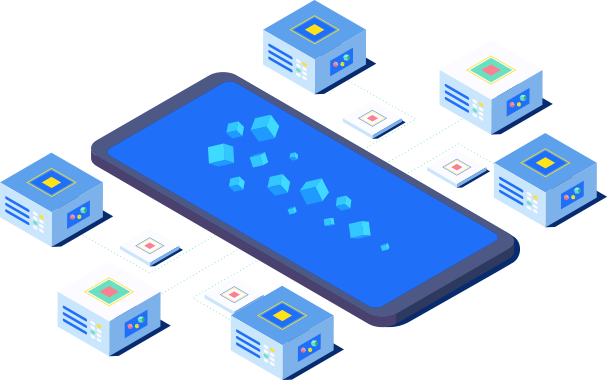
Illustration: What 'Agentic AI' Means for Website Hosting and AutomationAgent Infrastructure Requirements — What Hosting Needs AI Agents Have
Running AI agents in production imposes infrastructure requirements that do not apply to conventional web applications or even to standard AI inference serving, and understanding these requirements is essential for anyone planning to deploy agent-driven automation on their hosting infrastructure. The most fundamental requirement is persistent execution: a chatbot responds to a request and terminates; an agent must run continuously — or at least be reliably scheduled — to monitor conditions, detect events that require action, and execute multi-step workflows whose completion may span minutes or hours. This requires a hosting environment that supports long-running processes with reliable scheduling, state persistence across execution cycles, and graceful handling of interruptions — capabilities that align more closely with workflow orchestration platforms like Temporal or Apache Airflow than with the stateless request-response architecture of traditional web servers. Hosting providers that serve the agentic AI market must offer execution environments that bridge these paradigms — providing the request-response serving that websites still need while also supporting the long-running, stateful agent processes that will increasingly manage those websites.
Memory and state management represent the second critical requirement for agentic AI hosting. An agent that is managing a hosting environment over days or weeks must maintain an understanding of the system state that extends beyond the context window of a single language model inference call. It must remember that it restarted a database service two hours ago and is now monitoring for recurrence of the condition that triggered the restart. It must track that it provisioned a staging server and is waiting for the provisioning to complete before proceeding to the deployment step. It must maintain a working memory of user preferences, escalation policies, and infrastructure topology that persists across the hundreds or thousands of inference calls that constitute the agent's operational activity. This state management layer — which in modern agent architectures is typically implemented through a combination of vector databases for semantic memory and traditional databases for structured state — must be colocated with the agent execution environment to avoid the latency penalties and failure modes of remote state access. The hosting architecture that serves an agent is therefore more complex than the architecture that serves a chatbot: it layers an execution runtime, a state persistence layer, and a tool-execution environment on top of the GPU or API-based inference serving that powers the language model at the agent's core. For teams building agent-driven applications that require vector search over persistent state, our guide to vector database hosting for AI-powered websites provides the technical foundation for selecting and deploying the storage layer that agents depend on.
Tool integration infrastructure is the third pillar of agent hosting requirements, and it is the area where the gap between experimental agent frameworks and production hosting environments is widest. An agent that manages hosting infrastructure needs secure, auditable access to a potentially large surface area of APIs and system commands — the hosting provider's control plane API, the server's operating system, the database's administration interface, the CDN's configuration endpoints, the DNS provider's record management system. Each of these integrations represents a security boundary: if an agent's reasoning loop can be manipulated into issuing a destructive command — deleting a database, revoking an SSL certificate, modifying DNS records to point to a malicious server — the consequences range from service disruption to data breach. Production agent hosting must therefore implement fine-grained tool authorization, where each tool the agent can invoke is scoped to the minimum privilege required, each invocation is logged with the full context of the agent's reasoning that led to it, and potentially destructive operations require explicit confirmation or are rate-limited to prevent rapid, unrecoverable damage from a reasoning error. These security primitives — tool sandboxing, invocation auditing, confirmation gating, rate limiting — do not exist in the prototype agent frameworks that developers use for initial experimentation, and hosting providers that serve production agent workloads must build them into the platform rather than expecting each customer to implement them from scratch.
Hosting for AI Agents — What Server Architecture Agent-Driven Sites Demand
The websites and web applications of the agentic AI era will place demands on hosting infrastructure that differ qualitatively from the demands of the websites that came before. A traditional website — even a dynamic, database-driven WordPress site — follows a predictable architectural pattern: a web server receives HTTP requests, application code queries a database and assembles responses, a cache layer absorbs repeat reads, and the entire stack scales by adding more web server instances behind a load balancer. An agent-driven website — one that embeds AI agents that autonomously perform tasks on behalf of the site owner or its visitors — adds layers that break this clean architectural separation. The agent runtime must be colocated with the infrastructure it manages to minimize the latency between detection and action. The agent's state store — the vector database or graph database maintaining its persistent memory — must deliver low-latency reads and writes under concurrent access from the agent's reasoning loop, which may query it multiple times per second during active task execution. The agent's tool execution environment must be isolated from the web application's runtime to prevent a misbehaving agent from destabilizing the website it is supposed to be managing, while still having sufficient access to perform its intended functions.
This architectural complexity has practical implications for server sizing and resource allocation. A single moderately capable AI agent — one powered by a 7-billion-parameter language model, maintaining a working memory in a vector database, and executing tool calls against infrastructure APIs — might consume 8 to 16 GB of RAM for the model weights, an additional 2 to 4 GB for the KV cache and working state, and sustained GPU utilization of twenty to forty percent during active task execution periods. Deploying this agent on the same VPS instance that serves the website it manages is technically possible — many prototype agents run in exactly this configuration — but it introduces resource contention and failure correlation that violate the separation-of-concerns principle that production infrastructure depends on. The recommended architecture separates the agent execution environment onto its own instance — a dedicated VPS or container — that communicates with the managed infrastructure over a secure internal network, preserving the isolation that prevents an agent failure from cascading into a website outage. This architectural guidance is not theoretical: it reflects the patterns that Hosting Captain has observed among its customers who are deploying production AI agents on our infrastructure, and it aligns with the broader infrastructure engineering principle that management planes and data planes should be provisioned and scaled independently.
The Inference Layer — Choosing Between API-Based and Self-Hosted Models
Every AI agent is powered by a language model at its reasoning core, and the decision of where that model runs — on a third-party API or on self-hosted infrastructure — is the single most consequential hosting decision for agent deployment. API-based inference — calling OpenAI, Anthropic, or Google's model endpoints — eliminates the operational burden of managing GPU instances, handling CUDA driver compatibility, and tuning inference serving configurations. It also introduces latency, cost, and data sovereignty considerations that become increasingly significant as agents scale. An agent that makes ten API calls per task and runs a hundred tasks per day is generating a thousand API calls daily — a volume that quickly accumulates into a substantial operational expense and that introduces network dependency: if the API provider experiences an outage or rate-limits the account, the agent stops functioning, and the hosting infrastructure it manages loses its autonomous management layer. API-based inference is the pragmatic starting point for most agent deployments, particularly during the experimentation and validation phases, but for production agents managing revenue-critical infrastructure, the reliability and cost predictability of self-hosted inference frequently justify the additional operational investment.
Self-hosted inference for agent workloads has become dramatically more accessible in 2026, driven by three converging developments. First, the maturation of open-weight models — Llama 3.3, Mistral, DeepSeek-V3, and Qwen — has produced models that match or approach the agentic reasoning capabilities of proprietary APIs at parameter counts (7B to 70B) that can be served on a single consumer or prosumer GPU. Second, inference serving frameworks — vLLM with PagedAttention, NVIDIA Triton Inference Server with continuous batching — have simplified the operational complexity of running production inference to the point where a single engineer can deploy and maintain a reliable inference endpoint. Third, the availability of inference-optimized GPU instances from bare-metal providers — L40S instances at $0.80 to $1.50 per GPU-hour — has made self-hosted inference economically competitive with API-based inference for sustained workloads, particularly when the agent's inference volume is high enough to keep a GPU consistently utilized. For organizations building agent-driven hosting automation, the trajectory is clear: start with API-based inference to validate the agent's capabilities, profile the inference volume and latency requirements, and transition to self-hosted inference when the economics and reliability requirements justify the operational investment. Our analysis of hosting an AI SaaS product provides deeper guidance on the architectural decisions involved in scaling self-hosted AI infrastructure.
What Changes for Website Owners — Practical Implications of Agentic AI Hosting
For the website owner who runs a small business, a content blog, or an e-commerce store, the emergence of agentic AI hosting will manifest not as a technology they need to understand deeply but as a set of capabilities that progressively improve their hosting experience without requiring them to become AI experts. The most immediate change will be in support responsiveness: when a website owner reports that their site is slow, an AI agent — not a human reading a ticket queue — will pull the site's performance telemetry, correlate the slowdown with a recent configuration change or traffic pattern, and either apply the remediation automatically or present the owner with a specific, plain-language diagnosis and a one-click fix. This replaces the support experience that hosting customers have tolerated for decades — the ticket submitted, the twelve-hour wait, the tier-one agent asking for information the customer already provided, the escalation to tier-two, the eventual resolution three days later — with an experience where the majority of issues are detected and resolved before the customer notices them, and the minority that require intervention are addressed with specific, actionable guidance rather than troubleshooting scripts.
The second practical change will be in infrastructure management overhead. Website owners who currently spend evenings and weekends updating plugins, reviewing security alerts, checking SSL certificate expiry dates, and wondering whether their server resources are adequate for next month's planned marketing campaign will increasingly delegate these tasks to agents that perform them continuously, automatically, and with better consistency than even a diligent human can sustain. An agent does not forget to renew an SSL certificate because it got busy with other tasks. It does not defer a security patch because the release notes look tedious. It does not misconfigure a cache policy because it misread the documentation. This does not mean that website owners can completely ignore their hosting infrastructure — there will always be strategic decisions about architecture, budget, and priorities that require human judgment — but it means that the routine operational toil that has been the hidden tax on website ownership since the Web's earliest days will be progressively absorbed by autonomous systems, freeing owners to focus on the content, products, and customer relationships that are the actual purpose of their websites.
The third change — and the one that will most directly affect website economics — is in resource utilization efficiency. The traditional hosting model provisions resources for peak demand and leaves them idle during troughs, a structural inefficiency that website owners pay for in every hosting bill. An AI agent with access to infrastructure control can implement genuinely elastic resource allocation: scaling up during a traffic surge triggered by a viral social media post, scaling down during the overnight quiet period, and — crucially — doing so automatically, without requiring the website owner to configure autoscaling groups, define scaling policies, or even be awake when the surge occurs. This elasticity, combined with the performance optimization that agents perform continuously, means that the same website can be served with less total infrastructure — and at lower cost — than the static-provisioning model requires. The hosting industry's economic model, which has historically benefited from customers overprovisioning resources "just in case," will face pressure as agent-driven optimization reduces the gap between provisioned capacity and actual demand, and hosting providers whose pricing models reward efficient utilization rather than penalizing it will be best positioned to serve the agentic era.
Future Scenarios — Where Agentic AI Hosting Is Heading
The trajectory of agentic AI in website hosting points toward a set of capabilities that will be standard within five years and that currently exist only in research demonstrations and early-stage product development. The most ambitious of these is fully autonomous website operation — an agent that handles not just monitoring and incident response but the complete lifecycle of website management: domain registration and DNS configuration, hosting plan selection and provisioning, CMS installation and theme setup, content scheduling and SEO optimization, plugin and security patch management, performance tuning and capacity planning, backup scheduling and disaster recovery testing. This is the vision that the term "agentic AI website hosting" ultimately describes: a hosting experience where the website owner specifies what they want their website to achieve — "run a fast, secure photography portfolio that ranks well for Mumbai-based wedding photography searches" — and the agent translates that intent into the specific infrastructure configuration, software stack, and ongoing management that delivers it, adapting continuously as requirements change and as the underlying technology evolves. We are years away from this vision being reliable enough for production deployment, but the component capabilities are being built today, and the integration of those components into coherent autonomous systems is the engineering challenge that will define the hosting industry's next decade.
Multi-agent collaboration represents the next frontier in hosting automation complexity. Real hosting environments are not managed by a single agent handling all tasks — they are managed by specialized agents each responsible for a domain: a security agent monitoring for vulnerabilities and intrusion attempts, a performance agent optimizing resource allocation and cache policies, a deployment agent managing staging environments and production releases, a support agent handling customer inquiries and generating diagnostic reports. These agents must coordinate — the deployment agent must not promote a build while the security agent is scanning it, the performance agent must not scale down resources that the support agent's diagnostics are actively using — and this coordination requires communication protocols, shared state, and conflict resolution mechanisms that are substantially more complex than the single-agent reasoning loops that dominate current agent development. The hosting providers that invest in multi-agent orchestration infrastructure — in the middleware that enables agents to discover each other, negotiate resource access, and resolve conflicts — will be the providers whose platforms can support the agentic automation workloads that enterprises and high-growth businesses will demand.
The regulatory dimension of agentic AI hosting is only beginning to be defined, and its evolution will shape the hosting market as powerfully as any technical development. An AI agent that autonomously modifies server configurations, provisions resources, or handles customer data is taking actions that have legal and compliance implications under frameworks like GDPR, HIPAA, and PCI-DSS — frameworks that were written before autonomous AI agents existed and that do not yet have settled interpretations for agent-driven infrastructure management. Who is liable when an agent makes a configuration error that exposes customer data — the hosting provider that deployed the agent, the website owner who configured it, or the AI model provider whose reasoning produced the error? What auditing standards apply to agent actions — does every agent decision need to be logged, explainable, and attributable to a specific human authorization? Standards bodies including the W3C are beginning to develop specifications for autonomous system behavior on the Web — including agent identity, action attribution, and consent frameworks — and the hosting industry's approach to agent governance will need to evolve in lockstep with these standards. The hosting providers that build their agent platforms with regulatory compliance as a first-order design constraint — embedding audit logging, action attribution, human-in-the-loop checkpoints, and explainability at the infrastructure level — will be the ones that enterprise customers and regulated industries can actually adopt, while providers that treat compliance as an afterthought will find their agent offerings restricted to low-stakes automation that does not justify the infrastructure investment.
Frequently Asked Questions
What exactly is agentic AI in the context of web hosting?
Agentic AI in web hosting refers to autonomous AI systems that actively manage and operate hosting infrastructure — monitoring server health, detecting and responding to incidents, optimizing performance, provisioning resources, and handling routine maintenance — without requiring a human to initiate each action. Unlike a conventional AI chatbot that waits for a prompt and generates a text response, an agentic AI system is given a goal (such as "keep this website loading in under two seconds at the 95th percentile") and then continuously plans, executes, and verifies actions to achieve that goal using tools like server APIs, configuration management systems, and monitoring dashboards. In the context of agentic AI website hosting, this means the hosting platform itself becomes an active participant in website management rather than a passive infrastructure layer that waits for human administrators to configure and maintain it. The core distinction is autonomy: agentic AI acts without being told to act for each individual action, operating within defined authority boundaries to achieve ongoing objectives.
Will AI agents replace human system administrators completely?
No — at least not in any timeframe that current technology suggests is realistic. AI agents are exceptionally good at handling routine, repetitive, and pattern-matchable hosting management tasks: monitoring for known failure conditions, applying standard remediations, scaling resources against predictable demand patterns, and auditing configurations against defined policies. They are not good at handling novel failure modes that their training data and tool sets did not anticipate, at making strategic architectural decisions that involve trade-offs between cost, performance, and complexity, or at exercising the human judgment required when an automation action could have business consequences that the agent cannot fully evaluate. The most effective model for the foreseeable future is a hybrid one: agents handle the operational toil — the monitoring, alerting, and standard remediation that currently consumes a large fraction of system administrator time — while human administrators focus on architecture, strategy, complex troubleshooting, and the oversight of agent actions that carry significant risk. This hybrid model improves both efficiency (agents never sleep, never skip steps) and job quality (humans focus on work that actually requires human intelligence) rather than replacing one with the other.
What kind of hosting plan do I need to run an AI agent on my website?
The hosting requirements for running an AI agent depend on where the agent's language model runs. If you are using an API-based model — calling OpenAI, Anthropic, or a similar service — the agent itself can run on a standard VPS or even a high-tier shared hosting plan, because the computationally expensive inference is happening on the API provider's infrastructure. You will need sufficient RAM (typically 2 to 4 GB for the agent runtime and its state store) and a hosting environment that supports long-running background processes, which most VPS and dedicated server plans provide. If you are self-hosting the language model, the requirements escalate substantially: you will need a GPU instance (an NVIDIA L40S or better for models in the 7B to 13B parameter range, an A100 or H100 for larger models), 16 to 32 GB of system RAM in addition to GPU memory, and fast NVMe storage for model weights and working state. For most website owners deploying their first AI agent, the API-based approach on a VPS is the practical starting point — our guide to VPS hosting explains the configuration options and how to select the right plan tier for your initial deployment.
How secure are AI agents that have access to my hosting infrastructure?
Security is the single most important consideration in agentic AI hosting, and the answer depends entirely on how the agent deployment is architected. A properly secured agent deployment implements multiple layers of defense: fine-grained tool authorization that grants the agent access only to the specific API endpoints and system commands it genuinely needs (not blanket sudo access or unrestricted API keys); invocation auditing that logs every tool call with the full reasoning context that produced it, creating an immutable record for forensic analysis if something goes wrong; confirmation gates on destructive operations — deleting data, modifying DNS records, revoking certificates — that require either human approval or a secondary validation step before execution; and execution isolation that prevents the agent's runtime from accessing the web application's data plane or other tenants' environments. An improperly secured agent deployment — which is distressingly common in prototype and hobbyist contexts — grants the agent broad system access with minimal auditing and no confirmation gates, creating a single point of catastrophic failure. The hosting providers that serve production agent workloads must build these security primitives into their platforms; expecting each customer to implement them from scratch is neither realistic nor safe. At Hosting Captain, our approach to AI-native security — described in our AI-era hosting architecture — embeds behavioral monitoring and anomaly detection at the platform level, providing defense-in-depth for agent-driven hosting environments.
Do I need to know how to code to use agentic AI for my hosting?
In early 2026, deploying a production AI agent for hosting management still requires technical expertise — you need to understand how to configure the agent's tool access, define its authority boundaries, set up monitoring for its actions, and troubleshoot when its reasoning produces unexpected behavior. This is changing rapidly. Hosting providers, including Hosting Captain, are building agent capabilities directly into their platforms — pre-configured agents that handle specific domains like security monitoring, performance optimization, and SSL certificate management — that website owners can enable with a checkbox or a single configuration setting rather than by writing code or configuring agent frameworks. The trajectory is toward a model where the hosting platform ships with a set of standard agents that are maintained and updated by the provider, and website owners interact with them through simple controls — enable or disable, set preferences, review actions and approve or reject — rather than through code-level configuration. The gap between "agentic AI as a developer tool" and "agentic AI as a hosting feature" is closing, and within two to three years, the most valuable agentic hosting capabilities will be accessible to website owners with no more technical expertise than is required to manage a WordPress site today.
What's the difference between AI agents managing hosting and traditional autoscaling or monitoring?
Traditional autoscaling and monitoring are rules-based systems: a human defines a threshold ("if CPU exceeds 80% for five minutes, add a server instance") and the system executes that rule deterministically every time the condition is met. These systems are reliable, predictable, and limited — they can only respond to conditions that a human anticipated and encoded into rules, and they cannot handle ambiguous situations, multi-factor diagnoses, or tasks that require reasoning across multiple system domains. An AI agent managing hosting can reason about situations that were not pre-programmed: it can detect that CPU utilization is high but determine — by checking application logs, database query performance, and recent deployment history — that the cause is a slow database query introduced by a plugin update rather than a genuine traffic increase, and that the correct remediation is reverting the plugin rather than adding server instances. It can chain together multi-step responses: detecting a certificate approaching expiry, checking which domains the certificate covers, renewing the certificate through the CA API, updating the server configuration, verifying the new certificate is being served correctly, and logging the entire sequence. The difference is reasoning versus rule-matching — agents can navigate situations that the rule author did not specifically anticipate, which is what makes them valuable for the inherently unpredictable domain of production hosting operations.
Arjun Mehta is a cloud infrastructure consultant specializing in bare-metal architectures, network routing, and high-traffic database clustering.
Frequently Asked Questions
This guide covers the practical decision points — pricing, performance, and when it makes sense for your situation — based on current 2026 data.
Pricing varies by provider and plan tier; see the cost breakdown section above for current ranges and what's actually included at each price point.
Look closely at uptime guarantees, renewal pricing (not just the first-year discount), and how responsive support actually is — all covered in detail in this article.
Hosting Captain has been exceptional for my e-commerce store in Pune. The NVMe SSD speed is
noticeable, and their support team responds within minutes. Highly recommended for any
Indian business!
Ryan John, Pune
Great Value for Money
Switched from a US-based host to Hosting Captain and my website loads 3x faster for Indian
visitors. The free SSL and cPanel are great, and the pricing is unbeatable. Very satisfied
customer!
Priya Mehta, Mumbai
Reliable VPS Hosting
I've been using their VPS plan for 2 years now. 99.9% uptime is not just a claim — it's
reality. My client projects run without interruption. The KVM virtualization gives me full
control I need.
Amit Kumar, Bangalore
Excellent 24/7 Support
The support team helped me migrate my entire WordPress site at 2 AM without any downtime.
This level of service is rare in Indian hosting. Worth every rupee!
Sunita Patel, Ahmedabad
Perfect for Startups
As a startup, budget matters. Hosting Captain's Business plan covers everything we need —
multiple websites, free SSL, daily backups — at a fraction of what international hosts
charge.
Vikram Singh, Delhi
Professional Dedicated Server
Our high-traffic news portal needed a dedicated server. Hosting Captain's DS Business plan
handles 100K+ daily visitors effortlessly. Their team provisioned everything within 4 hours!
Meena Krishnaswamy, Chennai
Trusted Technologies & Partners
Start Your Website with Hosting Captain
From personal blogs to enterprise solutions, we've got you covered!