What AI Hosting Actually Means: GPUs, TPUs, Inference, and Training
Artificial intelligence hosting represents a fundamental departure from the shared CPU servers and virtual private environments that have powered websites for decades. At its core, AI hosting refers to infrastructure purpose-built to run machine learning workloads — servers equipped with specialized hardware accelerators such as NVIDIA GPUs, Google TPUs, or custom ASICs that process the massive matrix multiplications and tensor operations at the heart of modern neural networks. Unlike a traditional web server that primarily serves static HTML files and handles lightweight PHP or Node.js requests, an AI hosting environment must sustain sustained, high-throughput floating-point computations that can push hardware to thermal and power limits for hours or even days at a time. This distinction is not merely a matter of adding a graphics card to a rack — it reshapes every layer of the hosting stack, from power delivery and cooling architecture to the orchestration software that schedules jobs across clusters of accelerator nodes.
The term AI hosting itself encompasses two primary operational modes that serve very different purposes: inference hosting and training hosting. Inference hosting is designed to serve a trained model in production, responding to end-user requests with predictions, classifications, or generated content — think of a chatbot answering customer questions or an image recognition API processing uploaded photos in real time. Training hosting, by contrast, provisions far more substantial compute resources for the initial model-building phase, where terabytes of data are fed through algorithms that iteratively adjust billions of parameters over multiple epochs. Inference workloads can often run on a single GPU or even a CPU with hardware-specific optimizations like Intel AMX or ARM Neon extensions, while training workloads frequently demand clusters of eight or more high-end GPUs interconnected with ultra-fast NVLink or InfiniBand fabrics to synchronize gradient updates across nodes. Understanding this distinction is critical because the hosting requirements, pricing models, and architectural decisions differ dramatically between the two use cases — a mistake that has led more than a few startups to drastically overspend on infrastructure they did not actually need.
GPU Servers: The Backbone of Modern AI Hosting
Modern AI hosting is inextricably linked to GPU-accelerated computing, a paradigm that took hold after researchers demonstrated that the massively parallel architecture of graphics processors could slash neural network training times by orders of magnitude compared to CPU-only approaches. A GPU server in the AI hosting context is not simply a standard rack server with a consumer graphics card slotted into a PCIe lane — it is a purpose-engineered system featuring enterprise-grade accelerators, high-bandwidth memory architectures like HBM2e and HBM3, and specialized interconnects that allow multiple GPUs to function as a unified compute fabric. These servers typically ship with 512 GB to 2 TB of system RAM, NVMe storage arrays capable of saturating PCIe Gen4 or Gen5 lanes, and power supplies rated at 3 kW or higher per node — figures that dwarf the specifications of even the most robust traditional web hosting servers. The physical footprint of a single 4U GPU server can draw more power than an entire rack of conventional web hosting nodes, which has profound implications for data center design, cooling infrastructure, and the geographic distribution of AI hosting capacity.
Google's Tensor Processing Units — TPUs — offer an alternative accelerator architecture that has gained significant traction in AI hosting, particularly for teams already invested in the Google Cloud and TensorFlow ecosystems. Unlike GPUs, which are general-purpose parallel processors that happen to excel at machine learning math, TPUs are application-specific integrated circuits designed from the silicon up to execute TensorFlow graph operations with maximum efficiency. The latest TPU v5p pods can scale to thousands of interconnected chips, delivering exaflop-scale compute for the largest foundation model training runs, while Cloud TPU v5e configurations provide a more cost-effective entry point for inference and fine-tuning workloads. For teams evaluating AI hosting options, the GPU-versus-TPU decision often hinges on framework compatibility — PyTorch workloads generally favor NVIDIA GPUs, while TensorFlow and JAX teams may find TPUs deliver superior price-performance ratios for certain model architectures.
AI Inference vs. AI Training: Hosting Implications
The hosting requirements for AI inference diverge from training requirements in ways that directly impact infrastructure budgets and architectural decisions. Inference hosting prioritizes low latency and high throughput at the lowest possible cost per prediction, which has driven the adoption of smaller, quantized models that can fit entirely within the memory of a single accelerator. For many inference workloads, a server equipped with an NVIDIA L40S or even a high-memory consumer GPU like the RTX 6000 Ada can deliver entirely acceptable performance at a fraction of the cost of the data-center-class A100 or H100 hardware typically reserved for training. The inference hosting market has also seen rapid growth in serverless GPU offerings — platforms that charge per inference rather than per GPU-hour — making it possible for smaller teams to deploy AI features without committing to long-term infrastructure contracts or managing their own GPU nodes.
Training hosting demands a fundamentally different resource profile: enormous memory capacity to hold model parameters, optimizer states, and activation gradients simultaneously; high-bandwidth interconnects to synchronize millions of gradient updates per second across multiple GPUs; and persistent storage systems fast enough to keep the accelerators fed with data without becoming the bottleneck that starves expensive GPU cycles. A single training run for a large language model can occupy clusters of 64 to 512 H100 GPUs running continuously for weeks, generating seven-figure hosting bills that make careful infrastructure planning not just a technical concern but an existential financial one. The checkpointing and fault-tolerance strategies required for training hosting — where a single GPU failure can corrupt hours of computation if not properly handled — add yet another layer of complexity that distinguishes this class of hosting from both inference and traditional web serving.
How AI Workloads Differ from Traditional Web Hosting
Anyone transitioning from managing traditional web hosting infrastructure to provisioning AI hosting capacity will encounter a set of operational realities that challenge assumptions carried over from the LAMP-stack and containerized microservices world. Where a standard web hosting environment might measure resource utilization in terms of CPU percentage, memory gigabytes consumed, and requests per second, an AI hosting environment must account for GPU utilization percentages, VRAM pressure, tensor core duty cycles, and the thermal throttling thresholds that can silently degrade accelerator performance by twenty percent or more without triggering conventional monitoring alerts. The metrics that matter in AI hosting are fundamentally different: GPU memory bandwidth saturation, NVLink throughput, and PCIe bus utilization often determine real-world performance far more than the headline teraflop numbers that dominate accelerator marketing materials.
Traditional web hosting workloads are typically stateless or store state externally in databases and caches, allowing horizontal scaling through the simple addition of more web server instances behind a load balancer. AI workloads, particularly during training, are deeply stateful — the model parameters being updated across thousands of iterative steps represent hundreds of gigabytes of interdependent state that cannot be trivially partitioned across independent nodes without sophisticated distributed training frameworks like DeepSpeed, FSDP, or TensorFlow's distribution strategies. The networking requirements for AI hosting can be an order of magnitude more demanding than even the most latency-sensitive web application: gradient synchronization across a cluster of H100 GPUs requires sustained inter-node bandwidth of 400 Gbps or higher, with tail latency spikes above a few microseconds directly translating to wasted accelerator cycles that accumulate into hours of lost compute time over the course of a long training run.
Power, Cooling, and Physical Infrastructure Demands
The physical infrastructure demands of AI hosting represent perhaps the starkest departure from traditional web hosting norms and the dimension most likely to catch first-time AI infrastructure planners off guard. A fully populated H100 GPU server can consume between 5 kW and 10 kW of power — the equivalent of five to ten fully loaded traditional web hosting servers — and that power draw is sustained at near-peak levels for the entire duration of a training job rather than fluctuating with user traffic patterns. Data centers designed for AI hosting require liquid cooling solutions, whether direct-to-chip cold plates or full immersion cooling systems, because the thermal density of GPU nodes exceeds the practical limits of conventional air cooling by a wide margin. Retrofitting an existing colocation facility to support AI hosting infrastructure can cost millions of dollars in electrical upgrades, cooling system installations, and structural reinforcement to handle the weight of dense liquid-cooled racks.
Power availability has emerged as one of the primary constraints on AI hosting capacity expansion, with major cloud providers reportedly struggling to secure sufficient electrical infrastructure in key metropolitan regions to meet surging GPU demand. The lead time for new data center power contracts in markets like Northern Virginia, Dublin, and Singapore has stretched to multiple years, creating a structural supply constraint that keeps AI hosting prices elevated and drives interest in distributed hosting models that can leverage power capacity at underutilized edge locations. For businesses evaluating AI hosting options, understanding the physical infrastructure landscape is not an academic exercise — it directly affects which regions can offer competitive pricing, what service level agreements are realistically achievable, and how quickly capacity can be provisioned during demand spikes driven by new model releases or product launches.
Software Stack and Orchestration Complexity
The software stack required to operate AI hosting infrastructure is substantially more complex than the Apache, Nginx, MySQL, and PHP combination that powers the majority of traditional web hosting environments. AI hosting demands a layered ecosystem including NVIDIA GPU drivers with specific CUDA toolkit versions, container runtimes configured for GPU passthrough via the NVIDIA Container Toolkit, distributed job schedulers like Slurm or Kubernetes with GPU-aware scheduling plugins, and model-serving frameworks such as NVIDIA Triton Inference Server, vLLM, or TensorFlow Serving that optimize request batching and memory allocation for production inference workloads. Each layer of this stack introduces compatibility constraints — a CUDA driver update can silently break PyTorch performance optimizations that a data science team spent weeks tuning — and the operational maturity of AI infrastructure tooling still lags significantly behind the battle-tested DevOps practices that web hosting teams have refined over two decades.
Containerization has become the dominant deployment paradigm for AI hosting workloads, but the challenges of containerizing GPU applications extend well beyond the familiar Docker workflows used in web hosting environments. GPU containers must mount specific device nodes, map CUDA libraries at predictable paths, and often require privileged mode or specific Linux capabilities to access hardware features like NVIDIA's MIG (Multi-Instance GPU) partitioning — security constraints that conflict with the least-privilege principles enforced in mature Kubernetes clusters. The emergence of dedicated AI orchestration platforms like Run:ai, Determined AI, and Anyscale reflects the industry's recognition that existing container orchestration systems designed for stateless web services cannot adequately serve the checkpointing, gang-scheduling, and elastic scaling requirements of distributed training and inference workloads without substantial customization and operational expertise.
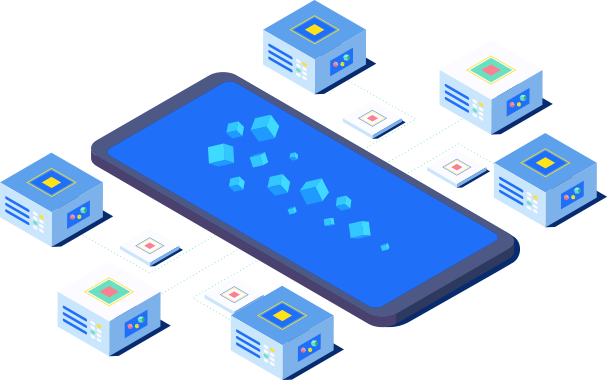
Illustration: What Is AI Hosting? Understanding the Next Generation of Web ServersNVIDIA GPU Specifications for AI Hosting: A100, H100, and L40S
NVIDIA's data center GPU portfolio defines the performance ceiling and cost floor for the vast majority of AI hosting deployments in 2026, and understanding the specifications of the three most commonly deployed accelerators — the A100, H100, and L40S — is essential for making informed infrastructure decisions. These GPUs occupy distinct positions on the price-performance curve, and selecting the right accelerator for a given workload can mean the difference between a profitable AI hosting deployment and one that hemorrhages capital on underutilized silicon. The A100, built on NVIDIA's Ampere architecture and fabricated on TSMC's 7nm process, remains a workhorse of the AI hosting industry despite being two generations old, largely because its 80 GB of HBM2e memory and mature software ecosystem make it a reliable, well-understood quantity that is widely available across every major cloud provider and bare-metal hosting vendor.
The H100 represents NVIDIA's current flagship accelerator for AI hosting, built on the Hopper architecture with TSMC's 4nm process and introducing the Transformer Engine — a dedicated hardware unit that dynamically adjusts floating-point precision between FP8 and FP16 to accelerate transformer model training and inference by up to 9x compared to the A100 for certain workloads. With 80 GB of HBM3 memory delivering 3.35 TB/s of bandwidth and 132 Streaming Multiprocessors capable of 1,979 TFLOPS of FP8 compute, the H100 is the accelerator of choice for large language model training, high-throughput inference serving for models with billions of parameters, and any workload where GPU memory capacity is the binding constraint on batch size and model quality. However, the H100's street price of $25,000 to $40,000 per unit — and its near-total dominance of AI hosting capacity waitlists — means that securing H100 instances often requires commitments measured in months and budgets measured in six or seven figures.
L40S: The Inference and Fine-Tuning Specialist
The NVIDIA L40S occupies a strategically important position in the AI hosting market that is frequently overlooked in discussions dominated by the attention-grabbing specifications of the H100 and the upcoming Blackwell series. Built on the Ada Lovelace architecture, the L40S packs 48 GB of GDDR6 memory with ECC, 1,814 GB/s of memory bandwidth, and 1,466 TFLOPS of FP8 compute into a dual-slot, passively cooled form factor that can be deployed in standard PCIe Gen4 server chassis without the exotic cooling infrastructure required by SXM-form-factor H100 modules. For inference workloads serving models up to approximately 70 billion parameters — which covers the vast majority of production LLM deployments in 2026 — the L40S delivers throughput within striking distance of the H100 at roughly one-third to one-half the per-GPU-hour cost, making it the economically rational choice for the majority of AI hosting use cases that do not involve large-scale distributed training.
The L40S also benefits from NVIDIA's decision to prioritize the Ada architecture for AI inference and media processing workloads, equipping it with dedicated hardware encoders and decoders that make it particularly well-suited for AI hosting environments that combine language model inference with video processing, image generation, or real-time computer vision pipelines. For startups and small businesses building AI-powered products — particularly those deploying fine-tuned open-source models like Llama 3, Mistral, or Qwen — an L40S-based hosting configuration often represents the optimal intersection of performance, cost, and operational simplicity. Hosting Captain has observed a clear trend among its small business clients: those who start with L40S instances and scale up to H100 capacity only when workload profiling demonstrates a clear need for the higher-memory accelerator consistently achieve better unit economics than those who default to the most powerful GPU available and end up paying for compute capacity they never fully utilize.
GPU Memory and Multi-Instance GPU (MIG) Partitioning
GPU memory capacity and bandwidth deserve far more attention in AI hosting planning than raw compute throughput, because memory constraints are more frequently the binding limitation on real-world workload performance than theoretical floating-point operations per second. A model that exceeds available GPU memory cannot be loaded at all without resorting to quantization, model parallelism, or CPU offloading — all of which introduce performance penalties and engineering complexity that undermine the value proposition of GPU acceleration. The 80 GB HBM3 found on the H100 is sufficient to run inference on a 70-billion-parameter model at FP16 precision with reasonable context lengths, but training the same model with optimizer states and activation gradients stored in memory simultaneously can easily require 400 GB or more, necessitating tensor parallelism across at least four GPUs. Understanding these memory arithmetic fundamentals prevents the costly mistake of provisioning GPU capacity that proves insufficient for the intended workload on the very first day of deployment.
NVIDIA's Multi-Instance GPU technology, available on A100 and H100 accelerators, introduces a hardware-level partitioning capability that is particularly valuable for AI hosting providers serving multiple tenants or for organizations running heterogeneous inference workloads on shared infrastructure. MIG allows a single physical GPU to be divided into up to seven fully isolated instances, each with dedicated memory, cache, and compute resources, enabling secure multi-tenancy without the performance overhead and security concerns of software-level GPU sharing approaches. For AI hosting environments that serve a mix of small inference models, batch prediction jobs, and interactive development workloads, MIG partitioning can dramatically improve GPU utilization rates — which notoriously hover in the 20-30% range in undermanaged GPU clusters — and reduce the effective cost per inference by ensuring that expensive accelerator silicon is not left idle while waiting for a single tenant's workload to complete.
Major AI Cloud Providers in 2026
The AI hosting landscape in 2026 is dominated by a tiered ecosystem of providers ranging from hyperscale cloud platforms with hundreds of thousands of GPUs under management to specialized bare-metal vendors that cater to teams seeking predictable pricing and dedicated hardware access. Amazon Web Services leads in sheer breadth of AI hosting options, offering Trainium2 custom accelerators alongside NVIDIA H100 and H200 instances through its P5 and forthcoming P6 instance families, all integrated with the SageMaker managed ML platform that handles distributed training job orchestration, model deployment, and MLOps pipeline automation. AWS's Trn2 UltraServers, which network 64 Trainium2 chips into a single logical accelerator with petabit-scale interconnect bandwidth, represent the most ambitious custom silicon play in the AI hosting market and demonstrate how far the major cloud providers are willing to go to reduce their dependency on NVIDIA's supply-constrained GPU ecosystem.
Microsoft Azure has established itself as the AI hosting provider most tightly integrated with the OpenAI ecosystem, offering dedicated GPU clusters optimized for GPT-series model fine-tuning and inference alongside more general-purpose ND H100 v5 instances that serve the broader PyTorch and TensorFlow communities. Azure's AI hosting strategy is distinguished by deep investments in InfiniBand networking at scale — their H100 clusters deploy NVIDIA Quantum-2 InfiniBand fabrics capable of 400 GB/s per GPU — and by Azure Machine Learning's automated model optimization pipelines that can quantize, prune, and compile models for specific hardware targets without manual intervention. Google Cloud's AI hosting portfolio leverages both the TPU v5 family for TensorFlow and JAX workloads and NVIDIA H100 GPU instances for the PyTorch ecosystem, with its Vertex AI platform providing a unified interface that abstracts away much of the infrastructure complexity that organizations would otherwise need to manage directly.
Bare-Metal and Specialized AI Hosting Providers
Beneath the hyperscale tier, a vibrant ecosystem of bare-metal AI hosting providers has emerged to serve organizations that need dedicated GPU access without the abstraction layers, data egress fees, and complex pricing models of the major clouds. Providers like Lambda Labs, CoreWeave, Vultr, and Crusoe Cloud have built their businesses around offering on-demand and reserved H100, A100, and L40S instances at per-GPU-hour rates that often undercut the hyperscale clouds by twenty to forty percent for equivalent hardware — a pricing advantage made possible by leaner organizational structures and, in Crusoe's case, by colocating GPU infrastructure at stranded energy sites where natural gas that would otherwise be flared powers the data center. These specialized providers have proven particularly attractive to AI research labs, independent developers, and startups that prioritize predictable billing and direct hardware access over the managed service ecosystems and enterprise compliance certifications that the hyperscale clouds offer.
The bare-metal AI hosting market has also seen the emergence of decentralized and peer-to-peer GPU marketplaces that aggregate idle accelerator capacity from crypto mining operations, gaming PC fleets, and underutilized enterprise clusters into marketplaces where AI workloads can bid for compute time. Platforms like Render Network, Akash, and Gensyn operate at varying levels of technical maturity and reliability — they are generally unsuitable for production inference serving with strict latency service level agreements — but they represent an important pressure-release valve for the AI hosting capacity crunch, particularly for batch inference jobs, model evaluation benchmarks, and academic research workloads where cost sensitivity outweighs the need for enterprise-grade availability guarantees. Hosting Captain's analysis of the AI hosting market suggests that these decentralized capacity sources will play an increasingly important role as the gap between GPU demand and traditional data center supply continues to widen through 2027 and beyond.
Evaluating AI Hosting Providers: Key Criteria
Selecting an AI hosting provider requires evaluating a set of criteria that goes well beyond the per-GPU-hour pricing that dominates comparison discussions. Network fabric quality — specifically whether the provider uses InfiniBand or RoCE (RDMA over Converged Ethernet) for inter-GPU communication — can create a two-to-four-times performance differential for distributed training workloads compared to standard Ethernet interconnects, effectively doubling or halving the real cost of training regardless of the headline GPU price. Storage architecture is similarly consequential: AI hosting environments that provide locally attached NVMe storage with sufficient throughput to keep GPUs fed with training data will dramatically outperform configurations where data must traverse a network file system with unpredictable latency characteristics, even if the GPUs themselves are identical. The completeness and maturity of the provider's machine learning operations tooling — experiment tracking, model registry, pipeline orchestration, and monitoring — determines whether data science teams spend their time building models or wrestling with infrastructure.
Geographic proximity to end users matters acutely for AI inference hosting, where the latency budget for applications like real-time voice assistants, autonomous systems, and interactive recommendation engines can be measured in single-digit milliseconds. A model served from a data center 2,000 kilometers from its users may add 30 to 60 milliseconds of network latency that, when combined with model inference time and application processing overhead, pushes total response time past the threshold where user experience degrades measurably. Forward-looking AI hosting strategies increasingly distribute inference capacity across multiple edge locations rather than concentrating it in a single availability zone, a pattern that mirrors the content delivery network architecture that transformed traditional web hosting two decades ago and that Hosting Captain expects to see formalized in AI-specific edge hosting products from every major provider by 2027.
On-Premise vs. Cloud AI Hosting: The Strategic Calculus
The decision between on-premise AI hosting and cloud-based AI hosting is rarely a simple cost-comparison exercise, despite the temptation to frame it as one by calculating the break-even utilization rate at which owning GPUs becomes cheaper than renting them. On-premise AI hosting involves capital expenditures that extend far beyond the GPU hardware itself: the server chassis, high-speed networking switches, liquid cooling infrastructure, electrical upgrades, and the physical space required to house and power GPU clusters that can draw hundreds of kilowatts. For a modest four-node H100 cluster — eight GPUs per node, 32 GPUs total — the all-in capital expenditure typically ranges from $1.5 million to $2.5 million, and that figure does not include the ongoing operational costs of power, cooling, hardware maintenance, and the specialized personnel required to operate AI infrastructure at production scale. Organizations that cannot achieve sustained GPU utilization rates above seventy percent across a meaningful cluster size will almost always find cloud AI hosting to be the economically superior option, regardless of how compelling the per-hour savings of ownership appear on a spreadsheet.
Cloud AI hosting shifts these costs from capital expenditure to operating expenditure and eliminates the utilization risk — if a training run finishes early or an inference workload experiences a seasonal demand trough, the cloud customer simply stops paying for unused GPU hours. This flexibility is particularly valuable for the growing number of organizations that operate AI workloads with spiky demand patterns: an e-commerce company might need massive inference capacity during Black Friday week and virtually none during February, while a research lab might alternate between periods of intensive cluster use during experimentation phases and near-zero utilization during analysis and paper-writing phases. The cloud model also transfers hardware lifecycle risk to the provider — when NVIDIA releases a new accelerator generation that delivers twice the performance at the same price, cloud customers can migrate workloads to the newer instances without stranding millions of dollars in suddenly-depreciated on-premise hardware. However, organizations with steady, predictable AI workloads operating at large scale — think hundreds of GPUs running continuously — report that the cumulative cloud premium can reach two to three times the equivalent on-premise total cost of ownership over a three-year hardware lifecycle, making the on-premise investment increasingly attractive as scale and utilization predictability increase.
Hybrid AI Hosting Architectures
A growing number of organizations are adopting hybrid AI hosting architectures that combine on-premise capacity for baseline, predictable workloads with cloud bursting for demand spikes and experimental projects — a pattern that mirrors the hybrid cloud strategies that have become standard practice in traditional enterprise IT over the past decade. In this model, an on-premise cluster sized to handle perhaps seventy percent of peak demand runs continuously, while cloud GPU instances are provisioned programmatically when the on-premise cluster approaches capacity saturation or when a team needs access to accelerator types — such as the latest H200 or B200 GPUs — that are not economically justifiable as permanent on-premise assets. Kubernetes-based orchestration layers with GPU-aware scheduling plugins like the NVIDIA GPU Operator and Kueue make this hybrid architecture operationally feasible by providing unified workload submission interfaces that abstract away the underlying infrastructure boundaries between on-premise and cloud capacity pools.
The hybrid approach demands a level of networking and identity management sophistication that can be challenging to achieve without dedicated platform engineering resources, particularly when dealing with the data gravity problem: training datasets are often measured in terabytes or petabytes, and moving that data between on-premise storage systems and cloud GPU instances can consume so much time and bandwidth that the economic advantages of cloud bursting are entirely negated. Successful hybrid AI hosting implementations typically colocate the training data with the primary compute capacity and use the cloud-burst tier either for inference workloads where latency and data locality constraints are less severe or for training jobs where the dataset can be pre-staged in cloud object storage during off-peak periods. Hosting Captain advises its enterprise clients to approach hybrid AI hosting as a multi-year architectural journey rather than a point-in-time procurement decision, with each phase of the transition validated against real workload telemetry rather than theoretical capacity planning models.
Data Gravity and Sovereignty in AI Hosting
Data gravity — the principle that data attracts applications and services to it — exerts a particularly powerful influence on AI hosting architecture decisions because training datasets for production-quality models are frequently too large to move efficiently across network boundaries. A customer support team training a fine-tuned model on years of ticket history accumulated in their existing data center environment will find that moving that multi-terabyte corpus to a cloud AI hosting provider introduces a data migration project, ongoing synchronization complexity, and potentially significant egress costs if the trained model artifacts need to be deployed back to on-premise inference endpoints. The hosting location often determines the data location, not the other way around, which is why AI hosting decisions must be made in tight coordination with data engineering and data governance stakeholders rather than treated as an independent infrastructure procurement exercise.
Sovereignty and regulatory compliance requirements add another dimension to the on-premise-versus-cloud AI hosting calculus that is particularly acute for organizations operating in the European Union under GDPR, in healthcare under HIPAA, or in financial services under an array of national and international regulatory frameworks. Cloud AI hosting providers have invested heavily in compliance certifications and data residency guarantees — AWS, Azure, and Google Cloud each offer GPU instances in dozens of geographic regions with region-specific compliance attestations — but the shared responsibility model means that the infrastructure customer, not the provider, bears ultimate responsibility for configuring AI hosting environments to meet regulatory requirements. For certain highly regulated workloads, particularly those involving personally identifiable information used for model training or fine-tuning, the compliance overhead of cloud AI hosting can become so burdensome that on-premise or private-cloud deployments become the pragmatically simpler path despite their higher nominal infrastructure costs.
Cost Per GPU Hour Benchmarks and AI Hosting Economics
Understanding the actual cost structure of AI hosting in 2026 requires looking past the headline on-demand pricing and examining the various pricing models, commitment discounts, and hidden costs that determine the true total cost of GPU compute. On-demand H100 instances across major cloud providers and bare-metal vendors currently range from approximately $2.50 to $4.50 per GPU-hour, with the lower end of that range typically available from bare-metal specialists and the higher end from hyperscale clouds that bundle managed services and premium support into their pricing. A100 instances have settled into a $1.00 to $2.00 per GPU-hour range, reflecting both the hardware's age and the migration of the most demanding workloads to H100 infrastructure, while L40S instances cluster between $0.80 and $1.50 per GPU-hour. These prices represent roughly a thirty to fifty percent premium over equivalent hardware costs in late 2024, driven by sustained demand growth that has consistently outpaced NVIDIA's manufacturing capacity expansion despite the company's aggressive investment in TSMC advanced packaging capacity.
Reserved and committed-use pricing models can reduce AI hosting costs by forty to sixty percent compared to on-demand rates, but they require the kind of workload predictability that many AI teams simply do not possess during the exploration and prototyping phases of model development. A one-year H100 reservation through AWS or Google Cloud typically prices at $1.50 to $2.00 per GPU-hour, while three-year commitments can push pricing below $1.20 per GPU-hour — rates that approach the fully loaded cost of on-premise ownership for organizations that can achieve high utilization on committed capacity. The spot and preemptible GPU markets offer even steeper discounts, often reaching seventy to eighty percent below on-demand pricing, but with the critical limitation that instances can be reclaimed by the provider with as little as thirty seconds' notice — a constraint that makes spot instances suitable primarily for fault-tolerant training workloads with robust checkpointing and for batch inference jobs that can tolerate interruption and resumption without impacting end users.
AI Hosting for Startups and Small Businesses
Startups and small businesses face a uniquely challenging AI hosting landscape in 2026, caught between the genuine technical requirements of AI-powered product features and the severe budget constraints that make seven-figure GPU commitments non-viable. The most common mistake Hosting Captain observes among early-stage AI companies is overprovisioning — ordering H100 clusters sized for hypothetical scale before validating that the AI feature actually drives user engagement and revenue — followed closely by the opposite error of underprovisioning inference capacity to the point where model latency degrades the user experience and undermines the very value proposition the AI feature was supposed to deliver. A disciplined approach starts with the smallest GPU instance capable of serving the model at acceptable latency, instruments everything exhaustively to establish real utilization patterns, and scales vertically to more powerful accelerators or horizontally to multiple instances only when the data unambiguously supports the investment.
Several AI hosting providers have introduced startup-specific programs that offer free or heavily discounted GPU credits — AWS Activate, Google for Startups Cloud Program, and Microsoft for Startups Founders Hub collectively distribute hundreds of millions of dollars in AI hosting credits annually — and these programs can entirely eliminate infrastructure costs during the critical early months when product-market fit is still being established. Beyond credits, startups should evaluate AI hosting providers based on the quality of their model deployment tooling: platforms that simplify the path from a trained model checkpoint to a production inference endpoint with automatic scaling, canary deployments, and A/B testing capabilities reduce the engineering headcount required to operate AI infrastructure, which for a cash-constrained startup can be more valuable than a twenty percent difference in per-GPU-hour pricing. For a more general introduction to hosting infrastructure tiers and when dedicated resources become necessary, our complete guide to VPS hosting provides foundational context that applies equally to traditional and AI workloads.
Hidden Costs: Storage, Networking, and Data Transfer
The GPU-hour pricing that dominates AI hosting discussions frequently obscures the ancillary costs that can inflate total infrastructure spending by fifty percent or more if not actively managed. High-performance storage — the NVMe SSD volumes and parallel file systems like Lustre, WEKA, or Amazon FSx for Lustre that feed training data to GPU clusters at sufficient throughput — can cost $0.10 to $0.50 per GB per month for the performance tiers required to avoid I/O bottlenecks during distributed training. A training dataset stored in a high-performance parallel file system can easily generate storage costs that rival the GPU compute costs for the training job itself, particularly for workloads with high data diversity requirements that preclude aggressive caching strategies. Data transfer costs represent an even more insidious budget drain: the egress fees that cloud providers charge for moving data out of their networks — typically $0.05 to $0.12 per GB — can accumulate into five-figure monthly charges for AI hosting environments that routinely move model checkpoints, training datasets, and inference logs between cloud regions or between cloud and on-premise environments.
Inter-GPU networking costs are baked into the instance pricing for most cloud AI hosting offerings but become a direct expense for bare-metal deployments where InfiniBand switches, cables, and transceivers must be procured and configured independently. An NVIDIA Quantum-2 InfiniBand switch capable of connecting 64 H100 GPUs at 400 GB/s per port costs approximately $60,000 to $100,000 — a significant line item in any bare-metal cluster budget — and the specialized cables required for the OSFP connectors used by H100 systems add thousands more per node. Organizations that attempt to economize on networking by using standard Ethernet for GPU-to-GPU communication typically discover that the resulting performance degradation during distributed training more than offsets the hardware savings, because the expensive GPUs spend a larger fraction of their time idle waiting for gradient synchronization to complete over the slower fabric. Accurate AI hosting cost modeling must account for the entire system — compute, memory, storage, networking, and the platform engineering labor required to integrate them — rather than treating the GPU as an isolated commodity whose price can be compared in isolation.
Privacy, Security, and Model Deployment Workflows in AI Hosting
Privacy considerations in AI hosting extend far beyond the familiar territory of encrypting data at rest and in transit, because the unique properties of machine learning models create attack surfaces and data leakage vectors that have no analogue in traditional web hosting environments. Models trained on proprietary or personally identifiable data can inadvertently memorize and later reproduce fragments of their training data through techniques like membership inference attacks and training data extraction — vulnerabilities that are well-documented in the academic literature and that carry serious regulatory implications under frameworks like GDPR's right to be forgotten, which becomes difficult to implement when a user's data has been implicitly encoded into billions of model parameters through stochastic gradient descent. AI hosting environments that serve fine-tuned models trained on customer data must implement layered defenses including differential privacy during training, output filtering and rate limiting at the inference endpoint, and regular adversarial testing to verify that deployed models do not leak sensitive information through carefully crafted prompts.
Model security in AI hosting also encompasses the increasingly critical domain of supply chain integrity for the model weights, training datasets, and inference code that constitute the software stack of an AI-powered application. The growing prevalence of model weight files downloaded from community hubs like Hugging Face — often containing serialized Python objects that can execute arbitrary code when deserialized using pickle-based formats — introduces a vector for supply chain compromise that AI hosting environments must address through sandboxed model loading, cryptographic signature verification of weight files, and network policies that restrict outbound connectivity from inference containers to only explicitly authorized endpoints. Hosting Captain recommends that all production AI hosting deployments implement a model registry with mandatory vulnerability scanning and provenance tracking, treating model artifacts with the same security rigor that traditional web hosting environments apply to container images and third-party library dependencies. Standards bodies like the W3C web standards organization are actively developing specifications for model provenance and content authenticity that will shape AI hosting security practices in the years ahead.
AI Model Deployment Workflows: From Notebook to Production
The journey from an experimental model trained in a Jupyter notebook to a production AI hosting endpoint serving real users at scale is a path littered with the wreckage of promising AI projects that underestimated the engineering complexity of production deployment. A mature AI deployment workflow begins not with model training but with inference infrastructure design: specifying the latency budget, throughput requirements, and availability targets that the production system must satisfy, then working backward to select model architectures, quantization strategies, and serving frameworks that can meet those constraints within the available GPU budget. This infrastructure-first approach represents an inversion of the common pattern in which data scientists train the most accurate possible model in an unconstrained research environment and then hand it to platform engineers with the implicit expectation that production deployment is a trivial post-processing step rather than a first-class engineering concern that should shape model development decisions from the outset.
Continuous integration and continuous deployment for AI hosting workloads — often termed CI/CD/CT, with CT standing for continuous training — extends traditional DevOps practices with model-specific concerns including automated evaluation against held-out test sets, performance regression detection on standardized benchmark prompts, and canary deployments that route a small percentage of production traffic to new model versions while monitoring for degradations in business metrics that may not be captured by offline evaluation methodologies. NVIDIA Triton Inference Server has emerged as one of the most widely adopted model serving frameworks for AI hosting environments, supporting concurrent execution of models from different frameworks (PyTorch, TensorFlow, ONNX, TensorRT), dynamic batching that combines multiple inference requests into a single GPU kernel invocation for maximum throughput, and model ensembles that chain multiple models together into inference pipelines — a feature that is particularly valuable for retrieval-augmented generation architectures that combine embedding models, vector search, and language model inference in a single serving deployment.
Monitoring, Observability, and Cost Governance
Production AI hosting environments demand observability strategies that go well beyond the CPU utilization, memory consumption, and request latency metrics that form the backbone of traditional web hosting monitoring. GPU-specific telemetry — including streaming multiprocessor utilization, tensor core duty cycle, GPU memory bandwidth saturation, NVLink throughput, and PCIe replay counts — provides the signal needed to identify underperforming model serving configurations and to attribute cost accurately across the multiple teams, projects, and models that typically share a common AI hosting infrastructure. Without this granular visibility, organizations inevitably discover that a small number of inefficiently configured inference jobs are consuming a disproportionate share of expensive GPU resources while the majority of workloads struggle to access the capacity they need — a tragedy-of-the-commons dynamic that GPU monitoring platforms like NVIDIA DCGM, Weights & Biases, and Datadog's GPU monitoring module are specifically designed to prevent.
Cost governance in AI hosting environments is an organizational challenge as much as a technical one, because the individuals making GPU provisioning decisions — data scientists and ML engineers optimizing for model accuracy and experimentation velocity — are often insulated from the financial consequences of those decisions by organizational structures that assign infrastructure costs to a centralized IT or platform engineering budget rather than to the teams that consume the resources. Implementing chargeback or showback mechanisms that make GPU consumption visible to the teams responsible for it, combined with automated policies that shut down idle GPU instances, enforce maximum instance sizes for non-production environments, and require justification for H100 allocations when L40S instances would suffice, can reduce AI hosting costs by thirty to fifty percent relative to ungoverned environments without meaningfully constraining the productivity of the teams that depend on GPU compute. Hosting Captain's consulting practice has repeatedly found that AI hosting cost optimization is the highest-return infrastructure investment available to organizations that have not yet implemented basic GPU governance, delivering savings that dwarf those achievable through provider discount negotiation or hardware refresh cycling.
Future Trends in AI Infrastructure and Hosting
The trajectory of AI hosting infrastructure through the remainder of the 2020s is being shaped by a convergence of hardware innovation, software maturation, and market forces that will transform how organizations provision, consume, and pay for AI compute. NVIDIA's Blackwell architecture — the B100 and B200 GPUs that succeed Hopper — introduces a second-generation Transformer Engine with FP4 precision support, up to 192 GB of HBM3e memory, and the NVLink 5 interconnect delivering 1.8 TB/s of GPU-to-GPU bandwidth per GPU, effectively doubling or tripling the performance envelope of a single AI hosting node compared to the H100 generation. Perhaps more consequentially for the AI hosting market structure, NVIDIA's Grace Hopper superchip — combining a Grace CPU based on ARM Neoverse cores with an H200 GPU on the same module — points toward a future where the traditional architectural separation between CPU host systems and GPU accelerators dissolves, simplifying the hardware stack that AI hosting providers must procure and maintain while reducing the energy consumption and latency penalties imposed by PCIe-based CPU-to-GPU communication.
AMD's Instinct MI300X accelerator represents the first credible competitive threat to NVIDIA's AI hosting dominance in nearly a decade, packing 192 GB of HBM3 memory into a single package with 5.3 TB/s of memory bandwidth and delivering FP8 performance within striking distance of the H100 for large language model inference workloads. The MI300X has gained particular traction in the inference hosting market, where its memory capacity advantage over the 80 GB H100 allows larger models to be served without tensor parallelism across multiple GPUs — a simplification that reduces both infrastructure cost and operational complexity for mid-scale deployments. The emergence of a genuinely competitive accelerator market, combined with the growing maturity of the ROCm software ecosystem that AMD has invested heavily in developing as an alternative to CUDA, promises to exert downward pressure on AI hosting prices that have been structurally elevated by NVIDIA's near-monopoly position throughout the first half of the 2020s.
Edge AI Hosting and Distributed Inference
The gravitational center of AI hosting is slowly but perceptibly shifting from centralized cloud data centers toward edge locations that can deliver the sub-10-millisecond latency required by the next generation of interactive AI applications. Edge AI hosting places inference capacity in locations physically proximate to end users — cellular base stations, regional colocation facilities, and even on-device — using smaller, lower-power accelerators like the NVIDIA Jetson Orin, Qualcomm AI Engine, and Apple Neural Engine that are optimized for the power and thermal constraints of edge deployment environments. This architectural shift is being driven as much by economics as by latency requirements: serving inference at the edge eliminates the data transfer costs and backbone network congestion associated with backhauling every user request to a centralized cloud data center, and it enables AI features to function with degraded but acceptable performance during network outages or connectivity gaps that would render a purely cloud-dependent architecture completely inoperable.
Federated and split-inference architectures represent an intermediate point on the spectrum between pure cloud AI hosting and pure on-device inference, where a small model running on the user's device handles the initial stages of inference processing before handing off to a larger model in a nearby edge data center or cloud region for the computationally intensive final stages. This tiered approach allows AI hosting providers to optimize the allocation of expensive GPU capacity across their entire inference fleet, reserving high-end accelerators for the subset of requests that genuinely require their capabilities while handling the majority of simpler queries on more cost-effective hardware closer to the user. Hosting Captain expects tiered inference architectures to become the dominant deployment pattern for large-scale consumer AI applications by 2028, with AI hosting providers differentiating themselves based on the sophistication of their request routing, model selection, and elastic scaling capabilities rather than on raw GPU count alone — a transition that mirrors the evolution of traditional web hosting from raw server provisioning toward platform-as-a-service abstractions that optimize application performance rather than infrastructure utilization.
Sustainable AI Hosting and Energy Efficiency
The environmental footprint of AI hosting has emerged from niche academic discussion to mainstream business concern with remarkable speed, driven by the staggering energy consumption of large-scale training runs and the growing scrutiny of corporate sustainability commitments by investors, regulators, and customers. Training a frontier large language model in 2026 can consume tens of thousands of megawatt-hours of electricity — comparable to the annual energy consumption of thousands of households — and the inference serving infrastructure required to support hundreds of millions of users making daily queries to AI-powered applications adds a continuous, multi-megawatt baseload on top of the episodic training demand. AI hosting providers are responding with a mix of technological and operational strategies: deploying GPU clusters in regions with abundant carbon-free electricity, implementing power-capping and dynamic frequency scaling that reduces energy consumption during non-peak inference periods, and investing in direct-chip liquid cooling and heat reuse systems that capture the thermal output of GPU clusters for district heating networks rather than dissipating it into the atmosphere through energy-intensive compressor-based cooling systems.
The metrics used to evaluate AI hosting sustainability are themselves evolving, moving beyond simplistic power usage effectiveness (PUE) ratios toward more comprehensive frameworks that account for the carbon intensity of the grid energy consumed, the embodied carbon in the manufacturing of GPU hardware, and the water consumption of the evaporative cooling systems that many large data centers rely on. Organizations that operate their own AI hosting infrastructure or that have significant influence over cloud provider selection are increasingly including sustainability criteria in their procurement evaluations, creating market incentives for AI hosting providers to invest in efficiency technologies and transparent carbon reporting. This trend intersects with the broader industry push toward smaller, more efficient models — techniques like distillation, quantization, and sparse expert architectures that can match the performance of much larger models while consuming a fraction of the compute resources — suggesting that the future of AI hosting will be shaped as much by algorithmic efficiency improvements as by continued hardware scaling.
Frequently Asked Questions
What is the most important thing to know about AI hosting?
This guide covers the practical decision points — pricing, performance, and when it makes sense for your situation — based on current 2026 data. Understanding the distinction between inference hosting and training hosting is essential because the infrastructure requirements, pricing models, and architectural decisions differ dramatically between the two use cases. Organizations that fail to distinguish between these operational modes frequently overprovision expensive GPU capacity for inference workloads that could run efficiently on more cost-effective accelerators, or underprovision networking and storage for training workloads in ways that cause expensive GPU cycles to be wasted waiting for data or gradient synchronization. The most successful AI hosting adopters approach infrastructure decisions as an iterative process informed by real workload telemetry rather than as a one-time procurement exercise based on theoretical capacity planning.
How much does this typically cost in 2026?
Pricing varies by provider and plan tier; see the cost breakdown section above for current ranges and what's actually included at each price point. On-demand H100 instances currently range from approximately $2.50 to $4.50 per GPU-hour depending on the provider, while A100 instances have settled into a $1.00 to $2.00 per GPU-hour range, and L40S instances cluster between $0.80 and $1.50 per GPU-hour. Reserved and committed-use pricing can reduce these rates by forty to sixty percent for organizations with predictable workloads, and startup credit programs from major cloud providers can offset much of the initial infrastructure cost during the critical early stages of product development. Beyond the headline GPU-hour pricing, organizations must account for storage costs, data transfer fees, and the platform engineering labor required to operate AI infrastructure — ancillary expenses that can inflate total spending by fifty percent or more if not actively managed and governed.
What should beginners check before making a decision?
Look closely at uptime guarantees, renewal pricing (not just the first-year discount), and how responsive support actually is — all covered in detail in this article. Begin by profiling your actual workload requirements rather than selecting hardware based on marketing specifications: identify whether you are primarily serving inference or running training jobs, determine the GPU memory capacity required to hold your model at the desired precision and batch size, and measure the latency and throughput targets that your application must satisfy for acceptable user experience. Evaluate the network fabric quality of potential AI hosting providers — InfiniBand versus standard Ethernet interconnects can create a two-to-four-times performance differential for distributed training workloads — and verify that the storage architecture can deliver sufficient throughput to keep GPUs fed with data without becoming the bottleneck. Finally, implement GPU cost governance from day one, with automated instance shutdown policies and chargeback mechanisms that prevent the gradual accumulation of idle GPU expenses that can silently consume budgets without delivering corresponding value.
Arjun Mehta is a cloud infrastructure consultant specializing in bare-metal architectures, network routing, and high-traffic database clustering.
Frequently Asked Questions
This guide covers the practical decision points — pricing, performance, and when it makes sense for your situation — based on current 2026 data.
Pricing varies by provider and plan tier; see the cost breakdown section above for current ranges and what's actually included at each price point.
Look closely at uptime guarantees, renewal pricing (not just the first-year discount), and how responsive support actually is — all covered in detail in this article.
Hosting Captain has been exceptional for my e-commerce store in Pune. The NVMe SSD speed is
noticeable, and their support team responds within minutes. Highly recommended for any
Indian business!
Ryan John, Pune
Great Value for Money
Switched from a US-based host to Hosting Captain and my website loads 3x faster for Indian
visitors. The free SSL and cPanel are great, and the pricing is unbeatable. Very satisfied
customer!
Priya Mehta, Mumbai
Reliable VPS Hosting
I've been using their VPS plan for 2 years now. 99.9% uptime is not just a claim — it's
reality. My client projects run without interruption. The KVM virtualization gives me full
control I need.
Amit Kumar, Bangalore
Excellent 24/7 Support
The support team helped me migrate my entire WordPress site at 2 AM without any downtime.
This level of service is rare in Indian hosting. Worth every rupee!
Sunita Patel, Ahmedabad
Perfect for Startups
As a startup, budget matters. Hosting Captain's Business plan covers everything we need —
multiple websites, free SSL, daily backups — at a fraction of what international hosts
charge.
Vikram Singh, Delhi
Professional Dedicated Server
Our high-traffic news portal needed a dedicated server. Hosting Captain's DS Business plan
handles 100K+ daily visitors effortlessly. Their team provisioned everything within 4 hours!
Meena Krishnaswamy, Chennai
Trusted Technologies & Partners
Start Your Website with Hosting Captain
From personal blogs to enterprise solutions, we've got you covered!