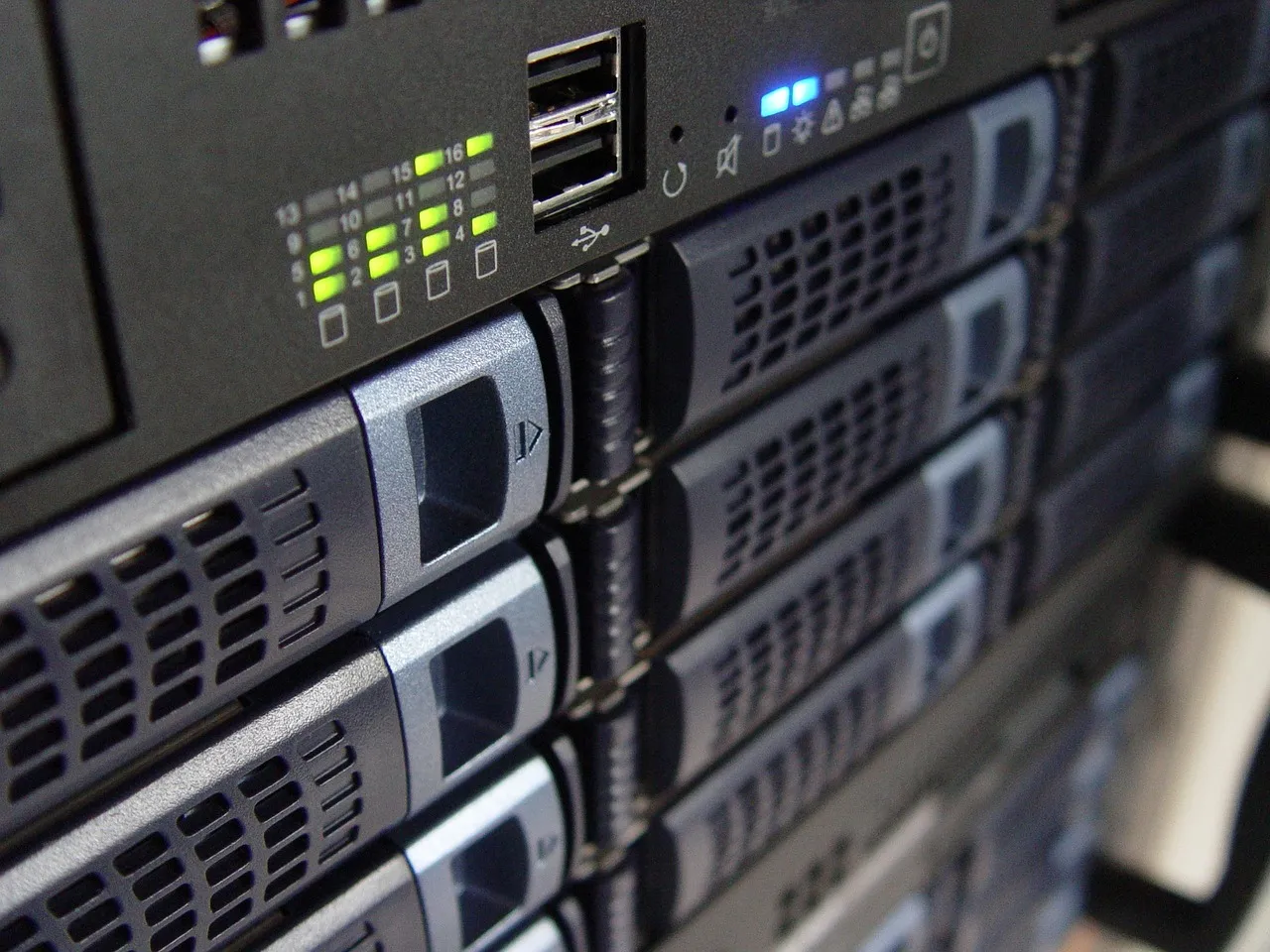
Inference vs. Training — Understanding the Fundamental Divide
The artificial intelligence infrastructure market is undergoing a structural reorientation, and the axis around which everything is pivoting is inference. For the first several years of the modern AI era — roughly 2017 through 2023 — the conversation about AI infrastructure was dominated by training: how many GPUs you needed, how much memory bandwidth you could harness, and how many weeks your cluster could sustain a single distributed training run without a node failure corrupting the entire checkpoint. Training was the prestige workload, the one that generated attention-grabbing headlines about billion-dollar supercomputers and the one that consumed the vast majority of NVIDIA's data center GPU output. Inference, by contrast, was treated as a secondary concern — something you figured out after the model was built, deployed on whatever leftover compute capacity happened to be available, and optimized only when latency complaints from users became impossible to ignore. That era is over. In 2026, inference has become the dominant AI workload by every meaningful measure — total compute cycles consumed, total infrastructure spending allocated, and total strategic importance to the businesses deploying AI in production — and the hosting industry is scrambling to build infrastructure that was purpose-designed for inference workloads rather than retrofitted from training-centric architectures.
The distinction between inference and training is not merely a matter of scale — it is a difference in kind that reshapes every layer of the hosting stack. Training is a batch process: you assemble a dataset, configure a cluster, launch a job that runs continuously for days or weeks, and produce a set of model weights as the output. The performance metric that matters during training is throughput — how many tokens or samples the cluster can process per second, aggregated across all GPUs — because the goal is to minimize the wall-clock time required to complete a predefined amount of computational work. Latency during training is largely irrelevant; no end user is waiting for the result of a single gradient update. Training workloads demand enormous memory capacity to hold model parameters, optimizer states (which can consume twelve bytes of memory for every byte of model parameters when using AdamW), and activation gradients simultaneously. They require high-bandwidth interconnects — InfiniBand or RoCE fabrics operating at 400 Gbps or higher — to synchronize gradient updates across dozens or hundreds of GPUs with sub-microsecond tail latency, because a single slow GPU in a synchronous distributed training job acts as a rate limiter for the entire cluster. And they require fault-tolerance mechanisms — checkpointing, elastic restart, redundant storage — because a GPU failure at hour 600 of a 700-hour training run that lacks a recent checkpoint can literally destroy weeks of computation and hundreds of thousands of dollars in compute cost. These are the requirements that shaped the first generation of AI hosting infrastructure, and they are still the requirements that dominate discussions of large-scale AI infrastructure in the trade press and at industry conferences.
Inference is a fundamentally different workload with fundamentally different requirements, and inference optimized hosting is the infrastructure category that has emerged to address them. Inference is an online process: an end user sends a request — a chat message, an image upload, a voice query — and expects a response within a latency budget measured in milliseconds for real-time applications or seconds for batch processing use cases. The performance metric that matters is not aggregate throughput alone but throughput at a given latency percentile — serving 1,000 tokens per second is meaningless if the ninety-ninth percentile latency exceeds two seconds, because real users experience the tail latency, not the average. Inference workloads are bursty and unpredictable in ways that training workloads are not: a chatbot might serve ten requests per minute at 3:00 AM and ten thousand requests per minute at 10:00 AM, and the inference hosting infrastructure must scale to meet the peak without incurring the cost of idle GPUs during the trough. Inference workloads can often be served by a single GPU or even a fraction of a GPU — a quantized 7-billion-parameter model can fit comfortably within the memory of a single L40S — which means that the unit of infrastructure provisioning shifts from the cluster to the accelerator, and the economics shift from long-term reserved capacity to elastic, on-demand allocation. Understanding these differences is not an academic exercise: every architectural decision in an inference hosting deployment — GPU selection, batching strategy, quantization precision, caching architecture — follows from the recognition that inference is not training-lite but a distinct operational domain with its own engineering discipline, its own optimization techniques, and its own hosting economics. For readers seeking the foundational context on AI infrastructure before diving into inference-specific optimizations, our guide to AI hosting fundamentals provides the complete architectural picture.
What Inference Workloads Actually Look Like in Production
Production inference workloads in 2026 span a far broader range of use cases than the chatbot and image-generation demos that dominate public perception of AI. E-commerce platforms serve product recommendation models that must process tens of thousands of user sessions per second, each requiring sub-50-millisecond inference to avoid perceptible page-load delay. Financial services firms deploy fraud detection models that evaluate transaction risk in real time against latency budgets measured in single-digit milliseconds, because a transaction that takes 200 milliseconds to authorize is a transaction the customer abandons. Healthcare applications serve diagnostic imaging models that must process multi-gigabyte radiology scans through ensemble architectures combining multiple specialized models, each contributing to a diagnostic pipeline where accuracy requirements leave no room for the precision compromises that quantization sometimes introduces. Content platforms serve embedding models that convert user behavior, document text, and media metadata into vector representations stored in vector databases — a workload that is less latency-sensitive than real-time chat but enormously throughput-intensive, with some platforms processing billions of embedding inferences per day. Autonomous systems — from delivery robots to industrial inspection drones — run inference on edge devices where power constraints and thermal limits preclude the high-wattage GPUs used in data center deployments, driving demand for specialized low-power inference accelerators.
This diversity of inference workloads means that there is no single "right" inference hosting configuration. A real-time chatbot serving a 70-billion-parameter model requires high memory bandwidth and a batching architecture that can coalesce concurrent requests into efficient tensor operations. An embedding pipeline generating vector representations for a billion-document corpus requires raw throughput and benefits from quantization techniques that might be unacceptable for a medical diagnosis model. An edge inference deployment on a retail store's point-of-sale system requires a hardware accelerator that fits within a 15-watt power envelope — an entirely different constraint space than the rack-mounted GPU servers that dominate data center inference hosting. The rise of inference optimized hosting reflects the industry's belated recognition that these diverse requirements demand diverse infrastructure — not a one-size-fits-all GPU instance that was designed for training and repurposed for inference, but a spectrum of hosting configurations purpose-built for specific inference workload profiles. This is the insight that is reshaping the AI hosting market, and it is the reason that inference-optimized hosting has emerged as the fastest-growing segment of the cloud infrastructure industry in 2026.
Why Inference Is Becoming the Dominant AI Workload
The shift from training-dominated to inference-dominated AI infrastructure spending is not speculative — it is visible in the financial disclosures of every major cloud provider, the capacity allocation decisions of GPU cloud operators, and the product roadmaps of the hardware companies that supply the silicon. Multiple converging trends are driving inference to eclipse training as the primary consumer of AI compute, and understanding these trends is essential for anyone making hosting decisions that will determine their infrastructure costs and capabilities over the next three to five years.
The first and most straightforward driver is the mathematics of deployment: every trained model is trained once but inferred against millions or billions of times over its operational lifetime. A language model that required 10,000 GPU-hours to train might serve a billion inference requests over a two-year deployment period, each consuming a small fraction of the compute that a single training step required, but collectively consuming orders of magnitude more total compute than the training run that produced it. As AI models transition from research artifacts to production infrastructure — as they move from papers and benchmarks into the applications that billions of people use every day — the ratio of inference compute to training compute grows relentlessly. OpenAI, Anthropic, Google, and Meta are all serving models whose cumulative inference compute consumption has long since surpassed the compute invested in their training, and this pattern holds at every scale: the fine-tuned Llama model serving customer support queries for a mid-market e-commerce company will consume far more total compute during its operational lifetime than was invested in the fine-tuning run that produced it.
The second driver is the proliferation of models. The AI ecosystem in 2026 is not characterized by a handful of giant foundation models trained by hyperscale laboratories and accessed exclusively through proprietary APIs. It is characterized by thousands of fine-tuned, distilled, and domain-adapted models — many built on open-weight architectures like Llama, Mistral, DeepSeek, and Qwen — deployed across a vast and growing surface area of applications. Every SaaS product embeds AI features that require inference hosting. Every enterprise deploys internal models for document processing, code generation, data analysis, and customer service automation. Every mobile application integrates on-device or cloud-inference for features ranging from photo enhancement to voice transcription to predictive text. This model proliferation creates inference demand that is structurally decoupled from training investment: a team can download a pre-trained Llama 3.3 70B checkpoint, fine-tune it on their proprietary data using a few hundred dollars of GPU time, and then deploy it to serve millions of inference requests per day — generating enormous inference hosting demand from a training investment that was essentially zero from their perspective. The hosting implications of this dynamic are profound: inference hosting capacity must scale with the number of deployed models and their aggregate usage, independent of the training capacity that produced those models.
The third driver is architectural: the emergence of compound AI systems that chain multiple model inferences together to accomplish tasks that no single model can perform alone. Retrieval-augmented generation (RAG) systems query an embedding model to convert a user's question into a vector, search a vector database for relevant documents, and then feed those documents — alongside the original question — into a language model for final response generation: three distinct inference calls for a single user interaction, each potentially served by a different model on different hardware. Agent frameworks like LangChain, CrewAI, and AutoGen orchestrate sequences of model calls where the output of one inference becomes the input to the next, sometimes looping through dozens of inference steps to complete a complex task. Multi-modal applications combine text, image, and audio models into pipelines where inference calls cascade across heterogeneous accelerator types — a user uploads a photo, a vision model describes it, a language model generates a response incorporating the description, and a text-to-speech model vocalizes the output. Each of these compound architectures multiplies the inference compute required per user interaction, and as compound AI systems become the dominant pattern for production AI deployment — which they are rapidly becoming — inference hosting demand multiplies correspondingly. Hosting Captain's analysis of our approach to AI-era hosting details how we are architecting infrastructure specifically for these compound inference patterns.
The Economics Driving the Inference-First Shift
Beyond the technical and architectural drivers, powerful economic forces are pushing inference to the center of the AI hosting market. The unit economics of inference hosting are fundamentally more attractive than training hosting for infrastructure providers: inference workloads are more predictable in aggregate, more amenable to multi-tenancy, and capable of sustaining higher utilization rates across a shared fleet of accelerators. A GPU cluster provisioned for a single training job might run at ninety percent utilization for the duration of the job and then drop to zero while the team analyzes results and prepares the next experiment — a utilization pattern that is economically punishing for providers and expensive for customers who must reserve capacity they do not consistently use. An inference hosting fleet serving hundreds or thousands of tenants sees demand that is far smoother in aggregate, because the individual burstiness of each tenant's workload averages out across the tenant population — the same statistical multiplexing effect that makes shared web hosting economically viable at price points that dedicated servers cannot match. This economic structure means that inference-optimized hosting can be priced at per-token or per-request rates that are dramatically lower than the equivalent cost of running a dedicated GPU for inference, because the provider can amortize the accelerator cost across many tenants whose demand peaks at different times. For customers, this translates into inference hosting costs that are often a fraction of what they would pay to provision dedicated GPU capacity — provided they can tolerate the modest multi-tenancy overheads that well-designed inference hosting platforms minimize to near-zero through hardware-level isolation and intelligent scheduling.
The economic case for inference-optimized hosting is strengthened further by the growing availability of specialized inference hardware — accelerators that sacrifice the flexibility required for training in exchange for dramatic improvements in inference throughput, energy efficiency, and cost per token. These specialized accelerators, which we examine in detail in the following section, are reshaping the inference hosting cost landscape and creating a market where inference-optimized infrastructure is not merely cheaper than general-purpose GPU hosting but is genuinely architecturally distinct — purpose-built silicon serving purpose-built software stacks on purpose-configured hosting platforms. The organizations that recognize this shift early and build their inference infrastructure on optimized hosting rather than repurposed training hardware will be the ones that achieve sustainable unit economics as AI features become standard components of every software product, and the ones that continue to treat inference as an afterthought served on training GPUs will watch their infrastructure costs escalate in direct proportion to their AI adoption — the worst possible scaling curve for a business trying to build AI-powered features into its products.
Illustration: The Rise of Inference-Optimized Hosting for AI ApplicationsSpecialized Inference Hardware — Beyond the General-Purpose GPU
The general-purpose GPU — specifically NVIDIA's data center lineup spanning the A100, H100, H200, and the forthcoming B200 Blackwell series — remains the default accelerator for the majority of AI hosting deployments in 2026, and for many workloads it remains the optimal choice. But the inference hosting market is increasingly defined by a diverse ecosystem of specialized hardware platforms that have been designed not as general-purpose parallel processors that happen to be good at machine learning, but as inference accelerators whose silicon architecture, memory subsystem, and software stack have been optimized from the transistor up for the specific computational patterns of neural network inference. These specialized platforms are not competing with NVIDIA on training — they largely concede that market — but they are increasingly compelling alternatives for production inference, where their architectural focus on inference-specific optimization can deliver order-of-magnitude improvements in throughput per dollar, throughput per watt, and latency at a given throughput level compared to general-purpose GPUs serving the same models. Understanding this hardware landscape is essential for anyone making inference hosting decisions, because the accelerator you choose determines not just your per-request cost but the entire software ecosystem, optimization toolkit, and operational model of your inference deployment.
Google Coral TPU and Edge Inference
Google's Coral TPU represents the extreme edge of the inference hardware spectrum — a tiny ASIC designed for deploying lightweight TensorFlow Lite models on devices where power, thermal, and cost constraints preclude anything resembling a data center GPU. The Coral USB Accelerator and the Coral Dev Board integrate Google's Edge TPU coprocessor, which is capable of executing 4 trillion operations per second (TOPS) of INT8 inference while consuming approximately 2 watts of power — a performance-per-watt figure that is roughly two orders of magnitude better than a data center GPU serving the same class of small vision and audio models. Coral is not relevant for large language model inference — its architecture is designed for the MobileNet, EfficientNet, and lightweight BERT variants that power on-device computer vision, keyword spotting, and sensor data classification — but it is profoundly relevant as a demonstration of the inference specialization thesis: that silicon purpose-built for inference at a specific point on the compute-versus-power curve can dramatically outperform general-purpose accelerators that were designed for a fundamentally different workload profile. The Coral ecosystem has established patterns — model quantization to INT8, compilation to Edge TPU-compatible operations, and deployment via TensorFlow Lite runtime — that are being replicated across the spectrum of inference-optimized hardware, from edge devices through data center ASICs.
AWS Inferentia and Trainium — Amazon's Custom Silicon Strategy
Amazon Web Services has made the most aggressive push among the hyperscale cloud providers to reduce its dependency on NVIDIA GPUs for AI inference, investing billions of dollars in the development of its own custom silicon — Inferentia for inference and Trainium for training — and integrating these accelerators deeply into its cloud hosting platform. AWS Inferentia2, the second generation of the platform, packages two inference-optimized chips per instance, each delivering 190 TFLOPS of FP16/BF16 compute with 32 GB of high-bandwidth memory (HBM), for a total of 380 TFLOPS and 64 GB HBM per Inferentia2 instance. The architectural insight behind Inferentia is that inference workloads do not need the full generality of a CUDA-programmable GPU — they benefit from a more constrained, deterministic execution model that allows the compiler to perform aggressive operator fusion, memory allocation optimization, and latency-predictable scheduling that would be impossible on a general-purpose GPU where the runtime behavior of any given kernel launch depends on the state of the entire GPU at that moment. The Neuron SDK — AWS's software stack for Inferentia and Trainium — compiles models from PyTorch, TensorFlow, or JAX into optimized inference graphs that exploit Inferentia2's hardware capabilities, including its dedicated collective communications engines for multi-chip inference serving of models too large for a single accelerator.
For inference hosting customers already invested in the AWS ecosystem, Inferentia2 instances — available as inf2.xlarge through inf2.48xlarge — offer compelling price-performance for a growing range of model architectures, particularly transformer-based language models and diffusion-based image generation models. AWS has disclosed that Inferentia2 delivers up to 4x higher throughput per dollar compared to GPU-based inference instances for models like Llama 2 and Stable Diffusion, and the gap has widened with Inferentia3 on the horizon. The trade-off — and it is a meaningful one — is that Inferentia requires model compilation through the Neuron SDK, which imposes constraints on supported operators, dynamic shapes, and control flow that do not exist on CUDA GPUs. Models with complex, dynamic computation graphs — particularly those involving tree search, recursive architectures, or data-dependent control flow — may not compile cleanly for Inferentia, and the debugging toolchain for Neuron is less mature than NVIDIA's Nsight and cuDNN ecosystem. This means that Inferentia-based inference optimized hosting is best suited for deployment of well-understood, compilation-compatible model architectures at scale, where the throughput-per-dollar advantage justifies the upfront compilation engineering investment. For experimental deployments, rapidly iterating model architectures, or models that push the boundaries of the Neuron compiler's operator coverage, GPU-based inference hosting remains the safer starting point.
Google Cloud TPUs for Inference
Google's Cloud TPU platform, best known for its role in training large-scale models (including the models that power Google's own Gemini family), has evolved into a capable inference hosting platform through the TPU v5e and v5p generations. Unlike Inferentia, which was designed specifically as an inference accelerator, Cloud TPUs were designed as general-purpose ML accelerators capable of both training and inference — but the v5e generation introduced architectural features specifically targeting inference economics, including support for INT8 precision (prior TPU generations were limited to BF16) and a smaller, more granular instance size that makes it economically feasible to provision TPUs for inference workloads that do not require the full capacity of a TPU v5p pod. The key advantage of Cloud TPUs for inference hosting is their integration with Google's broader AI platform — models trained on TPUs using JAX or TensorFlow can be deployed for inference on TPUs without cross-accelerator model conversion, and the Vertex AI platform provides managed inference serving that abstracts away much of the infrastructure complexity.
For inference workloads that align with the TPU software ecosystem — JAX and TensorFlow models, particularly those using the Flax or Keras frameworks — Cloud TPU v5e offers throughput-per-dollar that is competitive with and sometimes superior to NVIDIA GPU instances for batch inference and high-throughput serving scenarios. However, the PyTorch ecosystem, which dominates the open-source model landscape, has historically had less mature TPU support than NVIDIA GPU support, and teams deploying PyTorch models on TPUs through the PyTorch/XLA bridge may encounter operator coverage gaps and performance characteristics that differ from the CUDA behavior they have tuned against. The W3C web standards community's work on machine learning interoperability formats — particularly the WebNN specification for browser-based inference — may eventually reduce the framework lock-in that currently complicates accelerator selection, but for 2026 deployment planning, framework compatibility remains a first-order constraint on inference hardware decisions.
NVIDIA Triton Inference Server — Software-Defined Inference Acceleration
NVIDIA Triton Inference Server deserves treatment alongside hardware inference accelerators because it represents a category of inference optimization — software-defined serving infrastructure — that can deliver performance improvements comparable to a hardware upgrade when deployed on existing GPU infrastructure. Triton is an open-source model serving framework that provides dynamic batching, concurrent model execution, model ensemble pipelines, and support for multiple framework backends (TensorRT, PyTorch, TensorFlow, ONNX Runtime, and custom Python/C++ backends) within a single serving binary. The architectural insight behind Triton is that inference serving performance is constrained less by raw GPU compute — GPUs are fast enough for most inference workloads — than by the efficiency with which inference requests are scheduled, batched, and routed to the appropriate model instances. Triton's dynamic batching algorithm accumulates individual inference requests into optimally sized batches in real time, trading a configurable amount of latency for substantial improvements in GPU utilization and throughput — a single batched forward pass through a model is dramatically more efficient than processing the same number of requests in separate forward passes, because the tensor core utilization and memory bandwidth efficiency of modern GPUs improve substantially as batch dimensions increase.
Triton's model ensemble capability addresses the compound AI pattern directly: it allows multiple models — an embedding model, a vector search operation, and a language model, for example — to be composed into a server-side pipeline where data flows between models without returning to the client between each stage, eliminating the network round-trips that would otherwise dominate end-to-end latency in a multi-model inference pipeline. For inference optimized hosting deployments running on NVIDIA GPU infrastructure, Triton is effectively the default serving framework — it is integrated with Kubernetes through NVIDIA's GPU Operator, it supports MIG partitioning for multi-tenant GPU sharing, and it provides the metrics (queue depth, batch size distribution, GPU utilization, request latency percentiles) that inference hosting operations require for capacity planning and performance optimization. Teams that deploy models on NVIDIA GPUs without Triton are leaving substantial performance on the table — typically 30% to 80% throughput improvements at equivalent latency, depending on workload characteristics — and should consider Triton adoption as the first step in an inference optimization journey, before investing in specialized hardware that may be unnecessary once software optimizations are properly applied.
Groq LPU — The Language Processing Unit Architecture
Groq's Language Processing Unit (LPU) represents the most architecturally radical entry in the inference hardware landscape — a chip designed not as a GPU variant or a generic ML accelerator, but as a deterministic processor specifically optimized for the autoregressive token generation that dominates large language model inference. The LPU's defining characteristic is its software-defined dataflow architecture: unlike a GPU, where thousands of threads compete for cache, memory bandwidth, and execution units in ways that make precise performance prediction impossible, the Groq LPU compiler statically schedules every operation across the chip's processing elements and memory, producing a deterministic execution plan whose latency and throughput can be predicted exactly at compile time. This deterministic architecture eliminates the tail latency problem that plagues GPU inference — where the ninety-ninth percentile latency can be ten times the median because of unpredictable cache misses, memory bank conflicts, and thread-block scheduling variations — and enables Groq to deliver remarkably consistent token generation latency even under high load.
For inference hosting applications where predictable latency is more important than raw throughput — interactive chat, voice assistants, real-time code completion — Groq's architecture offers a genuinely differentiated value proposition. The trade-off is that the LPU's memory architecture (230 MB of on-chip SRAM per chip, with no external DRAM) limits the model sizes it can serve without resorting to chip-to-chip model parallelism: serving a 70-billion-parameter model requires splitting it across dozens of LPU chips, and models in the 400-billion-parameter class are beyond Groq's current practical serving capacity. This makes Groq LPU inference hosting best suited for deployments of smaller, latency-critical models — the 7B to 70B parameter class that covers the vast majority of production chatbot, code completion, and real-time analysis use cases — where the combination of deterministic latency and high throughput per chip creates a compelling alternative to GPU-based inference for applications where users notice tail latency and abandon interactions that take more than a few hundred milliseconds. Groq's inference hosting is currently available through GroqCloud, with select hosting partners beginning to offer LPU capacity through their own platforms — a distribution model that is likely to expand as demand for deterministic low-latency inference grows.
Inference-Optimized Hosting Providers and Platforms
The inference hosting provider landscape has fragmented into a tiered ecosystem that mirrors the broader cloud infrastructure market, with hyperscale platforms, specialized GPU clouds, and emerging serverless inference services each occupying distinct positions on the spectrum of control, convenience, and cost. At the hyperscale tier, AWS, Google Cloud, and Microsoft Azure have each developed inference-specific instance families and managed services — AWS Inferentia2 instances and SageMaker Inference, Google Cloud TPU v5e and Vertex AI Prediction, Azure's inference-optimized GPU instances and Azure Machine Learning managed endpoints — that provide the broadest ecosystem integration, the most mature compliance certifications, and the highest absolute ceiling on scalability, at prices that reflect the premium of the hyperscale platform. For enterprises with existing cloud commitments, complex compliance requirements, and the engineering resources to navigate the hyperscale service catalogs, these platforms remain the default inference hosting choice, and the availability of custom silicon (Inferentia, TPU) at the hyperscale tier creates a price-performance advantage that specialized providers cannot easily replicate — because they cannot build their own silicon.
Beneath the hyperscale tier, a rapidly maturing ecosystem of inference-specialized hosting providers has emerged, each differentiating on dimensions that the hyperscale platforms do not prioritize. RunPod and Banana.dev have built serverless GPU inference platforms that abstract away infrastructure management entirely — developers upload a model container, configure autoscaling parameters, and pay per request rather than per GPU-hour, with the platform handling the complexity of batching, scaling, and cold-start mitigation. These serverless inference platforms are particularly well-suited for workloads with spiky or unpredictable demand patterns, where provisioning dedicated GPU capacity would mean paying for idle accelerators during trough periods, and for teams that want to deploy AI inference without building infrastructure operations expertise. The trade-off is reduced control: serverless platforms make architectural decisions about batching, queueing, and instance sizing that are appropriate for the median workload but may not be optimal for any specific workload, and the cold-start latency when scaling from zero — typically several seconds for GPU container initialization — can be problematic for latency-sensitive applications with strict tail-latency requirements.
For inference workloads at the other end of the scale spectrum — high-throughput, sustained-demand serving of well-optimized models — bare-metal GPU providers like CoreWeave, Lambda Labs, and Crusoe Cloud offer per-GPU-hour pricing that undercuts the hyperscale clouds by twenty to forty percent for equivalent NVIDIA hardware, with the predictable performance characteristics of dedicated accelerator access. These providers have invested heavily in the InfiniBand networking and locally attached NVMe storage architectures that inference hosting demands, and several have developed proprietary orchestration layers for model deployment and autoscaling that approach the sophistication of hyperscale managed services. The economic calculus for choosing a bare-metal inference hosting provider over a hyperscale platform typically hinges on utilization rates: at sustained GPU utilization above fifty to sixty percent, the per-hour savings of bare-metal pricing accumulate into meaningful total cost differences, while at lower utilization rates, the serverless or hyperscale managed models become economically competitive once the cost of idle capacity is factored in. Hosting Captain's guidance for organizations evaluating inference hosting providers — informed by our work helping customers navigate the inference infrastructure market through our AI-era hosting platform — emphasizes workload profiling as the essential first step: measure your model's throughput at various batch sizes, quantify your latency requirements at specific percentiles, collect real-world traffic pattern data, and only then evaluate providers against the specific requirements that emerge from that profiling, rather than selecting a provider based on headline GPU pricing and hoping the workload fits.
Optimization Techniques That Transform Inference Economics
The inference hosting techniques discussed in this section are not marginal optimizations that shave a few percentage points off an inference bill — they are transformative techniques that can reduce inference costs by a factor of two to ten while simultaneously improving latency, throughput, or both. Organizations that deploy inference hosting without methodically applying these optimization techniques are, in effect, paying a massive premium for infrastructure that is operating far below its capability ceiling, and the gap between optimized and unoptimized inference hosting costs will only widen as model sizes grow, inference volumes increase, and the economic pressure to serve AI features profitably intensifies. Each technique involves trade-offs — between latency and throughput, between model quality and compute efficiency, between memory consumption and speed — and the skill of inference engineering lies in understanding which trade-offs are appropriate for which workloads and configuring the optimization stack accordingly.
Quantization — INT8, INT4, and the Precision Trade-Off
Quantization is the single most impactful optimization technique available for inference hosting, and its adoption has accelerated dramatically as model sizes have grown beyond the memory capacity of individual GPUs. The principle is straightforward: neural network parameters are typically stored and computed at 16-bit floating-point precision (FP16 or BF16), consuming 2 bytes per parameter, but inference quality often degrades only minimally when parameters are stored at 8-bit integer precision (INT8, 1 byte per parameter) or even 4-bit integer precision (INT4, half a byte per parameter). Reducing precision from FP16 to INT8 cuts the memory required to hold model parameters in half; reducing to INT4 cuts it to one-quarter. For a 70-billion-parameter model, FP16 requires 140 GB of accelerator memory — exceeding the 80 GB available on a single H100 — while INT4 requires 35 GB, fitting comfortably within that memory budget and enabling single-GPU inference on hardware that would otherwise require tensor parallelism across multiple accelerators. The throughput implications are equally significant: lower-precision arithmetic operations execute faster, and smaller memory footprints allow larger batch sizes, which improve GPU utilization and amortize the fixed overhead of kernel launches and memory transfers across more tokens processed per inference step.
Contemporary quantization techniques have evolved far beyond naive round-to-nearest conversion, which can degrade model quality unacceptably for precision-sensitive tasks. GPTQ (Generative Pre-Trained Transformer Quantization) uses approximate second-order optimization to determine per-channel quantization scales that minimize the output error introduced by precision reduction, producing INT4-quantized models whose quality degradation — measured by perplexity increase on held-out evaluation data — is often less than one percent compared to the FP16 baseline, even for large models. AWQ (Activation-Aware Weight Quantization) improves on GPTQ by identifying the small fraction of weight channels (typically 1% or fewer) that disproportionately influence model output and preserving these channels at higher precision while aggressively quantizing the rest, achieving better quality preservation at equivalent bit-widths. For teams deploying inference optimized hosting, the practical guidance is clear: quantize aggressively by default, evaluate quality degradation on your specific task (not on general benchmarks that may not reflect your use case), and fall back to higher precision only if task-specific evaluation reveals unacceptable quality loss. The infrastructure cost savings from quantization — a 4x reduction in GPU memory requirements translating to either 4x more throughput on the same hardware or the ability to serve the same throughput on hardware that costs half as much — are too substantial to leave on the table without a specific, measured reason to do so.
Dynamic Batching and Continuous Batching
Batching is the optimization technique that bridges the gap between the fundamentally sequential nature of autoregressive token generation and the fundamentally parallel nature of GPU computation. A GPU executing a forward pass through a language model experiences diminishing returns from batch size one — the tensor cores are underutilized, memory bandwidth is wasted on small transfers, and kernel launch overhead dominates total execution time. Increasing batch size improves GPU utilization dramatically, because the same model weights are applied to multiple input sequences simultaneously, amortizing the weight-loading cost across more computation. The challenge for inference hosting is that inference requests arrive individually at unpredictable times, and naively waiting to accumulate a large batch before processing any request introduces latency that may be unacceptable for interactive applications. Dynamic batching — the technique at the core of NVIDIA Triton Inference Server, vLLM, and most production inference serving frameworks — solves this by continuously adjusting batch composition as requests arrive and complete, never blocking a new request until a minimum batch size is reached but opportunistically adding newly arrived requests to batches that are about to begin execution.
Continuous batching — also known as in-flight batching or iteration-level scheduling — extends dynamic batching to the autoregressive generation loop itself. Traditional batching treats each request as a unit: all requests in a batch are processed through the entire generation until each has produced its full output sequence, which means that a request generating a 500-token response holds the batch slot for the entire duration of that generation, even if other requests in the batch finished generating after 10 tokens. Continuous batching breaks the batch at the token-generation level: after each forward pass produces one new token for each sequence in the batch, requests whose sequences have reached their end-of-generation condition (EOS token, max length, or stop sequence) are removed from the batch, and new requests waiting in the queue are added to replace them. This dramatically improves GPU utilization for serving workloads with variable-length responses — which is to say, essentially all real-world LLM serving workloads — because it prevents the common scenario where most of the GPU's batch capacity is occupied by requests that have already finished generating but are waiting for the longest-running request in the batch to complete. The vLLM project has demonstrated that continuous batching can deliver 2x to 23x throughput improvements over static batching for LLM inference, with the largest improvements observed for workloads with high response-length variance — the very workloads that dominate production chatbot and content-generation deployments. For any inference optimized hosting deployment serving language models, continuous batching is not a nice-to-have optimization — it is infrastructure table stakes, and deploying without it means burning GPU cycles on idle batch slots at a cost that quickly exceeds any savings from choosing a cheaper GPU instance.
Model Distillation — Smaller Models, Comparable Performance
Model distillation is an optimization technique that operates at a different level than quantization or batching — rather than making an existing model run more efficiently, it produces a new, smaller model that approximates the behavior of a larger teacher model. The distillation process involves training a smaller student model to match not just the final output of the teacher model, but the full probability distribution over tokens that the teacher produces — the "soft labels" that encode information about which tokens the teacher considers plausible alternatives at each position, information that is richer than the single correct token and that helps the student learn the teacher's nuanced understanding of language. Distilled models can achieve surprising quality retention: a 7-billion-parameter student distilled from a 70-billion-parameter teacher can often match or exceed the teacher's performance on specific tasks while requiring one-tenth the memory and delivering substantially higher throughput — a 10x improvement in inference hosting efficiency that is achieved not through hardware optimization but through a one-time training investment that produces a permanently more efficient model.
The practical significance of distillation for inference hosting strategy is that it creates a decision point that did not exist when the only options were deploying the full-size model or accepting a quality degradation from a generically smaller model. Teams deploying inference hosting can now evaluate a spectrum of model sizes — 70B, 40B, 13B, 7B — each potentially distilled from a larger teacher, and select the smallest model that meets their quality requirements for their specific task, rather than defaulting to the largest model available and paying the corresponding inference hosting premium. The distillation decision interacts with the quantization decision: a 7B model at FP16 might occupy less memory than a 70B model at INT4, and the quality comparison between these two configurations — a smaller model at full precision versus a larger model heavily quantized — depends on the specific task and model architecture in ways that cannot be predicted from general benchmarks and must be evaluated on the actual deployment task. Inference hosting providers that offer model optimization pipelines — including Hosting Captain's forthcoming automated model optimization service, described in our AI-era hosting roadmap — can help teams navigate this evaluation by benchmarking model variants against their specific workloads and recommending the configuration that minimizes inference hosting cost while meeting quality thresholds.
KV Caching and Memory Optimization
KV (key-value) caching is the memory optimization technique that makes autoregressive language model inference tractable, and understanding its memory footprint is essential for right-sizing inference hosting infrastructure. During autoregressive generation, each new token is produced by attending to the keys and values (the intermediate representations computed from all previous tokens in the sequence) of every preceding token. Without caching, the model would recompute these keys and values for the entire sequence at every generation step — an O(n²) computation that would make generating more than a handful of tokens prohibitively expensive. KV caching stores the keys and values from previously processed tokens in GPU memory, so each new token generation step only requires computing the attention for the single new token against the cached representations of all prior tokens — an O(n) computation that makes long-form generation practical. The memory cost of KV caching, however, is substantial: for a 70-billion-parameter model with a 4,096-token context window, the KV cache requires approximately 2.3 GB of memory per sequence at FP16 precision, and serving multiple concurrent sequences requires multiplying this by the batch size. For inference hosting serving long-context applications — document analysis, codebase understanding, multi-turn conversation with memory — KV cache memory can exceed model parameter memory and become the binding constraint on batch size and concurrent request capacity.
KV cache optimization techniques have become a focus area for inference hosting because reducing KV cache memory consumption directly increases the number of concurrent requests a single GPU can serve, improving throughput and reducing per-request cost. Multi-Query Attention (MQA) and Grouped-Query Attention (GQA) — architectural choices made at model design time — reduce KV cache memory by sharing key and value heads across multiple query heads, cutting the number of stored key-value pairs by a factor of 4 to 8 compared to standard Multi-Head Attention with no measurable quality degradation. PagedAttention, introduced by the vLLM project, applies virtual memory management concepts to KV caching: instead of allocating a contiguous block of GPU memory for each sequence's KV cache (which leads to fragmentation and wasted memory when sequences have varying lengths), PagedAttention manages KV cache in fixed-size pages that can be allocated and deallocated independently, dramatically improving memory utilization and enabling near-100% GPU memory usage for KV storage versus the 20-40% utilization typical of contiguous-allocation schemes. For inference optimized hosting deployments, KV cache management is not a configuration detail — it is the factor that often determines whether a GPU can serve 4 or 40 concurrent requests at a given context length, and the difference between those numbers is the difference between an inference hosting deployment that is economically sustainable and one that bleeds money on underutilized GPU memory.
Cost Comparison — Inference-Optimized vs. General GPU Hosting
The cost differential between inference-optimized hosting and general GPU hosting is not a single number — it varies dramatically depending on workload characteristics, optimization maturity, and the specific providers being compared — but the patterns are consistent enough to provide a framework for evaluation. General GPU hosting provisions a standard GPU instance — an AWS p4d.24xlarge with 8 A100 GPUs, a CoreWeave H100 instance, a Lambda Labs cluster — and leaves the customer responsible for configuring the inference serving stack, applying optimizations, and managing utilization. Inference-optimized hosting provisions the same or similar GPU hardware but layers inference-specific software infrastructure — Triton Inference Server with dynamic batching, vLLM with PagedAttention, pre-configured model quantization pipelines, autoscaling tuned for inference traffic patterns — that dramatically improves the throughput and cost-efficiency achievable from the same silicon. The difference in effective cost per token or cost per request between these two models can easily reach 3x to 5x for teams that lack the specialized inference engineering expertise to optimize a general GPU hosting deployment, and even for experienced teams, the operational overhead of maintaining an optimized inference stack — updating CUDA versions, tuning batch sizes as traffic patterns shift, managing KV cache configurations as context lengths grow — represents a substantial hidden cost that inference-optimized hosting absorbs into the platform.
To make the comparison concrete, consider a typical production LLM serving workload: a customer support chatbot powered by a fine-tuned Llama 3.3 70B model serving 500,000 inference requests per day, with an average input length of 500 tokens, an average output length of 200 tokens, and a latency requirement of under 2 seconds at the ninety-fifth percentile. On standard GPU hosting — an H100 instance provisioned through a bare-metal provider at $3.50 per GPU-hour, with the model deployed via a basic FastAPI wrapper around a Hugging Face Transformers pipeline and no batching optimization — this workload might sustain 15 requests per second, requiring two H100 GPUs at a daily cost of approximately $168, or roughly $5,040 per month. On inference-optimized hosting — the same H100 hardware, but deployed with vLLM's continuous batching and PagedAttention, the model quantized to INT4 with AWQ, and KV cache configured for optimal memory utilization — the same two GPUs might sustain 120 requests per second, an 8x throughput improvement that reduces the per-request cost proportionally. More importantly, the 8x improvement means the workload can be served by a single GPU instead of two, cutting the monthly infrastructure cost to $2,520 without any model quality compromise. These are not theoretical numbers — they are consistent with the throughput improvements reported by organizations that have migrated from general GPU hosting to inference-optimized serving stacks, and they underscore the reality that GPU hardware cost is a minority component of inference hosting economics once optimization is factored in.
The cost comparison becomes even more stark when specialized inference hardware enters the equation. An AWS inf2.48xlarge instance with 12 Inferentia2 chips costs approximately $12.50 per hour on-demand and can serve a Llama 3.3 70B model at throughput levels that, depending on the specific benchmark, range from 50% to 200% higher than an H100 instance that costs 2x to 3x as much per hour. For inference workloads that compile cleanly for Inferentia — and the Neuron SDK's operator coverage has expanded dramatically across 2024 and 2025, with most common transformer architectures now well-supported — the cost advantage of inference-optimized hardware can reduce effective inference hosting costs by 60% to 75% compared to equivalent-throughput GPU hosting. Groq's LPU inference hosting, priced through GroqCloud at rates designed to compete with GPU-based inference, offers a different dimension of cost advantage: deterministic latency that eliminates the over-provisioning buffer that GPU inference deployments typically maintain to absorb tail latency variance. A GPU inference deployment that provisions 30% extra capacity to handle ninety-ninth percentile latency spikes is paying for hardware that sits idle most of the time; a Groq LPU deployment with deterministic latency can provision exactly the capacity required for the target throughput, eliminating that buffer cost. The inference hosting cost landscape in 2026 rewards organizations that understand their workload's specific characteristics — latency distribution, throughput requirements, model architecture compatibility with specialized hardware, and demand predictability — and match those characteristics to the hosting configuration that optimizes for them, rather than defaulting to a generic GPU instance and accepting the cost penalty of mismatched infrastructure.
Latency and Throughput Benchmarks That Matter
The latency and throughput benchmarks that matter for inference hosting decisions are not the ones published in hardware vendor whitepapers or tech blog posts showcasing ideal-case performance under contrived conditions. They are the benchmarks that reflect the specific workload profile, traffic pattern, and quality requirements of the deployment being planned, measured under conditions that approximate production reality — variable request arrival rates, diverse input and output lengths, and the concurrent load that real users generate. This section provides a framework for thinking about inference hosting benchmarks rather than a set of numbers to consult, because the numbers that matter for a given deployment depend on too many workload-specific variables to be captured in a general-purpose benchmark table, and the most expensive inference hosting mistakes are made by teams that select infrastructure based on benchmarks that do not reflect their actual workload.
The first benchmarking dimension is throughput at a given latency percentile, not maximum throughput under unlimited queuing. A benchmark that reports 200 requests per second with a ninety-fifth percentile latency of 10 seconds is reporting a number that is irrelevant for any interactive application — no user waits 10 seconds for a response from a chatbot, code completion tool, or recommendation widget. Meaningful inference hosting benchmarks specify the throughput achievable while maintaining latency below the target service level objective, and the most useful benchmarks report the throughput-versus-latency curve across a range of offered loads, so operators can identify the knee in the curve — the load level beyond which latency degrades rapidly — and provision capacity to operate at a safe margin below that point. Tools like Locust, k6, and custom load-generation scripts that replay recorded production traffic provide far more actionable benchmark data than offline throughput measurements that lack the queuing dynamics and request variability of real inference serving.
The second dimension is benchmark realism regarding input and output token lengths. A benchmark that measures inference hosting throughput using inputs of exactly 128 tokens and outputs of exactly 64 tokens — the settings used in many published GPU inference benchmarks — will report throughput numbers that are fantastically higher than real-world performance for a workload where inputs average 1,200 tokens and outputs average 400 tokens, because the computational cost of attention scales quadratically with sequence length and the memory cost of the KV cache scales linearly. Inference hosting benchmarks that do not specify the input and output token length distributions they are measuring against are effectively reporting unanchored numbers whose relationship to any specific deployment's performance is unknown and potentially misleading. The most useful benchmarks report performance across a range of token length combinations — short prompt/short response, long prompt/short response, short prompt/long response, long prompt/long response — that correspond to the workload categories (classification, summarization, generation, multi-turn conversation) that production inference deployments serve.
The third dimension is benchmark treatment of the first-token latency versus total-generation-latency distinction. For interactive applications, the latency that users experience is dominated by Time To First Token (TTFT) — the delay between submitting a prompt and seeing the first word of the response appear — because the subsequent token generation can be streamed progressively, creating a perception of responsiveness even if total generation time is moderate. Benchmarks that report only total generation latency obscure the TTFT performance that drives user experience, and inference hosting configurations that optimize for total throughput at the expense of TTFT — by using large batch sizes that increase the time before any individual request's first forward pass begins — may produce impressive throughput numbers while delivering a user experience that feels sluggish and unresponsive. The appropriate balance between TTFT optimization and throughput optimization depends on the application: a real-time voice assistant needs TTFT below 200 milliseconds and will sacrifice significant throughput to achieve it; a batch document summarization pipeline does not care about first-token latency at all and should optimize exclusively for throughput. Inference hosting configurations must be tuned for the specific latency-versus-throughput trade-off that the application demands, and benchmarks must measure the right latency metric — TTFT or total generation time — for the application context.
For organizations that lack the in-house benchmarking infrastructure to conduct this level of workload-specific evaluation, understanding the underlying hosting infrastructure — particularly the relationship between GPU memory bandwidth, tensor core throughput, and the memory-versus-compute binding characteristics of different model architectures — provides the analytical framework for predicting real-world performance from published hardware specifications. A model whose inference is memory-bandwidth-bound (true for most autoregressive language models at small batch sizes) will see throughput scale roughly linearly with accelerator memory bandwidth regardless of headline TFLOPS. A model whose inference is compute-bound (true for large-batch inference and for models with very wide feed-forward layers) will see throughput scale with tensor core throughput. Understanding which regime a given model operates in — and matching hardware to that regime — is the foundation of informed inference hosting decisions, and it is knowledge that general-purpose GPU benchmarks, which average across heterogeneous model architectures, systematically obscure.
Getting Started with Inference-Optimized Hosting
Transitioning from general GPU hosting to inference-optimized hosting — or deploying inference hosting for the first time — involves a sequence of decisions and investments that benefit enormously from being made in the right order. The most common and costly mistake is beginning with hardware selection: choosing a GPU instance, reserving capacity, and then attempting to fit the inference workload into the provisioned infrastructure. The right sequence starts with workload characterization, proceeds through software optimization, and only then arrives at hardware provisioning matched to the optimized workload profile. Organizations that follow this sequence consistently achieve better performance at lower cost than organizations that skip to hardware provisioning — because optimization changes the hardware requirements, and hardware provisioned before optimization is almost always over-specified for the optimized workload.
The first step is workload profiling. Measure your model's inference performance across the dimensions that matter for your application: throughput at various batch sizes, latency (both TTFT and total generation time) at various load levels, memory consumption at various sequence lengths and batch sizes, and quality degradation across quantization levels (INT8, INT4) evaluated on your specific task. This profiling does not require expensive infrastructure — a single GPU instance rented for a few hours of benchmarking can generate the data needed to characterize a model's performance envelope — and it is the investment that pays for itself many times over by preventing the provisioning of hardware that is either insufficient for the workload (a capacity planning failure that results in latency violations and user complaints) or excessive for the workload (a cost failure that results in paying for GPU capacity that is never fully utilized). Open-source tools including vLLM's benchmark suite, NVIDIA's GenAI-Perf, and Hugging Face's Text Generation Inference benchmark module provide standardized infrastructure for this profiling, and the data they generate — throughput-versus-latency curves, memory consumption profiles, quantization quality evaluations — form the foundation of every subsequent decision in the inference hosting deployment process.
The second step is software optimization applied to the profiled model, before hardware selection. Apply quantization — starting with INT8 and evaluating at INT4 if memory pressure requires it — and measure the quality impact on your specific task using your own evaluation data, not generic benchmarks. Deploy a continuous batching inference server (vLLM, TensorRT-LLM, or NVIDIA Triton with a continuous-batching-capable backend) and measure the throughput improvement at your target latency percentile compared to naive single-request serving. Configure KV cache management — enable PagedAttention or equivalent, tune the GPU memory fraction allocated to KV cache versus model weights, and measure the maximum concurrent request count at your target context length and sequence length distribution. These optimization steps can be completed in a few days of engineering work and can reduce the hardware required for a given inference workload by a factor of 2x to 8x — a return on engineering investment that is difficult to match through any other means. The optimized model and serving configuration define the actual infrastructure requirement, and provisioning hardware based on the optimized requirement rather than the unoptimized baseline is what separates inference-optimized hosting from general GPU hosting in practice, not just in marketing language.
The third step is provider and hardware selection matched to the optimized workload profile. If the optimized model fits comfortably within a single L40S GPU (48 GB VRAM) and achieves acceptable latency at the target throughput, an L40S-based inference hosting configuration — available from bare-metal providers at roughly $1.80 to $2.80 per GPU-hour — will deliver better cost efficiency than an H100 configuration that costs twice as much and provides memory capacity and compute throughput the workload does not need. If the optimized model requires more than 48 GB of accelerator memory, H100 instances (80 GB HBM3) or Inferentia2 instances (64 GB HBM per instance, with multi-instance serving for larger models) become the appropriate tier. If latency predictability is the dominant requirement and batch throughput is secondary, Groq LPU inference hosting deserves evaluation against GPU alternatives for the 7B to 70B model size range. The key principle is that hardware selection follows from workload requirements, not from headline specifications or brand defaults, and the inference hosting provider landscape in 2026 is diverse enough to offer appropriately matched configurations for essentially every inference workload profile — provided the workload has been properly characterized and optimized before the provider evaluation begins.
Finally, operationalize the deployment with the monitoring, autoscaling, and continuous optimization practices that distinguish production inference hosting from experimental model serving. Deploy GPU-specific monitoring — tensor core utilization, memory bandwidth saturation, KV cache hit rates, queue depth, batch size distribution, per-request latency percentiles — alongside the application-level metrics that measure end-user experience. Configure autoscaling based on inference-specific signals — queue depth and request latency, not CPU utilization — with scale-down delays long enough to avoid thrashing during traffic bursts and scale-up thresholds low enough to provision capacity before queues grow to latency-degrading depths. Establish a continuous optimization loop: periodically re-profile the model serving stack after framework updates, CUDA version changes, or traffic pattern shifts, and adjust quantization settings, batch size configurations, and KV cache allocations to maintain optimal efficiency as the deployment environment evolves. Inference hosting, like traditional web hosting, is not a one-time configuration exercise but an ongoing operational practice, and the organizations that treat it as such — investing in the monitoring tooling, the operational expertise, and the continuous optimization discipline — are the ones that sustain inference hosting costs at a fraction of their competitors' while delivering superior latency and reliability. For a broader perspective on how the hosting industry is evolving to support AI workloads at scale, Hosting Captain's analysis of how voice search and AI assistants are reshaping hosting requirements examines the user-facing trends that are driving inference hosting demand and the infrastructure implications that hosting providers must address.
Frequently Asked Questions
What exactly is inference optimized hosting?
Inference optimized hosting is infrastructure and software purpose-built for serving trained AI models in production — responding to end-user requests with predictions, classifications, or generated content — as opposed to general GPU hosting that provisions accelerators designed primarily for model training and leaves the customer responsible for configuring and optimizing the inference serving stack. Inference optimized hosting incorporates specialized hardware (such as AWS Inferentia, Google TPU v5e, or Groq LPU), inference-specific software (dynamic and continuous batching servers like vLLM and NVIDIA Triton, model quantization pipelines, KV cache optimization), and operational practices (inference-aware autoscaling, GPU-specific monitoring, workload-profiled capacity planning) that collectively deliver substantially higher throughput per dollar and lower latency at a given throughput level than general GPU hosting configured without these optimizations. The defining characteristic of inference optimized hosting is that it treats inference as a first-class workload with its own engineering discipline, rather than as a secondary use case for hardware designed for training.
How much can inference optimized hosting reduce my AI infrastructure costs?
Cost reduction varies by workload and by the degree of optimization already applied, but organizations migrating from unoptimized general GPU hosting to inference optimized hosting with continuous batching, INT4 quantization, and KV cache optimization consistently report throughput-per-dollar improvements of 3x to 8x for language model inference workloads. When specialized inference hardware (Inferentia2, TPU v5e, or Groq LPU) replaces general-purpose GPUs for compatible model architectures, total cost reductions of 50% to 75% compared to equivalent-throughput GPU hosting have been documented, though these savings depend on model compatibility with the specialized hardware's compilation toolchain. The most significant cost reductions come from the combination of software optimization and right-sized hardware: applying continuous batching and quantization to reduce the GPU memory and compute required by the workload, then provisioning the smallest (cheapest) accelerator that meets the optimized requirement rather than the largest accelerator that can technically run the unoptimized model.
Do I need to use specialized inference hardware, or can I optimize inference on standard GPUs?
Standard NVIDIA GPUs — L40S, A100, H100 — can serve inference workloads with excellent efficiency when properly optimized with continuous batching, quantization, and KV cache management, and for many organizations this represents the most practical path to inference optimized hosting because it avoids the compilation constraints and framework compatibility limitations of specialized hardware. The decision between optimized GPU hosting and specialized inference hardware depends on scale, workload characteristics, and framework compatibility: at low to moderate inference volumes (under approximately 500,000 requests per day), the engineering effort of targeting specialized hardware may exceed the cost savings, and optimized GPU hosting is typically the pragmatic choice. At high inference volumes where infrastructure cost is a material line item, and for model architectures that compile cleanly for Inferentia or TPU, specialized hardware can deliver cost savings that justify the additional engineering investment. For latency-critical applications where tail latency predictability is paramount, Groq LPU's deterministic architecture offers a genuinely differentiated capability that GPU-based inference cannot replicate regardless of optimization level.
What is continuous batching and why does it matter for inference hosting?
Continuous batching — also called in-flight batching or iteration-level scheduling — is a technique that allows an inference server to add newly arrived requests to an actively processing batch and remove completed requests from the batch at every token generation step, rather than waiting for all requests in a batch to complete before starting a new batch. This matters for inference hosting because it solves the utilization problem created by variable-length generation: when requests are batched together at the start of generation and must all complete before the batch slot is freed, requests that finish generating early occupy GPU memory and batch capacity while waiting for the longest-running request, wasting accelerator cycles that could be processing new requests. Continuous batching eliminates this waste, and production deployments of language models using continuous batching servers like vLLM or TensorRT-LLM routinely achieve 2x to 23x throughput improvements compared to static batching, with the largest improvements observed for workloads with variable-length responses — the common case for chatbots, content generation, and code completion. For any inference hosting deployment serving language models, continuous batching is essential infrastructure, and deploying without it results in GPU utilization patterns that are economically unsustainable at scale.
How do I decide between serverless inference hosting and dedicated GPU hosting?
The decision hinges on three factors: request volume predictability, latency sensitivity, and optimization requirements. Serverless inference hosting — platforms like RunPod Serverless, Banana.dev, and Modal — charges per request rather than per GPU-hour and abstracts away infrastructure management, making it ideal for workloads with spiky or unpredictable demand where provisioning dedicated GPU capacity would mean paying for idle accelerators during trough periods, and for teams that want to deploy AI inference without building infrastructure operations expertise. The trade-offs are cold-start latency (several seconds to initialize a GPU container when scaling from zero, which can be mitigated but not eliminated by keeping a minimum instance count), reduced control over batching and optimization parameters, and per-request pricing that at high sustained volumes becomes more expensive than dedicated GPU hosting. Dedicated GPU hosting — whether from hyperscale clouds or bare-metal providers — offers lower per-request costs at sustained high utilization, full control over the inference serving stack and optimization configuration, and predictable performance without multi-tenant variance, at the cost of infrastructure management overhead and the risk of paying for idle capacity during demand troughs. The practical approach for many organizations is to start with serverless inference hosting to validate the application and characterize the traffic pattern, then transition to dedicated GPU hosting once the workload profile is understood and the inference volume makes the unit economics of dedicated hosting compelling.
How does Hosting Captain approach inference optimized hosting?
Hosting Captain's approach to inference optimized hosting is grounded in workload-first infrastructure design: we do not provision GPU instances and hope customer workloads fit them; we profile customer workloads against model architectures, latency targets, and throughput requirements to determine the appropriate accelerator configuration, optimization stack, and serving architecture for each deployment. Our inference hosting platform — detailed in our AI-era hosting roadmap — integrates GPU compute (NVIDIA L40S and H100 instances) within the same hosting environment that serves web applications, databases, and storage, eliminating the architectural fragmentation that forces teams to host their application and their AI inference on different providers. We are building automated model optimization pipelines that apply quantization, pruning, and hardware-specific compilation without requiring customers to develop deep inference optimization expertise, and our support engineering team provides workload profiling assistance to help customers right-size their inference hosting configurations from the start. We believe that inference hosting is not a separate product category from web hosting but the natural evolution of what hosting must become as AI features become standard components of every application — and we are building our platform architecture accordingly.
Arjun Mehta is a cloud infrastructure consultant specializing in bare-metal architectures, network routing, and high-traffic database clustering.
Frequently Asked Questions
This guide covers the practical decision points — pricing, performance, and when it makes sense for your situation — based on current 2026 data.
Pricing varies by provider and plan tier; see the cost breakdown section above for current ranges and what's actually included at each price point.
Look closely at uptime guarantees, renewal pricing (not just the first-year discount), and how responsive support actually is — all covered in detail in this article.
Hosting Captain has been exceptional for my e-commerce store in Pune. The NVMe SSD speed is
noticeable, and their support team responds within minutes. Highly recommended for any
Indian business!
Ryan John, Pune
Great Value for Money
Switched from a US-based host to Hosting Captain and my website loads 3x faster for Indian
visitors. The free SSL and cPanel are great, and the pricing is unbeatable. Very satisfied
customer!
Priya Mehta, Mumbai
Reliable VPS Hosting
I've been using their VPS plan for 2 years now. 99.9% uptime is not just a claim — it's
reality. My client projects run without interruption. The KVM virtualization gives me full
control I need.
Amit Kumar, Bangalore
Excellent 24/7 Support
The support team helped me migrate my entire WordPress site at 2 AM without any downtime.
This level of service is rare in Indian hosting. Worth every rupee!
Sunita Patel, Ahmedabad
Perfect for Startups
As a startup, budget matters. Hosting Captain's Business plan covers everything we need —
multiple websites, free SSL, daily backups — at a fraction of what international hosts
charge.
Vikram Singh, Delhi
Professional Dedicated Server
Our high-traffic news portal needed a dedicated server. Hosting Captain's DS Business plan
handles 100K+ daily visitors effortlessly. Their team provisioned everything within 4 hours!
Meena Krishnaswamy, Chennai
Trusted Technologies & Partners
Start Your Website with Hosting Captain
From personal blogs to enterprise solutions, we've got you covered!