Arjun Mehta
Dedicated Server SpecialistArjun Mehta is a cloud infrastructure consultant specializing in bare-metal architectures, network routing, and high-traffic database clustering.
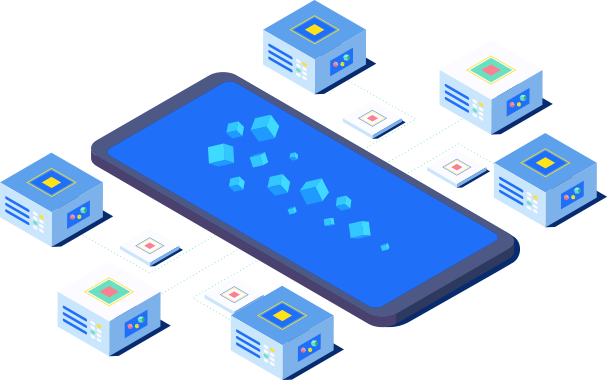

The term "serverless" can be genuinely misleading when applied to AI workloads. After all, the inference still runs on a physical machine somewhere—you are not conjuring model outputs from thin air. What serverless AI hosting actually means is that you, the developer or business owner, never touch a GPU. You do not provision instances, you do not monitor VRAM utilization at 2 a.m., and you do not pay for idle silicon sitting dormant between requests. The platform provider absorbs all infrastructure complexity and exposes a simple API endpoint that accepts input data and returns predictions. This paradigm shift moves the operational burden from your team to the hosting vendor, letting you focus on what the model does rather than how it runs.
Serverless AI hosting is the natural maturation of two converging trends: the serverless compute movement pioneered by AWS Lambda and the commoditization of large language models. In 2022 and 2023, running a model like Stable Diffusion or Llama 2 meant renting a dedicated GPU instance—often an A100 or an H100—at hourly rates that could easily cross four figures per month. Those costs were tolerable for funded startups and enterprise R&D labs but completely prohibitive for indie developers, small agencies, and businesses experimenting with AI features. Serverless AI hosting changes that equation by decoupling compute from availability: you pay only when the model actually runs an inference, not for the seconds, minutes, or hours between requests when the GPU sits idle. For a growing number of use cases—especially those with sporadic or unpredictable traffic—this pricing model is not merely cheaper; it makes AI economically viable for the first time.
To understand why this matters in 2026, you need to appreciate how quickly the landscape has evolved. Just three years ago, the dominant pattern for deploying AI was to containerize a model, wrap it in a FastAPI or Flask server, and deploy it onto a GPU-backed Kubernetes pod. That pattern still exists and makes sense for high-throughput production systems, but it locks you into a fixed-cost structure where you pay for the GPU whether it is processing 10 inferences per minute or zero. Serverless AI hosting, by contrast, aligns your costs with actual usage. If your SaaS product adds an AI feature that gets used twice a week during a beta test, your bill might be measured in cents rather than hundreds of dollars. If your e-commerce store runs product-image background removal as a one-off batch job every quarter, you pay for that batch and nothing else. This elasticity is the core value proposition.
The technology is not without tradeoffs, of course. Serverless AI platforms introduce cold start latency—the delay incurred when a model must be loaded into GPU memory before serving the first request—which we will dissect in detail later in this article. They also impose concurrency limits and, in some cases, maximum execution timeouts that rule out extremely long-running inference jobs. And for sustained, high-volume workloads, the per-inference pricing can eventually exceed the cost of a dedicated GPU. But as we will demonstrate with real numbers, the break-even point is surprisingly generous for most teams, and the operational simplicity of never managing a GPU server is itself worth a meaningful premium. For an introduction to the broader category, you may want to read our guide on what AI hosting is and how next-generation web servers work before diving into the pricing details below.
At its simplest, pay-per-inference pricing means you are charged a fractional amount every time your model produces an output. Unlike traditional cloud billing—where you rent a virtual machine by the hour or a Kubernetes node by the minute—serverless AI billing ties your invoice directly to the work the model performed. This granularity is what makes the model so attractive for low-volume and intermittent workloads. But the mechanics vary significantly across platforms and model types, and understanding those mechanics is essential for accurate cost forecasting. The three dominant billing units in 2026 are per-token, per-image, and per-second-of-compute, and each has its own quirks, gotchas, and ideal use cases.
One of the subtler points that newcomers often miss is that the billed unit is not always the same as the natural unit of work the model performs. For instance, a text-to-image model might be billed per generated image, but the platform is internally tracking the GPU-seconds consumed to produce that image and deriving a price that covers its own costs plus margin. Similarly, a language model billed per token is effectively billed per unit of compute multiplied by the length of the input and output sequences. The abstraction layer between you and the hardware is the platform's pricing engine, and while that abstraction is convenient, it also means you must learn each platform's pricing page carefully before committing to a production integration. As we discussed in our comparison of cloud AI APIs versus self-hosted models, the convenience premium can compound quickly if you do not model your expected usage.
Another dimension of pay-per-inference pricing that deserves attention is the treatment of failed or partial inferences. If a model call times out after generating half a response, does the platform charge you for the tokens it produced? If a rate limit kicks in and returns a 429 status code, are you billed for the rejected request? The major platforms have largely converged on customer-friendly policies here—most do not charge for failed requests or rate-limited responses—but the fine print varies, and a handful of smaller providers do bill for partial tokens or compute seconds consumed before a timeout. When evaluating a serverless AI provider, make the billing failure policy one of your checklist items alongside model availability and latency SLAs. It is the kind of detail that never matters during prototyping but can quietly inflate a production bill by 5–10 percent.
Per-token billing is the pricing model most people encounter first, because it is how OpenAI, Anthropic, Google Gemini, and virtually every major LLM-as-a-service provider charge for API access. A token is a sub-word unit of text—roughly three-quarters of an English word on average—and you are billed separately for input tokens (the prompt you send) and output tokens (the completion the model generates). Output tokens typically cost between 2x and 5x more than input tokens because generating text requires more sequential compute than encoding a prompt. In the serverless AI hosting context, platforms like Replicate, HuggingFace Inference Endpoints, and Banana adopt a similar model for open-source LLMs, but the rates are often dramatically lower because you are running unmodified community models on shared infrastructure rather than accessing a proprietary model behind a managed API. For example, running Llama 3.1 70B on Replicate in mid-2026 costs approximately $0.0005 per input token and $0.0015 per output token—an order of magnitude cheaper than GPT-4o API pricing for comparable quality.
What makes per-token billing so transparent is its direct proportionality to usage: if your application sends 10,000 tokens of input and receives 2,000 tokens of output, your cost is (10,000 × input_rate) + (2,000 × output_rate). This predictability is a gift for unit economics. You can calculate the exact AI cost per user session, per support ticket resolved, or per blog post drafted, and build that cost into your product pricing with confidence. The downside is that token costs scale linearly with volume, so a product that processes millions of tokens per day will eventually hit a breakeven point where a dedicated GPU deployment becomes cheaper. We will quantify that breakeven point with concrete numbers in the cost calculation section below.
For visual models—text-to-image generators like Stable Diffusion 3 and Flux, background removers, upscalers, and video generators—per-token pricing does not make sense because there are no tokens. Instead, platforms bill per generated image or per second of GPU compute consumed. Per-image pricing is the most user-friendly variant: you pay a flat rate for each image the model produces, regardless of how long the inference actually took. For instance, generating a single 1024×1024 image with SDXL on Fal.ai in 2026 costs roughly $0.002 to $0.005, while a higher-quality Flux Pro generation might run $0.01 to $0.03. The per-image model is ideal when your application needs predictable, per-unit costs—say, an e-commerce tool that generates exactly one product photo background per SKU.
Per-second billing, by contrast, charges you for the wall-clock time the GPU spends processing your inference, typically rounded to the nearest millisecond or hundred-millisecond interval. Platforms like Modal and Beam favor this model because it maps directly to their underlying infrastructure cost: they pay cloud providers for GPU-seconds, and they pass those costs through to you with a markup. Per-second billing is more opaque to the end user—you do not know in advance exactly how many seconds an inference will take—but it is inherently fairer for workloads where inference time varies wildly, such as video generation or large-batch image processing. A 10-second video generation should cost more than a 0.3-second text classification, and per-second billing ensures that it does. The tradeoff is predictability: if you cannot estimate inference duration ahead of time, you cannot forecast your bill with precision. Most teams mitigate this by running a calibration batch, measuring average and p99 inference durations, and building a cost model from those benchmarks before scaling up.
The serverless AI hosting market has matured considerably since its chaotic infancy in 2023, and by mid-2026 a clear competitive landscape has emerged. Six platforms dominate the conversation, each with a distinct philosophy, pricing model, and ideal user profile. Understanding their differences is critical because the "best" platform for one use case can be the most expensive for another. The platforms we will examine are Replicate, HuggingFace Inference Endpoints, Modal, Banana, Beam, and Fal.ai. While there are dozens of smaller players and niche alternatives, these six collectively account for the vast majority of serverless AI inference volume outside of the proprietary API providers like OpenAI and Anthropic.
At a high level, these platforms split into two architectural camps: those that run models on a shared, multi-tenant pool of always-warm GPUs (Replicate, Fal.ai, HuggingFace Inference Endpoints in their serverless tier) and those that provision isolated GPU containers on-demand per request (Modal, Banana, Beam). The shared-pool approach minimizes cold starts but can introduce noisy-neighbor problems where another user's workload degrades your inference latency. The on-demand provisioning approach gives you isolated, predictable performance at the cost of longer cold starts—often 30 to 90 seconds for large models. Which architecture suits you depends on your latency tolerance, traffic pattern, and budget. We will explore cold starts in detail in a dedicated section below.
It is worth noting that all six platforms have achieved W3C-compliant API standards for their REST and gRPC interfaces, which means integrating any of them into a modern web application follows well-established patterns. Most provide Python and JavaScript SDKs, and several offer WebSocket streaming for real-time token delivery in chat applications. The barrier to entry has never been lower, which is both a blessing and a caution: it is easy to start building, but equally easy to architect yourself into a corner if you do not understand the pricing implications of your chosen platform. The next section provides a detailed pricing comparison across platforms for common AI tasks, so you can anchor your decision in real numbers rather than marketing claims.
To ground this discussion in concrete figures, we have compiled representative pricing data for five common AI inference tasks across the major serverless platforms as of mid-2026. These numbers are approximate and should be verified against each platform's current pricing page before making a financial commitment, but they accurately reflect the relative cost landscape. The tasks we benchmarked are: text generation with Llama 3.1 8B (a mid-size LLM suitable for chatbots and summarization), text generation with Llama 3.1 70B (a large model for complex reasoning), image generation with Stable Diffusion 3 at 1024×1024, background removal from a 4K product photo, and speech-to-text transcription of a 60-second audio clip using Whisper Large v3. The dollar amounts that follow represent cost per single inference, excluding any platform subscription fees or storage costs.
For Llama 3.1 8B text generation (approximately 500 input tokens, 200 output tokens), Replicate charges roughly $0.00035, HuggingFace serverless Inference Endpoints comes in at about $0.00025, and Modal—with its per-second billing—averages around $0.00040 when factoring in the CPU-to-GPU transfer time for a cold container. For the larger Llama 3.1 70B with the same token counts, Replicate is approximately $0.0018, HuggingFace is $0.0012, and Modal averages $0.0021. The spread across platforms for LLM inference is relatively narrow—roughly 2x from cheapest to most expensive—because the underlying GPU compute cost dominates and all platforms face similar hardware economics. The real cost differentiation emerges in visual tasks, where inference durations vary more widely.
For Stable Diffusion 3 image generation at 1024×1024, the per-image pricing tells a more fragmented story. Fal.ai charges $0.003 per image on its lowest tier, Replicate charges $0.004, and Beam bills approximately $0.006 per image using per-second accounting. HuggingFace's serverless endpoints do not natively support image-generation models with the same granularity—they bill per second of GPU time, which for SD3 typically works out to $0.005 to $0.008 per image depending on step count and batch size. Background removal shows an even wider spread: Replicate charges $0.0015 per image, while Modal's per-second billing for the same task ranges from $0.0008 to $0.003 depending on image resolution and whether the container is warm. For Whisper Large v3 transcription of a 60-second audio clip, Replicate charges $0.001 per second of audio ($0.06 total), HuggingFace comes in at $0.04 per minute, and Banana averages $0.05 per minute. The takeaway is not that one platform is universally cheaper, but that the cheapest platform depends heavily on your specific model and workload characteristics.
Serverless AI hosting shines brightest in low-to-moderate volume scenarios where renting a dedicated GPU would mean paying for far more compute capacity than you actually use. The classic example is a SaaS product that integrates an AI feature—say, an automated email summarizer or a customer-support ticket classifier—that processes a few hundred to a few thousand inferences per day. An A100 GPU on a major cloud provider costs roughly $2.50 to $4.00 per hour in 2026, or $1,800 to $2,900 per month if run continuously. If your inference workload only keeps that GPU busy for 20 minutes per day, you are paying for roughly 23 hours and 40 minutes of idle time every single day. Serverless AI eliminates that waste entirely: those same 20 minutes of inference, priced per-token or per-second, might cost you $10 to $50 per month—a 40x to 180x reduction. For a detailed breakdown of GPU hosting costs, our VPS hosting guide provides useful context on how traditional compute pricing works.
Intermittent and bursty workloads are another domain where serverless AI dominates economically. Consider an e-commerce site that runs AI-powered product descriptions only when new inventory arrives—perhaps twice a month in large batches of 500 products. With a dedicated GPU, you would either keep the instance running around the clock for those two batch jobs or script instance startup and shutdown, adding operational complexity and still paying for at least an hour of GPU time per batch. With serverless AI, you submit the batch job, pay for exactly the 500 inferences (roughly $1.50 to $3.00 for Llama 3.1 8B), and incur no further charges. The operational simplicity—no startup scripts, no shutdown cron jobs, no monitoring for orphaned instances—is the hidden value multiplier. Many teams find that the engineering time saved by not managing GPU infrastructure outweighs the per-inference premium even when the raw compute cost is mathematically higher.
Development and prototyping environments are arguably the most compelling use case for serverless AI. During the exploratory phase of a project, when you are iterating on prompts, testing different model checkpoints, and building integration scaffolding, your inference volume is inherently low and unpredictable. Renting a dedicated GPU for this phase is like buying a server rack to test a WordPress plugin—wildly disproportionate to the actual need. Serverless AI lets you experiment with a dozen different models, including large 70B-parameter LLMs that would not fit on a single consumer GPU, without committing to any infrastructure overhead. If a model does not work for your use case, you simply stop calling its endpoint, and your billing stops with it. This frictionless experimentation accelerates the R&D cycle and lowers the financial risk of trying ambitious AI features. For an honest take on separating genuine AI value from marketing noise, our article on AI hype in web hosting marketing is a worthwhile companion read.
For all its advantages, serverless AI hosting has a cost crossover point beyond which renting a dedicated GPU—or a fleet of them—becomes the economically rational choice. That crossover point is determined primarily by inference volume and the per-unit pricing premium that serverless platforms charge over raw GPU compute cost. Serverless platforms are businesses, not charities: they price their services to cover GPU costs, platform engineering, margin, and the risk of underutilized capacity. As a rule of thumb, the per-inference cost on a serverless platform is roughly 2x to 5x the raw GPU compute cost for the same inference on a self-managed instance. When your volume is low, that multiplier is a bargain because you avoid paying for idle GPU time. When your volume reaches the point where you are fully saturating one or more GPUs around the clock, the multiplier flips from insurance to tax.
Let us quantify the break-even point for a concrete scenario. Suppose you are running Llama 3.1 8B on Replicate at $0.00035 per inference (500 input + 200 output tokens) and processing 100,000 inferences per day. Your daily serverless cost is $35, or roughly $1,050 per month. An A100 instance on a cloud provider costs roughly $2,800 per month, but at 100,000 inferences per day, you are likely saturating only a fraction of the A100’s capacity—Llama 3.1 8B inference is fast, and 100k inferences might consume only 6–8 GPU-hours per day. At that utilization level, serverless is still cheaper. But if your volume climbs to 500,000 inferences per day, your serverless bill reaches $5,250 per month, while a single A100 running 24/7 still costs $2,800 per month and can handle the entire load. At this point, the dedicated GPU is clearly cheaper, and the operational overhead of managing it becomes worthwhile. The exact crossover varies by model size and platform, but for mid-size LLMs, it typically falls between 200,000 and 500,000 inferences per day.
High-volume batch processing, real-time video generation, and continuous fine-tuning pipelines are the workloads most likely to exceed the serverless break-even threshold. If you are generating 10,000 images per day with Stable Diffusion 3, your Fal.ai bill at $0.003 per image is $30 per day or $900 per month—still cheaper than a dedicated GPU at current cloud pricing. But if you scale that to 100,000 images per day, the serverless cost hits $9,000 per month, while a dedicated H100 at approximately $3,500 per month can handle the entire throughput with room to spare. Continuous workloads, where inference requests arrive in a steady stream 24/7 with no idle periods, are the worst fit for serverless pricing because they eliminate the very idle time that serverless economics are designed to avoid paying for. The smart play is to start with serverless, benchmark your actual usage over 30 to 60 days, and then calculate whether the crossover math favors a migration to dedicated hardware.
Cold start latency is the single most important non-monetary tradeoff in serverless AI hosting, and it catches many teams by surprise when they move from prototyping to production. A cold start occurs when a serverless platform receives an inference request but does not have a warm instance of your model already loaded into GPU memory. The platform must then pull the model weights from storage (often an S3-compatible object store or a specialized model cache), load them into GPU VRAM, initialize the inference runtime, and only then begin processing your actual request. For small models under 1 billion parameters, this process can complete in 5 to 10 seconds. For large models like Llama 3.1 70B or Mixtral 8x22B, which require 140 GB or more of VRAM across multiple GPUs, cold starts routinely take 45 to 90 seconds—and in some cases, up to three minutes if the model weights must be fetched from cold storage rather than a regional cache.
The impact of cold starts on user experience depends entirely on your application architecture. If your AI feature runs as an asynchronous background job—say, generating a weekly report summary or processing uploaded documents in a queue—a 60-second cold start is a non-issue. The user submitted the job and will check back later; whether it took 5 seconds or 65 seconds to begin processing is irrelevant. But if your application calls an AI model synchronously in response to a user action—for instance, a chatbot that generates a reply when the user hits "send"—a 60-second delay is catastrophic. Users accustomed to sub-second response times will assume the application is broken and abandon the session. Mitigating cold starts in synchronous applications typically involves one of three strategies: keeping at least one instance warm via periodic keep-alive pings (which partially defeats the cost savings of serverless), using smaller models that cold-start faster, or designing the UI to mask latency with progress indicators and streaming partial results.
Different platforms handle cold starts with varying degrees of transparency and configurability. Replicate and Fal.ai, with their shared-pool architectures, maintain pools of pre-warmed model instances for popular models, which means cold starts are rare during normal traffic conditions. When your specific model version is not in the warm pool, however, the cold start penalty is paid in full. Modal and Beam take a different approach: they allow you to configure a minimum number of warm containers (for an additional fee) that eliminate cold starts entirely at the cost of paying for idle GPU time on those reserved instances. HuggingFace Inference Endpoints offer a hybrid model where you can choose between fully serverless (cold starts possible) and dedicated (always-warm, billed hourly) deployment modes. The platform choice directly affects your latency profile, and as with GPU economics, the optimal strategy depends on whether your traffic is steady or bursty. For synchronous user-facing features, the warm-pool platforms (Replicate, Fal.ai) or a small reserved-container allocation on Modal are usually the pragmatic choices.
Abstract pricing comparisons are useful for building intuition, but nothing clarifies the economics of serverless AI like a worked example grounded in a realistic product scenario. Let us walk through three archetypal use cases—a small SaaS prototype, a mid-market e-commerce integration, and a high-volume enterprise deployment—and calculate the monthly AI inference costs on both serverless and dedicated GPU infrastructure. For each scenario, we will assume the use of Llama 3.1 8B (hosted on Replicate) for text generation and Stable Diffusion 3 (hosted on Fal.ai) for image generation, as these represent the most common model categories in production AI applications today. The numbers are approximate mid-2026 figures and should be recalibrated with current pricing when you do your own analysis.
Scenario A: Indie SaaS Prototype. A solo developer is building a writing assistant tool that summarizes user-provided text. During the beta period, the app serves 20 active users who collectively trigger 100 summarization requests per day. Each request involves roughly 800 input tokens and 300 output tokens. On Replicate at $0.00035 per inference, the daily cost is $0.035, and the monthly cost is approximately $1.05. If the same developer rented a dedicated A100 for $2,800 per month, the GPU would be idle roughly 99.97% of the time. Serverless is the obvious and only rational choice—the operational overhead of managing a GPU instance alone would consume more engineering time than the entire AI feature is worth at this stage.
Scenario B: Mid-Market E-Commerce Platform. A Shopify Plus merchant with 5,000 SKUs uses AI to generate product descriptions and remove image backgrounds. The workflow runs once per month when new inventory arrives: on average, 500 new products per month, each requiring one text generation and one background removal. Text generation (800 input tokens, 200 output tokens) costs $0.00035 per product. Background removal costs $0.0015 per product on Replicate. Total AI cost per month: 500 × ($0.00035 + $0.0015) = $0.925. Adding image generation for lifestyle photos (one per product at $0.003 on Fal.ai) brings the total to $2.43 per month. A dedicated GPU for this workload is laughably excessive; serverless AI is not merely cheaper but the only sane architectural choice for a batch workload that runs for 30 minutes once a month.
Scenario C: Enterprise Customer-Support Automation. A SaaS company with 50,000 daily active users integrates an AI copilot that classifies support tickets and suggests response drafts. The system processes 200,000 inferences per day—100,000 ticket classifications (200 input tokens, 50 output tokens) and 100,000 response drafts (500 input tokens, 300 output tokens). On Replicate, the daily cost is roughly 100,000 × $0.00020 + 100,000 × $0.00040 = $60 per day, or $1,800 per month. At this volume, a dedicated A100 at $2,800 per month can handle the entire load with headroom, and the monthly cost is within striking distance of the serverless bill. If the team expects volume to grow 2x within six months, migrating to dedicated infrastructure now saves $800 per month immediately and avoids a $3,600 monthly serverless bill post-growth. This is the crossover zone where the economics flip, and the team should evaluate both paths with a proper total-cost-of-ownership model that includes DevOps labor, monitoring, and redundancy.
One of the most persistent misconceptions about serverless AI is that adopting it requires abandoning your current hosting infrastructure. In reality, serverless AI integrates with existing hosting environments far more gracefully than a dedicated GPU deployment does, precisely because it is accessed over HTTPS like any other external API. Your web application—whether it runs on a $5 shared hosting plan, a managed WordPress instance, a VPS, or a Kubernetes cluster—makes an HTTP POST to the serverless AI endpoint, receives a JSON response, and incorporates the result into its response pipeline. There is no GPU driver to install, no CUDA toolkit to version-manage, and no custom container orchestration to configure. The AI model is an external service consumed over the network, exactly like Stripe for payments or Twilio for SMS. This architectural simplicity is perhaps the most underappreciated advantage of the serverless AI model.
For teams using traditional hosting platforms—shared hosting, cPanel-based VPS, or managed WordPress—the integration path is straightforward: your backend (PHP, Node.js, Python, or any language capable of making HTTP requests) calls the AI endpoint, processes the response, and caches results where appropriate to avoid redundant inference calls. If your hosting environment restricts outbound HTTP connections (some shared hosts do), you can route AI calls through a lightweight middleware function on a platform like Cloudflare Workers or Vercel Edge Functions. For teams on containerized or Kubernetes-based infrastructure, the integration is even simpler: the AI endpoint is just another external service referenced in your application configuration, and you can use standard tools like environment variables for API keys and Circuit Breaker patterns for resilience. Our VPS hosting guide covers the fundamentals of setting up application environments that can call external APIs, and the same principles apply whether the external service is a payment processor or an AI inference endpoint.
The one architectural consideration that deserves careful thought is caching. Serverless AI charges you per inference, so every redundant call—generating the same product description twice, summarizing the same document for two different users, classifying the same type of support ticket repeatedly—directly costs you money. A well-designed caching layer can reduce your AI inference bill by 30% to 70% depending on how repetitive your workload is. For deterministic models (those that always produce the same output for the same input, such as classifiers and embedding models), you can cache results indefinitely using the input hash as the cache key. For generative models with temperature settings above zero, caching is trickier because outputs are non-deterministic, but you can still cache at the semantic level—for example, storing a generated product description and reusing it until the product data changes. Implementing this caching layer in your existing hosting stack is straightforward: Redis for in-memory caching, your database for persistent caching, or a CDN edge cache for read-heavy public-facing content. The reduction in inference calls directly translates to a lower monthly bill, making caching the highest-ROI optimization you can perform on a serverless AI integration.
In AI hosting, "serverless" means you do not provision, manage, or pay for GPU servers directly. You send input data to an API endpoint managed by the provider, and the provider handles loading the model onto GPUs, running inference, and returning results. You pay only for the inferences actually executed—per token, per image, or per second of compute—rather than for server uptime. Physical servers still exist behind the scenes; the "serverless" abstraction refers to the developer experience, not the absence of hardware. This model eliminates GPU provisioning, driver management, and idle-capacity costs, making it especially valuable for teams without dedicated ML infrastructure engineers.
Most major serverless AI platforms in 2026 offer SOC 2 Type II compliance, encrypted data in transit (TLS 1.3) and at rest (AES-256), and configurable data retention policies ranging from zero retention (inputs and outputs deleted immediately after inference) to 30-day logging for debugging. For regulated industries, several platforms offer dedicated tenancy options where your models run on isolated GPU instances not shared with other customers, though these typically carry a premium over shared-pool pricing. As with any external API, you should review the provider's data processing agreement, understand where inference data is processed geographically, and ensure that your integration does not log sensitive inputs to client-side consoles or error-reporting services. The security model is fundamentally similar to using any SaaS API—Stripe, SendGrid, or OpenAI—and the same best practices around API key rotation, least-privilege access, and transport encryption apply.
Rate limits vary significantly by platform and pricing tier. Free tiers typically impose strict limits—for example, 10 concurrent requests and 100 requests per minute—while paid tiers scale up to hundreds of concurrent requests and thousands of requests per minute. Platforms with shared GPU pools (Replicate, Fal.ai) enforce global rate limits to protect their infrastructure but offer generous headroom on paid plans. Platforms with on-demand provisioning (Modal, Beam) can scale concurrency more elastically because each request can spin up an independent GPU container, but extremely high concurrency spikes may encounter provisioning delays if the cloud provider's GPU capacity is constrained in your region. For production deployments, always check your platform's concurrency limits against your expected peak load, implement exponential backoff with jitter on the client side, and consider a request queue (backed by SQS, Redis, or RabbitMQ) if your workload pattern involves large spikes that exceed the platform's instantaneous concurrency ceiling.
Yes, all six major platforms we discussed support custom model deployment, though the process and pricing differ. Replicate allows you to push custom model weights via Cog, their open-source model packaging format, and run them on the same serverless infrastructure as community models. HuggingFace Inference Endpoints can deploy any model hosted on the HuggingFace Hub, including private fine-tuned checkpoints. Modal and Banana provide Docker-based deployment pipelines where you supply a container image with your custom model and inference code; they handle GPU provisioning and scaling automatically. Custom model deployments typically incur higher per-inference costs than community models because the platform cannot amortize model-loading costs across multiple customers and must maintain a smaller warm pool for your specific checkpoint. Expect custom-model pricing to be 20% to 50% higher than equivalent community-model pricing on the same platform.
Network latency between your application server and the AI inference endpoint is typically 5 to 30 milliseconds within the same cloud region and 50 to 150 milliseconds across continents. This network overhead is negligible compared to the inference time itself, which for large language models ranges from 500 milliseconds (for short completions on small models) to 30 seconds (for long completions on 70B+ models). The dominant latency factor is not the network but the model inference time and, when applicable, the cold start penalty. To minimize total round-trip latency, deploy your application servers in the same cloud region as your AI platform's GPU infrastructure. Most platforms document their available regions; Replicate, for example, operates GPU clusters in us-east-1, eu-west-1, and ap-southeast-1 as of 2026. For real-time applications, also consider enabling streaming responses (server-sent events or WebSockets), which allow the user to see generated tokens as they are produced rather than waiting for the full completion, dramatically improving perceived responsiveness.
Serverless AI can absolutely power real-time chatbots, provided you choose the right platform and implement streaming. For chatbot use cases, you want a platform with low cold-start probability—ideally one that maintains warm pools for popular models, like Replicate or Fal.ai—and you must enable token streaming so the user sees the response being generated character by character rather than waiting for the full message. Without streaming, a 2,000-token response on a 70B model could take 15 to 20 seconds to fully generate, which feels broken to an end user. With streaming, the first token appears in under a second, and the conversation feels natural and responsive even though the full generation takes longer. For production chatbot deployments with strict latency SLAs, many teams reserve a minimum number of warm containers (on platforms that support it) during peak hours and fall back to fully serverless scaling during off-peak periods, balancing cost and latency.
Start by defining your expected usage in the platform's native billing units: tokens per day for LLMs, images per day for visual models, or seconds of GPU compute per day for per-second billing platforms. Multiply by 30 to get a monthly baseline. Then add a 20% buffer for usage growth, failed-and-retried requests, and prompt iteration during development. Most platforms provide pricing calculators or cost-estimation tools on their websites; use them, but also run a real-world test by deploying a prototype, sending representative traffic for one week, and extrapolating from actual billing data rather than theoretical calculations. Monitor your billing dashboard closely during the first 30 days, set budget alerts at 50% and 80% of your expected spend, and implement per-user or per-session cost caps in your application code to prevent runaway costs from bugs or abuse. The platforms we have discussed all provide usage dashboards and API-accessible billing metrics, so cost visibility is strong if you invest the initial effort to instrument your integration properly.

Arjun Mehta is a cloud infrastructure consultant specializing in bare-metal architectures, network routing, and high-traffic database clustering.

Hosting Captain has been exceptional for my e-commerce store in Pune. The NVMe SSD speed is noticeable, and their support team responds within minutes. Highly recommended for any Indian business!
Switched from a US-based host to Hosting Captain and my website loads 3x faster for Indian visitors. The free SSL and cPanel are great, and the pricing is unbeatable. Very satisfied customer!
I've been using their VPS plan for 2 years now. 99.9% uptime is not just a claim — it's reality. My client projects run without interruption. The KVM virtualization gives me full control I need.
The support team helped me migrate my entire WordPress site at 2 AM without any downtime. This level of service is rare in Indian hosting. Worth every rupee!
As a startup, budget matters. Hosting Captain's Business plan covers everything we need — multiple websites, free SSL, daily backups — at a fraction of what international hosts charge.
Our high-traffic news portal needed a dedicated server. Hosting Captain's DS Business plan handles 100K+ daily visitors effortlessly. Their team provisioned everything within 4 hours!








From personal blogs to enterprise solutions, we've got you covered!

© 2026 Hosting Captain. All Rights Reserved by 'Apollo Hosting'.