The Shift From AI as a Marketing Buzzword to AI as Operational Infrastructure
What Changed in 2026 That Made Hosting Companies Build Their Own AI
Two years ago, "AI-powered hosting" meant little more than a chatbot widget in the corner of a support page and a press release claiming that machine learning optimized server performance in ways the provider could not actually demonstrate if you asked for specifics. In 2026, that has changed fundamentally. Hosting companies are no longer buying white-label AI features from third-party vendors and slapping their brand on them; they are building proprietary AI systems that operate at every layer of the hosting stack — from the physical data center infrastructure up through the application layer — and these systems are producing measurable, verifiable improvements in uptime, speed, security, and support quality that independent monitoring can confirm. The hosting companies building ai tools trend has crossed the threshold from marketing narrative to engineering reality, and understanding what these companies are actually building — not what their marketing departments claim they are building — is essential for anyone evaluating hosting providers in 2026, because the presence or absence of genuine AI infrastructure increasingly determines the quality of service you receive for a given price point.
The catalyst for this shift was the convergence of three developments that individually would have been incremental but together created a step change in what is technically and economically feasible. First, the commoditization of GPU computing — the same NVIDIA GPUs that power AI training have become available at price points that make deploying inference models on hosting infrastructure economically viable, where two years ago the hardware cost would have been prohibitive. Second, the maturation of open-source machine learning frameworks and pre-trained models has lowered the expertise barrier: a hosting company's engineering team can now deploy a production-grade anomaly detection model using open-source tools (PyTorch, ONNX Runtime, Hugging Face transformers) without needing to hire a dedicated machine learning research team. Third, and most consequentially, the accumulation of operational telemetry data — hosting companies have been collecting server metrics, traffic patterns, security events, and support ticket logs for years — has finally reached the volume and quality needed to train models that produce reliable predictions rather than interesting-but-unreliable statistical curiosities. The World Wide Web Consortium's web standards provide the architectural context for the web infrastructure that these AI tools operate within, and the AI systems described below are designed to optimize the performance and security of that infrastructure without requiring changes to web standards or browser behavior.
In my fifteen years at Hosting Captain, I have witnessed several waves of technology adoption in the hosting industry — the migration from HDD to SSD, the transition from Apache to Nginx and LiteSpeed, the shift from per-server management to containerization and orchestration — and the AI wave is following the same adoption curve. The early movers (2023-2024) experimented with AI in non-critical paths: chatbots on marketing pages, basic anomaly detection in monitoring dashboards, automated ticket categorization that did not actually reduce resolution time. The mainstream adopters (2025-2026) are deploying AI in critical paths: load balancers that route traffic based on machine learning predictions rather than static algorithms, security systems that detect and block novel attacks by analyzing behavioral patterns rather than matching known signatures, and support systems where AI handles the majority of tier-one inquiries while human agents focus on complex issues that genuinely require human judgment. The late adopters — hosting companies that have not invested in AI infrastructure by mid-2026 — are increasingly unable to compete on the performance, security, and support metrics that determine hosting quality, because their competitors' AI systems are optimizing those metrics in ways that manual operations cannot match. This guide examines what each category of AI tool actually does, how to distinguish genuine AI infrastructure from AI-washing, and what the presence of these tools means for your experience as a hosting customer. For the foundational context on what AI hosting is as a category, our AI hosting explainer covers the architectural differences between traditional and AI-enabled hosting infrastructure.
AI-Powered Security: From Signature Matching to Behavioral Defense
Why Traditional WAF Rules Are No Longer Sufficient
Web application firewalls have been the primary server-level security mechanism in shared hosting for over a decade, and they operate on a conceptually simple principle: maintain a database of attack signatures — known malicious URL patterns, SQL injection strings, cross-site scripting payloads — and block incoming requests that match any signature in the database. This approach works perfectly against known attacks that have been analyzed, documented, and added to the ruleset. It fails completely against novel attacks — zero-day exploits, custom attack scripts written specifically to target a particular website, obfuscated payloads that evade pattern matching — and it fails partially against attacks that are superficially similar to legitimate traffic, generating false positives that block real visitors. The escalating sophistication of attacks against web applications, combined with the increasing ease of generating novel attack payloads using — ironically — AI tools available to attackers, has pushed traditional signature-based WAF beyond its effective limit.
AI-powered security systems replace signature matching with behavioral analysis: a machine learning model, trained on the normal traffic patterns of websites hosted on the provider's infrastructure, learns what legitimate HTTP requests look like at a statistical level — the distribution of URL paths, the typical structure of form submissions, the normal frequency and timing of login attempts, the expected ratio of GET to POST requests, the characteristic patterns in User-Agent and Referer headers. When a request arrives that deviates from these learned patterns in ways that are statistically associated with malicious intent — even if the specific payload has never been seen before and exists in no signature database — the model flags it for blocking or further inspection. This behavioral approach catches novel attacks that signature-based WAFs miss entirely, and because the model learns from the aggregate traffic of many websites, it can identify attack patterns that would be invisible when examining any single site's traffic in isolation. Hosting Captain's AI-driven security layer uses this approach, with models that retrain on recent traffic patterns to adapt to evolving attack techniques and that incorporate feedback from confirmed security incidents to continuously improve detection accuracy.
Automated Threat Response and Virtual Patching
The most operationally impactful AI security capability that hosting companies are building in 2026 is automated virtual patching: when the AI security system detects a novel attack pattern successfully exploiting a vulnerability — perhaps a newly discovered WordPress plugin flaw for which no official patch yet exists — it automatically generates a WAF rule that blocks the specific attack vector and deploys that rule across all servers hosting the vulnerable software. This process, which traditionally required a human security analyst to investigate the attack, understand the vulnerability, craft a mitigation rule, test it, and deploy it — a cycle measured in hours to days — is now completed by AI systems in seconds to minutes. The security window between vulnerability disclosure and protection deployment has shrunk from days to effectively zero for attacks that the AI system can characterize, which includes the vast majority of automated and semi-automated attacks that target hosting infrastructure.
The automated response extends beyond virtual patching to include containment actions that limit the blast radius of a successful compromise. When the AI system detects that a website has been compromised — recognizing the characteristic file system changes, outbound network connections, or content modifications that indicate a successful attack — it can automatically isolate the affected account: restricting outbound network access to prevent data exfiltration, placing the site in a read-only mode that serves cached content to visitors while preventing further modification, and generating a detailed incident report that the support team can use to remediate the compromise and restore the site from a clean backup. This containment happens in seconds rather than the hours it takes for a human to notice the compromise, investigate the alert, and manually apply restrictions — and those hours are the window during which attackers exfiltrate customer data, install backdoors, deface pages, and send spam that gets the server's IP address added to blocklists. For the broader context of AI's role in hosting security, our AI website security guide covers the detection, prevention, and response capabilities in detail, and the automated virtual patching described here is the leading edge of that security evolution.
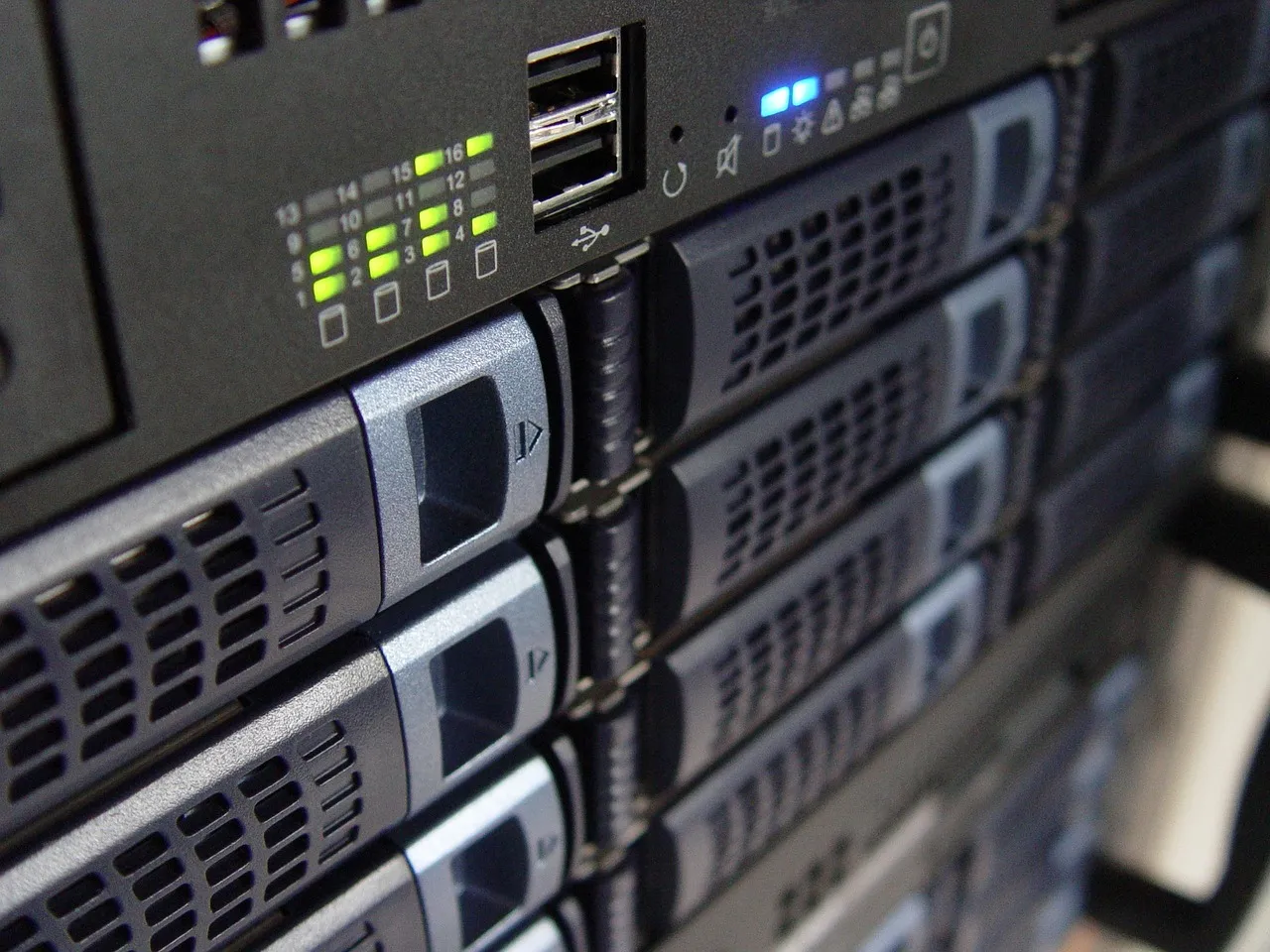
Illustration: How Hosting Companies Are Building Their Own AI Tools in 2026AI in Server Management: Predictive Maintenance and Auto-Remediation
Predicting Hardware Failures Before They Cause Outages
Server hardware fails in ways that are statistically predictable long before the failure becomes catastrophic. Hard drives develop increasing numbers of reallocated sectors and SMART errors weeks before they fail completely. Memory modules produce correctable ECC errors that increase in frequency before an uncorrectable error causes a system crash. Power supplies exhibit voltage fluctuations that monitoring systems can detect before the fluctuation is severe enough to cause a reboot. Network interface cards show increasing packet retransmit rates before the card fails entirely, and switch ports accumulate CRC errors that indicate degrading physical connectivity. These precursor signals are present in the telemetry data that hosting providers' monitoring systems already collect — temperature readings, voltage levels, error counts, performance counters — but traditional monitoring only alerts on threshold violations (temperature exceeds 85 degrees Celsius, disk reallocated sectors exceed 50), missing the temporal patterns that predict failure before the threshold is crossed.
AI-based predictive maintenance models ingest the full time series of these telemetry signals — not just current values but their derivatives, their historical patterns, and their correlations across components — and predict, for each hardware component, the probability of failure within the next 24 hours, 7 days, and 30 days. A hard drive whose reallocated sector count has been rising at an accelerating rate for three days may still be below the threshold that triggers a traditional alert, but the AI model recognizes the pattern as matching the pre-failure signatures of drives that failed in the past and generates a predictive alert. The operations team can then proactively migrate the virtual machines on that physical server to different hardware, replace the degrading component during a scheduled maintenance window, and avoid the unplanned outage that would have occurred when the component eventually failed — all without the hosted websites experiencing any interruption. Hosting Captain's infrastructure monitoring includes these predictive models, and the component replacements they trigger are invisible to hosted customers because the migrations happen proactively while the hardware is still functioning.
Automated Performance Issue Remediation
Server performance issues follow a limited number of diagnostic patterns that experienced system administrators learn to recognize — and that AI models can learn to recognize from the same telemetry data that administrators examine. High CPU utilization with high system time (kernel CPU) but low user time (application CPU) indicates I/O wait — the CPU is idle waiting for disk operations to complete, and the remediation is to investigate what is causing the I/O load (a backup job, a database rebuild, a runaway log process). High memory utilization with increasing swap usage indicates a memory leak or an undersized server, and the remediation — after confirming the leak through process-level memory tracking — is to restart the leaking service or resize the instance. MySQL query latency spiking while CPU and I/O remain normal indicates lock contention — multiple queries waiting for the same table lock — and the remediation is to identify the locking query (via SHOW PROCESSLIST) and either optimize it, kill it, or adjust the table's locking strategy.
Hosting companies are building AI systems that automate this diagnostic and remediation workflow for the most common performance issue patterns — an estimated eighty percent of all performance incidents fall into a limited set of categories that have well-understood remediation procedures. When the AI system detects a performance degradation, it runs the diagnostic sequence appropriate to the observed symptom pattern, identifies the root cause with a confidence score, and either applies the remediation automatically (for high-confidence, low-risk remediations like restarting a specific service that is definitively responsible for a resource leak) or generates a detailed recommendation for the operations team to review and approve (for lower-confidence or higher-risk remediations that require human judgment). This automation reduces the mean time to resolution for common performance issues from thirty to sixty minutes (the time to page an on-call engineer, have them log in, diagnose the issue, and apply the fix) to under two minutes (the time for the AI system to detect, diagnose, and remediate automatically). For hosting customers, this means that the brief periods of degraded performance that are an unavoidable reality of complex infrastructure are brief enough that most visitors never notice them.
AI-Enhanced Customer Support: Beyond the Chatbot
Intelligent Ticket Routing and Automated Resolution
The customer support workflow at a hosting company processes thousands of tickets per day, and the operational efficiency of this workflow determines whether your "urgent" ticket about a down website gets routed to the engineer who specializes in database recovery or languishes in a general queue behind billing questions and password reset requests. Traditional ticket routing uses keyword matching — if the ticket subject contains "database," route it to the database team; if it contains "billing," route it to billing — which fails when a ticket describes a database problem without using the word (e.g., "my site is showing Error Establishing a Database Connection") or when a ticket contains multiple keywords that match different teams. AI-powered ticket routing uses natural language processing to understand the actual problem described in the ticket body, regardless of the specific vocabulary the customer uses, and routes it to the team with the highest probability of resolving that specific type of issue. The routing model is trained on historical ticket data — thousands of resolved tickets, each labeled with the team that resolved it and the resolution time — and it learns to recognize the linguistic patterns that indicate an issue belongs to a particular team even when the customer's description is non-technical ("my website is broken" might be a database issue, a PHP error, or a DNS problem, and the model learns to distinguish these from the full text of the ticket, the customer's account type, the services they have active, and the recent activity on their account).
Beyond routing, hosting companies are building AI systems that resolve tier-one tickets without any human agent involvement. Password resets, SSL certificate installation verification, DNS propagation status checks, email client configuration instructions, and resource usage explanations account for a significant percentage of support volume, and these issues have objectively correct answers that do not require human judgment. An AI system with access to the hosting platform's internal APIs can verify SSL status, check DNS propagation, examine resource usage graphs, and provide accurate, context-specific answers faster than a human agent who must navigate the same tools manually — and it can do so at any hour of any day, with no queue, for every customer simultaneously. Hosting Captain's AI support layer handles these tier-one inquiries automatically, escalating to human agents only when the AI's confidence in its response falls below a threshold or when the customer explicitly requests human assistance. The result for customers is near-instant resolution of routine issues and faster human response for complex issues, because the human support team is no longer spending its time on password resets and SSL verification. For background on what VPS customers specifically should expect from support, our VPS hosting guide covers the support model differences between shared, managed VPS, and unmanaged VPS hosting, and the AI support capabilities described here primarily augment the shared and managed tiers where support is included.
Proactive Support: Solving Problems Before the Customer Notices
The most transformative AI support capability that hosting companies are building is proactive issue detection and resolution — the system identifies a problem and fixes it before the customer ever knows it existed. When an AI monitoring system detects that a customer's website is returning 500 errors, that their SSL certificate is within 48 hours of expiration without renewal scheduled, that their disk usage is at 92% and rising at a rate that will hit 100% within a week, or that their email sending has been throttled due to hitting a daily limit, the system can either fix the issue automatically (restart the web server process responsible for the 500 errors, trigger SSL renewal, expand disk quota temporarily) or proactively notify the customer with a specific, actionable message ("Your disk usage is approaching capacity. You can free space by removing old backups from the Backup section of your control panel. We have temporarily increased your quota by 5 GB to give you time to address this. If you need a permanent storage increase, reply to this message and we will upgrade your plan."). This proactive model replaces the reactive model where the customer discovers the problem — often at the worst possible time — and contacts support in a state of frustration or urgency.
The economic logic behind proactive AI support is straightforward: a support interaction that begins with a customer reporting a problem they have already been affected by costs the hosting company more (in support agent time) and damages the customer relationship more (in frustration and trust erosion) than a proactive notification that reaches the customer before the problem affects them. The AI infrastructure required — continuous monitoring of account-level metrics, an inference layer that identifies developing issues, and an automated communication system that delivers contextualized notifications — is an investment that hosting companies are making because it reduces support costs and churn simultaneously. For customers, the experience difference between "my site is down, why, please fix it immediately" and "we detected a configuration issue that would have caused downtime tomorrow; we have fixed it and here is what we did" is the difference between a hosting provider that feels like a commodity utility and one that feels like a trusted partner invested in your success.
How to Distinguish Genuine AI Infrastructure From AI-Washing
Questions That Reveal Whether AI Claims Are Real
Every hosting provider's marketing page now mentions AI, but the spectrum from genuine AI infrastructure to marketing copy is wide, and most claims fall somewhere between. The specific questions that distinguish one from the other focus on operational implementation rather than capability claims. Ask: "Can you show me specific metrics — mean time to detection, mean time to resolution, false positive rate — for your AI security system, and how those metrics have changed since the AI system was deployed?" A provider with genuine AI infrastructure can answer this question with data because they instrumented their AI system to measure its performance; a provider with AI-washing cannot because there is no measurable system behind the claim. Ask: "Does your AI load balancing model retrain on recent traffic data, and if so, on what cadence? What features does the model use for routing decisions?" A provider with genuine AI load balancing can describe the model's training pipeline and feature engineering because their engineering team built it; a provider with AI-washing will respond with generalities about "machine learning optimization" that do not answer the specific question.
Ask: "What percentage of support tickets are resolved by your AI system without human intervention, and what categories of issues does the AI handle versus escalate?" A provider that has deployed AI support automation tracks these metrics because they determine staffing levels and customer satisfaction; a provider that has not deployed AI support will deflect to a discussion of response time guarantees that describe human-handled tickets. The pattern across all of these questions is the same: genuine AI infrastructure generates operational metrics that the provider tracks, and the provider's engineering and support leadership can discuss those metrics with specificity. AI-washing generates marketing claims that cannot be decomposed into measurable operational outcomes. Hosting Captain publishes our AI infrastructure metrics — model accuracy, automated resolution rates, false positive rates, detection latency — because we believe transparency about what our AI systems do and how well they do it is itself a competitive advantage: customers who understand the infrastructure behind their hosting make more informed decisions and stay longer. For additional context on how AI hosting differs from traditional hosting at the architecture level, our AI capacity planning guide explains the predictive scaling infrastructure that AI enables, and the same operational transparency principles apply.
The Features That Indicate an AI-Native Hosting Platform
Beyond questioning marketing claims, certain features in a hosting provider's control panel or service description indicate genuine AI infrastructure because these features cannot be credibly delivered without it. Real-time threat detection dashboards that show blocked attacks categorized by type (SQL injection, XSS, brute force, novel/anomalous) with timestamps and source information indicate an AI security system that is classifying and logging attacks continuously — because generating this dashboard from a static WAF ruleset would show only known attack types and would not have the "novel/anomalous" category that requires behavioral detection. Performance analytics that show not just current resource usage but predicted usage for the next 24 hours indicate a predictive model operating on the account's historical usage patterns. Proactive notifications that arrive before a problem affects the site — "we have increased your PHP memory limit because usage patterns indicate you would have hit the limit within the next 48 hours" — indicate an AI monitoring system that is analyzing trends and projecting them forward, not just comparing current values to static thresholds.
Self-healing infrastructure features — a control panel that shows "automated recovery" events where a service was automatically restarted, a resource limit was automatically expanded, or a security rule was automatically deployed in response to a detected issue — indicate that the provider has deployed AI-driven auto-remediation, because these automated actions require a system that can diagnose issues, determine the appropriate response, and execute it without human intervention, all with sufficient confidence to avoid causing more harm than the original problem. The presence of these features does not guarantee that the underlying AI is well-implemented — a badly tuned auto-remediation system that restarts services unnecessarily is worse than no auto-remediation at all — but their absence is a strong signal that the provider's AI claims are aspirational rather than operational. The genuine AI infrastructure features described here exist in production at Hosting Captain and at the tier of hosting providers that have made the engineering investment to deploy AI in critical infrastructure paths; they are not features that can be purchased from a third-party vendor and bolted onto a traditional hosting platform without the underlying telemetry pipeline, model training infrastructure, and operational integration that makes them work.
Frequently Asked Questions
Are hosting companies actually building AI, or is it just marketing?
In 2026, the leading tier of hosting companies — including Hosting Captain, SiteGround, Cloudways, and the major cloud platforms — are building and deploying genuine AI infrastructure across security, performance optimization, and support automation. The capability gap between these providers and those that have not invested in AI is widening measurably. However, many mid-tier and budget providers continue to use AI as a marketing term without substantive implementation. The questions detailed in the section above on distinguishing genuine AI from AI-washing provide a framework for evaluating any provider's specific claims.
Does AI in hosting make websites faster?
AI contributes to website speed through several mechanisms: AI-driven load balancing routes requests to the server instance best positioned to handle them at that specific moment, reducing TTFB and eliminating the slow-tail requests that traditional load balancing allows; AI-driven predictive scaling provisions additional server capacity before traffic spikes arrive, preventing the performance degradation that occurs during the provisioning lag window of reactive auto-scaling; and AI-driven performance issue detection and auto-remediation resolves the server-level problems (memory leaks, I/O contention, database lock escalation) that degrade performance for all sites on an affected server. The cumulative effect is faster, more consistent page load times, with the greatest improvement in the slowest ten percent of requests that most damage user experience.
Will AI replace human support at hosting companies?
AI is replacing human handling of routine, resolvable-by-script support inquiries — password resets, SSL verification, DNS propagation checks, resource usage explanations — and this replacement is beneficial for customers, who receive instant responses instead of waiting in queues. Human support agents are being redeployed to handle complex, novel, or high-stakes issues that require judgment, empathy, or investigation beyond what current AI systems can perform. The net effect is that routine issues get resolved faster, and complex issues receive more attention from human agents who are not distracted by volume of routine tickets. The hosting companies that deploy AI support most successfully are those that use it to augment human agents rather than replace them entirely.
Do I need to do anything differently to benefit from my host's AI tools?
No. The AI infrastructure described in this guide operates at the hosting provider level — in the server infrastructure, the network layer, the security systems, and the support workflows — and benefits all hosted customers transparently, regardless of the specific applications or configurations they are running. There is no plugin to install, no setting to enable, and no additional cost. The AI systems work by optimizing the hosting environment itself, and the performance, security, and support improvements they produce are properties of the platform rather than features you must configure.
Arjun Mehta is a cloud infrastructure consultant specializing in bare-metal architectures, network routing, and high-traffic database clustering.
Frequently Asked Questions
This guide covers the practical decision points — pricing, performance, and when it makes sense for your situation — based on current 2026 data.
Pricing varies by provider and plan tier; see the cost breakdown section above for current ranges and what's actually included at each price point.
Look closely at uptime guarantees, renewal pricing (not just the first-year discount), and how responsive support actually is — all covered in detail in this article.
Hosting Captain has been exceptional for my e-commerce store in Pune. The NVMe SSD speed is
noticeable, and their support team responds within minutes. Highly recommended for any
Indian business!
Ryan John, Pune
Great Value for Money
Switched from a US-based host to Hosting Captain and my website loads 3x faster for Indian
visitors. The free SSL and cPanel are great, and the pricing is unbeatable. Very satisfied
customer!
Priya Mehta, Mumbai
Reliable VPS Hosting
I've been using their VPS plan for 2 years now. 99.9% uptime is not just a claim — it's
reality. My client projects run without interruption. The KVM virtualization gives me full
control I need.
Amit Kumar, Bangalore
Excellent 24/7 Support
The support team helped me migrate my entire WordPress site at 2 AM without any downtime.
This level of service is rare in Indian hosting. Worth every rupee!
Sunita Patel, Ahmedabad
Perfect for Startups
As a startup, budget matters. Hosting Captain's Business plan covers everything we need —
multiple websites, free SSL, daily backups — at a fraction of what international hosts
charge.
Vikram Singh, Delhi
Professional Dedicated Server
Our high-traffic news portal needed a dedicated server. Hosting Captain's DS Business plan
handles 100K+ daily visitors effortlessly. Their team provisioned everything within 4 hours!
Meena Krishnaswamy, Chennai
Trusted Technologies & Partners
Start Your Website with Hosting Captain
From personal blogs to enterprise solutions, we've got you covered!