Every day, millions of businesses entrust their websites, customer databases, transaction records, and intellectual property to cloud hosting platforms — often without fully understanding what keeps that data intact when hardware fails, power cuts strike, or entire data centers go offline. Cloud hosting data redundancy is the engineering discipline that answers that question. It is the collection of strategies, technologies, and architectural decisions that ensure your data survives component failures, natural disasters, and routine maintenance events without a single byte being lost or a single visitor encountering an error page. The topic is dense with technical terminology — replication factors, erasure coding, synchronous mirroring, consistency models — but the principles underneath are practical and accessible. This guide breaks down every dimension of cloud data redundancy in plain language, covering what it actually means, how the major cloud providers implement it, how it differs from simple backups, what it costs, and what level of protection your business genuinely needs in 2026.
The conversation around data redundancy has become more urgent as businesses migrate increasingly critical workloads to cloud environments. A decade ago, a small business might have stored its website on a single shared server and its customer records in a local spreadsheet, with data loss being an inconvenience rather than an existential threat. Today, that same business might run its entire operations — website, e-commerce checkout, inventory management, customer relationship management, email, and analytics — through cloud-hosted platforms where data is the business. Understanding how that data stays safe, and what questions to ask of your hosting provider, is no longer optional knowledge reserved for IT departments. It is a fundamental business literacy that every decision-maker who signs a hosting contract should possess. Hosting Captain has built its cloud infrastructure around the principles outlined in this guide, and we believe that transparency about how data redundancy works is the best way to earn the trust of businesses evaluating their hosting options.
What Cloud Hosting Data Redundancy Actually Means
Cloud hosting data redundancy is the practice of storing multiple copies of your data across independent physical hardware, network paths, and often geographic locations, so that the failure of any single component does not result in data loss or service interruption. At its core, redundancy answers a brutally simple question: if this specific hard drive, server, network switch, power supply, or entire data center fails right now, does my data still exist and can my website still serve it? A system with proper redundancy answers yes to that question across every foreseeable failure scenario. The concept is not unique to cloud computing — it has been fundamental to data center engineering since the era of mainframes — but cloud platforms have democratized access to redundancy architectures that previously required seven-figure infrastructure investments and dedicated facilities engineering teams.
Three primary mechanisms power modern cloud data redundancy: replication, erasure coding, and distributed consensus algorithms. Replication is the simplest to understand — it means keeping identical copies of your data on multiple physical drives, across multiple physical servers, and ideally across multiple independent failure domains such as separate racks, separate network segments, or separate data center buildings. A replication factor of three, which is the standard minimum across most enterprise cloud platforms, means that three complete copies of your data exist at all times, any two of which could fail simultaneously without data loss. Erasure coding takes a more mathematically sophisticated approach, breaking data into fragments, computing parity fragments using algorithms similar to those that power RAID arrays, and distributing those fragments across multiple independent storage nodes. Erasure coding delivers equivalent or better durability than triple replication while consuming significantly less raw storage capacity — typically 40% to 60% overhead instead of 200% overhead — making it the preferred approach for cold storage, archival data, and large-scale object storage systems where storage efficiency directly impacts profitability. Distributed consensus algorithms, such as Paxos and Raft, ensure that every copy of a piece of data agrees on its current state even when some servers are unreachable or returning stale information, solving the coordination problem that makes distributed redundancy work correctly in practice.
What makes cloud redundancy fundamentally different from traditional on-premises redundancy is the scale and automation of the protection layer. A traditional data center might protect against drive failures with RAID arrays inside individual servers, protect against server failures with spare hardware sitting powered off in a rack, and protect against site failures with manual disaster recovery procedures that take hours or days to execute. Cloud platforms operate at a scale where drive failures are not exceptional events but a continuous background process — in a data center with 100,000 drives and a 1% annual failure rate, roughly three drives fail every single day. At that scale, redundancy cannot depend on human intervention. Automated systems detect degrading drives preemptively, evacuate data to healthy hardware, and trigger replacement workflows without any human touching a console. The data you store on a cloud platform is not sitting on a specific server that you can point to; it exists as a distributed, self-healing abstraction that continuously verifies integrity, repairs corruption, and rebalances itself as hardware enters and leaves the system. This is the foundational difference that makes cloud data redundancy not just an incremental improvement over traditional hosting but a qualitative leap in how data durability is achieved.
Consistency, Availability, and Partition Tolerance: The CAP Trade-Off
Every discussion of distributed data redundancy eventually arrives at the CAP theorem, and for good reason — it explains the fundamental trade-offs that shape your hosting provider's redundancy architecture and, by extension, your experience when things go wrong. The CAP theorem states that any distributed data system can guarantee at most two of three properties simultaneously: Consistency (every read returns the most recent write), Availability (every request to a non-failing node returns a response), and Partition Tolerance (the system continues operating despite network failures that prevent some nodes from communicating with others). Since network partitions are an unavoidable reality in distributed systems, cloud hosting platforms must choose between prioritizing consistency or availability when a partition occurs. This is not an academic consideration — it is the reason some cloud storage services might return slightly stale data during a regional network disruption while others might refuse to serve data at all until they can guarantee it is current.
Most cloud hosting storage services lean toward availability during partition events, adopting what is known as an AP (Availability-Partition tolerant) model in CAP terminology. This means that during a network disruption that isolates part of the storage cluster, the system continues accepting reads and writes on the accessible nodes even if it cannot immediately synchronize those writes to all replicas. When the partition heals, the system reconciles any conflicts using application-specific or timestamp-based resolution strategies. This approach aligns with the fundamental value proposition of cloud hosting — staying online and accessible — but it means that in rare edge cases during major network disruptions, different visitors might briefly see different versions of your data. The alternative, a CP (Consistency-Partition tolerant) system, would refuse writes entirely during a partition rather than risk inconsistency, which is appropriate for financial transaction ledgers but would be catastrophic for a content website or e-commerce catalog. Understanding this trade-off helps you evaluate whether your hosting provider's redundancy architecture aligns with your application's actual requirements — a conversation that is far more productive than simply asking "is my data safe?" because the answer always depends on what "safe" means for your specific use case.
How Major Cloud Providers Implement Data Redundancy
The three dominant cloud platforms — Amazon Web Services, Google Cloud, and Microsoft Azure — have each developed distinct approaches to data redundancy, though they converge on the same fundamental durability targets. Understanding how each platform works helps you evaluate whether the provider behind your hosting solution is building on battle-tested redundancy infrastructure or cutting corners in ways that may not be visible from the control panel. The differences between platforms matter less for static brochure websites and more for applications that handle user-generated content, financial transactions, healthcare data, or any information where data loss carries legal, regulatory, or existential business consequences.
Amazon S3, the object storage service that powers a substantial portion of the internet's data storage, advertises 99.999999999% (eleven nines) of durability for data stored in its Standard tier. This number is not a marketing exaggeration — it represents a specific engineering guarantee: if you store 10,000,000 objects in S3 Standard, you can expect to lose one object every 10,000 years on average. AWS achieves this durability through a combination of erasure coding that distributes data across multiple availability zones within a region, continuous integrity checking using checksums, and automatic self-healing that detects and repairs corrupted or degraded data before it becomes unrecoverable. When you write an object to S3, the service does not return a success response until the data has been durably stored across multiple physically isolated facilities, meaning your data survives the complete failure of one or even two entire data centers within a region. This architecture is not a secret — AWS documents it publicly — but it represents an extraordinary engineering investment that is effectively impossible for individual businesses to replicate with on-premises hardware, which is a core part of the value proposition that makes cloud hosting compelling for data that matters.
Google Cloud Storage adopts a philosophically similar but architecturally distinct approach to data redundancy, leveraging the same distributed storage infrastructure that powers Google Search, Gmail, and YouTube. Google's storage system disperses data across dozens of independent disks and servers within a region, using a combination of replication and erasure coding, and automatically redistributes data when hardware failures occur. What distinguishes Google Cloud's approach is its emphasis on geo-redundancy as a configurable feature: dual-region and multi-region storage classes replicate data across geographically separated regions automatically, providing resilience against regional disasters that would overwhelm single-region redundancy. A multi-region bucket in Google Cloud Storage distributes data across at least two regions separated by at least 100 miles, with automatic failover that makes your data accessible even if an entire metropolitan area's cloud infrastructure goes offline. This capability is available to any Google Cloud customer — it is not an enterprise-only feature — which reflects Google's philosophy that geographic redundancy should be accessible to all workloads, not reserved for customers with six-figure monthly bills.
Microsoft Azure implements data redundancy through a tiered model that gives customers granular control over the trade-off between durability, availability, and cost. Locally Redundant Storage (LRS) replicates data three times within a single data center — protecting against drive and server failures but not against data center-level disasters. Zone-Redundant Storage (ZRS) distributes data across three availability zones within a region, protecting against the loss of an entire data center building. Geo-Redundant Storage (GRS) adds asynchronous replication to a secondary region hundreds of miles away, bringing the total number of data copies to six across two geographically separated regions. Read-Access Geo-Redundant Storage (RA-GRS) extends this by making the secondary region readable during primary region outages, enabling disaster recovery scenarios where traffic fails over to the secondary region with minimal data loss. Azure's tiered model is useful for businesses that run multiple workloads with different redundancy requirements — a marketing website might use LRS, a customer database might use ZRS, and a financial audit log might use RA-GRS — all managed within the same Azure subscription and visible through the same management interface.
It is worth noting that when we discuss hosting providers at Hosting Captain, we are often describing managed services built on top of these cloud platforms. A managed cloud hosting plan from a specialized provider adds configuration, monitoring, support, and optimization layers on top of the raw cloud infrastructure. Understanding the underlying redundancy architecture matters because it determines the baseline durability of your data — but the quality of the management layer determines whether that durability is actually realized in practice through correct configuration, regular testing, and proactive monitoring. The Cloudflare cloud computing overview provides an accessible introduction to the infrastructure concepts that underpin these redundancy architectures, and it is a resource we recommend for anyone who wants to deepen their understanding of how cloud infrastructure works at a fundamental level.
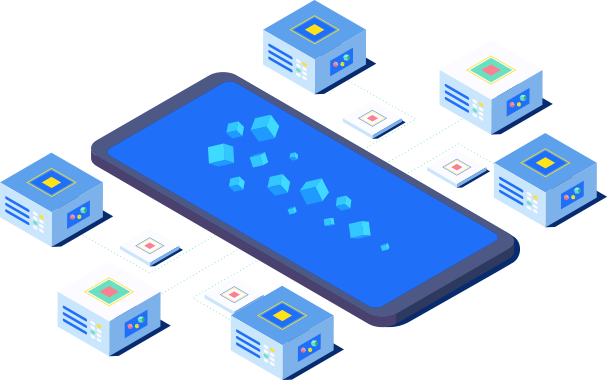
Illustration: Cloud Hosting Data Redundancy: How Your Data Stays SafeRAID Configurations in Cloud vs Traditional Hosting
RAID — Redundant Array of Independent Disks — is the grandfather of data redundancy technologies, and it remains deeply embedded in both cloud and traditional hosting infrastructure, though in fundamentally different ways. In traditional hosting, RAID operates at the individual server level: a dedicated server or VPS node might have its physical or virtual drives configured in a RAID array that protects against drive failures within that specific machine. The server's operating system sees the RAID array as a single logical disk, and when a physical drive fails, the array continues operating in a degraded state while the failed drive is replaced and the data is rebuilt from the parity or mirror information stored on the remaining drives. This is a proven, battle-tested approach that has protected server data for decades, but it has an inherent limitation — the RAID array exists entirely within a single physical server, so if the server's motherboard, power supply, or network interface fails, the RAID protection does nothing to maintain data accessibility.
Cloud hosting platforms abstract RAID away from the individual server entirely. In a cloud environment, you never interact with physical drives or RAID configurations — you interact with storage services that internally use RAID-like concepts at a vastly larger scale, distributed across hundreds or thousands of physical drives. When you create a virtual machine with a persistent disk on AWS, Google Cloud, or Azure, that disk is not a partition on a local RAID array inside the physical server running your VM. It is a logical volume that is replicated across multiple independent storage nodes behind the scenes, using a combination of local RAID for individual node protection and distributed replication or erasure coding for cross-node protection. Your VM can be live-migrated to a completely different physical host without your persistent disk ever being "moved" in the traditional sense — the storage stays on the distributed storage cluster, and the new physical host simply reconnects to it across the data center network. This architecture means that a physical server hosting your cloud VM can catch fire, and your data remains intact and your VM can be restarted on another physical host within minutes, without any data recovery procedure being required. The dedicated server guide on the Hosting Captain blog provides a detailed comparison of how these architectural differences play out in practice when you are choosing between renting physical hardware and consuming cloud resources.
RAID 10, NVMe, and the Speed-Redundancy Balance
For traditional hosting environments — dedicated servers and high-performance VPS nodes — RAID 10 has become the dominant configuration in 2026 for workloads that demand both high performance and solid redundancy. RAID 10 combines mirroring (RAID 1) and striping (RAID 0) by first creating mirrored pairs of drives, then striping data across those mirrored pairs. A four-drive RAID 10 array can survive the failure of any single drive and, with some luck, a second drive failure provided the two failed drives are not in the same mirrored pair. The read performance of RAID 10 is excellent because data can be read from either drive in each mirror simultaneously, and write performance is also strong because there is no parity calculation overhead — writes simply go to both drives in each mirror. The cost is a 50% storage efficiency penalty, which is increasingly acceptable as NVMe drive capacities have grown and per-gigabyte costs have fallen. A 4 TB NVMe RAID 10 array using four 2 TB drives delivers 4 TB of usable capacity with excellent performance and redundancy — a configuration that would have been prohibitively expensive a decade ago and is now accessible to businesses of all sizes.
The emergence of NVMe (Non-Volatile Memory Express) storage has reshaped the RAID calculation in important ways. NVMe drives are dramatically faster than the SATA SSDs they are replacing — a single enterprise NVMe drive can deliver over 1 million IOPS and 7 GB/s of sequential throughput — but they fail differently than traditional drives. NVMe failures tend to be catastrophic and sudden, with fewer of the gradual degradation warning signs that spinning drives and early SATA SSDs exhibited. This failure mode makes RAID protection for NVMe arrays more critical, not less, because you are unlikely to have a warning window during which you could manually migrate data before the drive dies. The extreme speed of NVMe also means that RAID rebuild times are dramatically shorter — a degraded 4 TB NVMe RAID 10 array can rebuild to full redundancy in under 30 minutes, compared to the hours or days that equivalent HDD arrays required. This rapid rebuild dramatically reduces the vulnerability window during which a second drive failure could cause data loss, which is especially important for hosting environments where drives are under continuous heavy load and the statistical likelihood of a second failure during a rebuild is non-trivial. Hosting Captain deploys NVMe RAID 10 storage across all managed dedicated server and high-performance cloud hosting plans, with automated health monitoring that triggers drive replacement workflows before drives actually fail, whenever the SMART monitoring data indicates degradation.
Backup vs Redundancy — Understanding the Critical Difference
One of the most persistent and dangerous misconceptions in hosting is the conflation of backups with redundancy. They are related concepts that serve fundamentally different purposes, and treating them as interchangeable can create a false sense of security that collapses at the worst possible moment. Redundancy protects against hardware failure by maintaining multiple live copies of data that are available immediately and continuously. If a drive fails in a RAID array or a server node goes offline in a distributed storage cluster, the redundant copy takes over within milliseconds or seconds, and your website visitors never notice anything happened. Backups, by contrast, protect against data loss scenarios that redundancy cannot address — accidental deletion, malicious activity, ransomware encryption, application-level corruption that propagates to all replicas, and logical errors that are dutifully replicated to every redundant copy. A redundant storage system will happily maintain three perfect copies of a database that was accidentally dropped by a developer at 3 AM, and all three copies will be equally empty. Backups provide the point-in-time recovery capability that lets you travel back to before the mistake was made.
The practical implication of this distinction is that you need both redundancy and backups, and you need to understand what each protects against and what it does not. A hosting provider that offers RAID 10 storage and distributed replication is providing excellent protection against hardware failures but is not providing backup protection. A hosting provider that offers nightly off-site backups is providing excellent protection against data loss scenarios but is not providing high availability or rapid recovery from hardware failures. The most resilient hosting architectures layer both protections: redundant storage that keeps services running through hardware failures, automated snapshotting for rapid recovery from application-level issues, and regular off-site backups for catastrophic recovery from ransomware, malicious insiders, or multi-site disasters. At Hosting Captain, we configure these layers as a unified data protection strategy for every managed hosting plan, because we have seen too many businesses discover the gap between redundancy and backup only after a data loss event that one protected against but the other would have prevented. The CDN integration with cloud hosting article on our blog explores another complementary protection layer — how content delivery networks can keep cached content accessible even when origin infrastructure experiences failures.
The 3-2-1 Rule and Why It Still Matters in the Cloud Era
The 3-2-1 backup rule — keep at least three copies of your data, on at least two different types of media, with at least one copy stored off-site — originated in the tape backup era but has remained relevant through the transition to cloud hosting, albeit with modern reinterpretations. In a cloud context, three copies might mean your primary data on cloud block storage, a replica in a different availability zone via your provider's redundancy features, and a backup in a completely different cloud region or even a different cloud provider via automated backup tools. Two different media types, in the modern interpretation, means two different failure domains — perhaps two different cloud storage services (object storage for backups, block storage for primary data) or two different providers entirely. The off-site copy is satisfied by any backup stored in a different geographic region, particularly one that is not managed through the same administrative account or authentication system as your primary data, protecting against scenarios where a compromised administrator account could delete both primary data and backups simultaneously.
Adhering to the 3-2-1 rule in cloud hosting does not require complex infrastructure or enterprise budgets. Cloud-native backup tools and managed backup services have made it straightforward to configure automated, encrypted backups to separate regions or separate providers with retention policies that maintain daily, weekly, and monthly restore points. What it does require is conscious attention — backups must be configured, monitored, and periodically tested, because an untested backup is a hope, not a plan. A backup that has never been restored to a working state is not a backup; it is a collection of files whose integrity and recoverability are unknown. Hosting Captain includes automated backup verification in its managed hosting plans, performing quarterly test restores to confirm that backup data is intact and recoverable within the recovery time objectives specified in each customer's service agreement. This testing discipline is the difference between having backups on paper and having backups you can actually count on when a crisis hits.
Geographic Redundancy and Disaster Recovery
Geographic redundancy extends the principle of data protection beyond the walls of a single data center, ensuring that your data survives events that affect an entire facility — natural disasters, extended power outages, fires, floods, and the rare but documented cases of human error that have cascaded through entire data center infrastructures. In cloud hosting, geographic redundancy typically operates at two levels: availability zone redundancy within a single region (protecting against data center building-level failures) and cross-region redundancy (protecting against disasters that affect an entire metropolitan area or regional infrastructure). The distinction matters because it maps directly to the failure scenarios your business might face and the recovery timelines you can expect. A hosting configuration that replicates data across three availability zones within a single AWS region will survive the loss of an entire data center building, which covers the vast majority of real-world failure scenarios, but it will not survive an earthquake that disrupts power and network connectivity across the entire Northern Virginia data center corridor.
Cross-region geographic redundancy adds a protection layer against these larger-scale events, but it introduces additional complexity and cost that must be weighed against the probability and impact of the scenarios it protects against. Synchronous cross-region replication — where data is written to storage systems in two regions simultaneously and the write is not confirmed until both regions have durably stored the data — provides zero data loss in the event of a complete regional failure, but it introduces latency on every write operation because the speed of light imposes a physical floor on how fast data can travel between continents. Asynchronous cross-region replication avoids this latency penalty by confirming writes locally first and replicating to the secondary region with a small delay, typically measured in seconds, at the cost of potentially losing the most recent few seconds of writes if the primary region fails catastrophically before replication completes. For the vast majority of business websites and applications, asynchronous cross-region replication represents the practical sweet spot — it delivers geographic protection without the performance penalty of synchronous replication, and the potential loss window of a few seconds of data is acceptable for most use cases. Financial transaction systems, healthcare record platforms, and regulatory compliance workloads may require synchronous replication, but those are the exception rather than the rule.
Disaster Recovery Planning: Beyond Technology to Process
Geographic redundancy is a technology capability; disaster recovery is an operational capability. Having data replicated to a secondary region is valuable, but it does not constitute a disaster recovery plan unless your team knows how to fail over to that secondary region, has practiced doing so, and has documented the steps, dependencies, and expected timelines. A disaster recovery plan should specify two critical metrics: the Recovery Time Objective (RTO), which is the maximum acceptable duration from disaster declaration to restored service, and the Recovery Point Objective (RPO), which is the maximum acceptable amount of data loss measured in time. A business with a four-hour RTO and a 15-minute RPO needs infrastructure and procedures that can restore service within four hours of a disaster event, losing at most the last 15 minutes of data writes. Achieving this requires not just replication technology but also pre-configured infrastructure in the secondary region (servers, load balancers, network configurations, DNS records), automated or well-documented failover procedures, and regular testing that validates the entire recovery chain from trigger to service restoration.
The most common disaster recovery failure mode is not technology failure but process failure — configurations that work during planned tests but fail during actual emergencies because a dependency was overlooked, a credential expired, a DNS change required manual approval from someone who was unreachable, or the failover procedure assumed network connectivity that did not exist because the disaster that took down the primary region also affected the corporate VPN. These failures are preventable through regular, unannounced disaster recovery exercises that simulate real failure conditions — not just failing over to the secondary region, but doing so without access to the primary region's management tools, without the engineer who wrote the original runbook, and without the luxury of advance preparation. Hosting Captain conducts these exercises quarterly for its managed hosting infrastructure, and the lessons learned from each exercise are incorporated into updated procedures that become progressively more robust over time. For businesses managing their own disaster recovery, the single highest-leverage action is scheduling and executing the first full failover test — the gaps that exercise reveals are almost always more extensive than expected, and they are infinitely better discovered during a test than during an actual disaster.
Edge computing introduces an additional dimension to geographic redundancy that is increasingly relevant for performance-sensitive applications. By distributing compute and data across edge locations closer to end users, edge architectures create inherent geographic redundancy — if one edge location goes offline, traffic routes to the next nearest location without a centralized failover decision. The edge computing explained article on the Hosting Captain blog explores how edge infrastructure complements traditional cloud redundancy, providing resilience against regional disruptions while simultaneously improving global performance. This convergence of redundancy and performance is one of the most significant trends in modern hosting architecture, and it reflects a broader industry recognition that resilience and speed are not separate goals but two dimensions of the same underlying infrastructure quality.
Snapshotting and Versioning for Data Protection
Snapshots and versioning occupy a middle ground between live redundancy and traditional backups, providing rapid recovery from application-level errors, configuration mistakes, and software bugs that corrupt data in ways that redundancy alone cannot protect against. A snapshot is a point-in-time, read-only copy of a storage volume or database that captures its exact state at the moment the snapshot is taken. Snapshots are typically stored on the same storage infrastructure as the primary data and rely on copy-on-write or redirect-on-write mechanisms that make them space-efficient — the initial snapshot consumes almost no additional storage because it simply records pointers to the existing data blocks, and additional storage is consumed only as the primary data diverges from the snapshotted state. This efficiency makes it practical to take snapshots frequently — hourly or even more often — and retain them for days or weeks, providing a dense recovery point history that lets you roll back to a specific point in time with minimal data loss.
Versioning, most commonly associated with object storage services like Amazon S3, extends the snapshot concept to individual objects by retaining every version of every object that has ever been stored in a bucket. When versioning is enabled, overwriting an object does not delete the previous version — it creates a new version while preserving the old one, which can be retrieved at any time by specifying its version ID. Deleting an object with versioning enabled does not actually delete it; instead, the system inserts a delete marker that makes the object appear deleted to normal requests while all previous versions remain recoverable. Versioning provides the ultimate protection against accidental deletion and overwrites — if a developer accidentally deletes the production database backup file or overwrites a critical configuration file with an incorrect version, the previous version remains accessible and recoverable with a few API calls or console clicks. The cost of versioning is the storage consumed by retaining multiple versions of data that may change frequently, but with intelligent lifecycle policies that automatically expire non-current versions after a defined period, this cost can be managed to a predictable, reasonable level.
For database workloads, snapshotting takes on additional sophistication through transactionally consistent snapshots that capture the database in a state that is immediately usable after restoration, without requiring crash recovery or integrity checks. Cloud providers achieve this by briefly quiescing write operations during the snapshot creation window — typically a fraction of a second — and capturing all data files, transaction logs, and metadata in a consistent state. Some managed database services go further by offering point-in-time recovery, which combines periodic full snapshots with continuous transaction log replication to enable restoration to any point in time within a retention window, down to the second. This capability transforms the recovery experience from "restore last night's backup and lose a day's work" to "restore to five seconds before the erroneous query ran, losing almost nothing." For businesses that depend on database integrity for core operations — which is virtually every business running a modern website — transactionally consistent snapshots and point-in-time recovery represent one of the most impactful data protection features available, and it is a capability that Hosting Captain includes as standard across its managed database hosting plans.
How Redundancy Affects Cloud Hosting Pricing
Cloud hosting pricing is inextricably linked to redundancy because redundancy is, at its core, the act of consuming additional resources — storage capacity, compute cycles, network bandwidth, and physical infrastructure — to protect against failures that may or may not occur. Understanding how these costs break down helps you make informed decisions about what level of redundancy is appropriate for your specific workloads, rather than either overpaying for protection you do not need or under-protecting data whose loss would be catastrophic. The cost of redundancy in cloud hosting manifests in three primary ways: storage overhead (the extra capacity consumed by replicas, parity data, and older versions), network egress charges (the bandwidth consumed when data is replicated across availability zones or regions), and compute overhead (the CPU cycles consumed by parity calculations, checksum verification, and consistency protocols). Each of these costs scales with the aggressiveness of your redundancy configuration, and each is directly visible on your cloud billing statement if you know where to look.
Storage overhead is the most transparent and often the largest component of redundancy costs. A database running on triple-replicated cloud block storage consumes three times the raw storage capacity of the database files themselves, and you pay for all three copies whether they are actively serving reads or simply sitting as dormant replicas. Switching to erasure-coded storage for appropriate workloads can reduce this overhead from 200% to 40-60%, but erasure coding is not supported by all storage services and may introduce latency penalties for write-heavy workloads. Cross-region replication doubles this overhead again — six copies of your data across two regions — while adding inter-region network transfer charges that can be surprisingly expensive if your application generates high write volumes. Snapshotting and versioning introduce their own storage consumption that accumulates over time as data diverges from its snapshotted state and as multiple versions of frequently modified files accumulate. The cumulative effect of these redundancy-related storage costs can exceed the cost of the primary data itself, particularly for write-heavy or rapidly changing datasets.
The financial case for investing in redundancy becomes clear when you compare redundancy costs against the expected cost of data loss. For a business generating $10,000 per month in revenue through its website, losing a day's worth of customer orders, inventory updates, or content changes represents a direct financial loss of approximately $330 in transaction value, plus the harder-to-quantify costs of customer trust erosion, support team time, and reputational impact. The incremental cost of upgrading from locally redundant storage (LRS) to zone-redundant storage (ZRS) on Azure, or from single-AZ to multi-AZ deployment on AWS, might be $50 to $150 per month for a typical business workload — a fraction of the expected loss from even a single significant data loss event. As with insurance, the economic calculation is straightforward: compare the premium (incremental redundancy cost) against the expected loss (probability of failure multiplied by cost of failure), and invest when the premium is lower than the expected loss. For most businesses where the website generates meaningful revenue, this calculation strongly favors investing in robust redundancy, and the break-even point arrives sooner than many decision-makers intuitively expect. For organizations exploring specialized hosting configurations, the AI hosting infrastructure article on the Hosting Captain blog covers how redundancy considerations evolve when high-value GPU compute resources enter the equation.
Hidden Costs and Provider Pricing Transparency
Not all redundancy costs are visible on the base pricing page. Cloud providers typically advertise the per-gigabyte storage price for their primary storage tiers but bury the costs of replication traffic, snapshot storage, versioning accumulation, and cross-region data transfer in separate line items that can surprise customers who have not read the fine print carefully. AWS charges for inter-AZ data transfer in both directions when data is replicated between availability zones, which can add $0.02 per gigabyte transferred — a cost that becomes significant for databases that replicate terabytes of transaction logs monthly. Google Cloud and Azure have moved toward simplified pricing models that include inter-zone replication traffic in the base storage price, but cross-region replication traffic remains a separate charge across all three platforms. Understanding these cost structures before architecting your redundancy strategy prevents the unpleasant discovery that your "affordable" multi-region deployment is generating four-figure monthly bills for replication traffic that you did not anticipate.
Hosting Captain's managed cloud hosting plans address this transparency problem by providing fixed-price redundancy configurations with clearly defined protection scopes and no hidden replication or transfer charges. Customers know exactly what redundancy level they are purchasing, what it protects against, and what it costs each month — with no line-item surprises at the end of the billing cycle. This approach reflects our conviction that hosting pricing should be predictable and that data protection should not be a profit center optimized through obscure billing mechanics. When evaluating any hosting provider's redundancy pricing, ask directly about inter-zone transfer charges, cross-region replication fees, snapshot storage costs, and whether the provider charges separately for the redundancy orchestration layer or bundles it into the base plan price. A provider that cannot give clear, immediate answers to these questions is either not transparent about their pricing or does not understand their own cost structure well enough to be trusted with your data.
RPO and RTO Explained in Plain Terms
Recovery Point Objective (RPO) and Recovery Time Objective (RTO) are the two metrics that translate data redundancy from an abstract engineering concept into a concrete business commitment. RPO answers the question: if a disaster occurs right now, how much data could we lose? It is measured in time — an RPO of one hour means that in a worst-case disaster scenario, you could lose up to one hour's worth of data writes that occurred between the last successful replication or backup and the moment of the failure. RTO answers the question: once we declare a disaster, how long until service is restored? It is also measured in time — an RTO of four hours means that from the moment someone decides to initiate disaster recovery procedures, the business expects its website, application, or database to be operational and serving traffic within four hours. Together, RPO and RTO define the recovery envelope that your hosting architecture must fit within, and every redundancy decision you make should be evaluated against whether it enables you to meet these objectives.
The relationship between RPO, RTO, and hosting cost is direct and often painful. Tighter RPOs require more frequent replication or backup operations, which consume more network bandwidth, storage IOPS, and CPU cycles, increasing costs. Near-zero RPO — the gold standard of synchronous replication where no data is lost — requires the most expensive infrastructure and imposes the highest performance penalties. Similarly, tighter RTOs require pre-provisioned infrastructure in the recovery environment (hot standby servers rather than cold infrastructure that must be spun up on demand), automated failover orchestration rather than manual runbooks, and regular testing that validates the recovery timeline — all of which increase costs. A business that can tolerate a 24-hour RTO and a 6-hour RPO (restore from nightly backups to new servers in a different region) can achieve this with relatively modest hosting spend. A business that requires a 5-minute RTO and a near-zero RPO (instantaneous failover to a fully provisioned, synchronously replicated secondary environment) will pay ten to fifty times more for that level of protection. The art of redundancy planning lies in honestly assessing what your business actually requires and refusing to pay for recovery objectives that exceed your genuine needs.
Setting Realistic RPO and RTO Targets for Small and Medium Businesses
For most small and medium businesses operating websites and web applications, realistic RPO and RTO targets fall into a range that is achievable without enterprise-grade infrastructure investment. An RPO of one hour is practical with hourly database transaction log backups or asynchronous replication to a warm standby environment — configurations that are available as standard features on managed cloud hosting plans and add modestly to monthly costs. An RTO of four to eight hours is achievable with documented recovery procedures, pre-configured machine images or infrastructure-as-code templates, and regular testing — again, within the scope of what a well-managed hosting provider can deliver without custom engineering. These targets mean that in a worst-case scenario, your business loses at most one hour of recent data and is back online within a single business day, which is sufficient for the overwhelming majority of commercial websites, content platforms, and SaaS applications serving small to medium customer bases.
The critical mistake that small businesses make is not setting RPO and RTO too high — it is not setting them at all. Without defined recovery objectives, there is no standard against which to evaluate a hosting provider's redundancy capabilities, no metric to test during disaster recovery exercises, and no commitment to hold providers accountable against. Hosting Captain includes defined RPO and RTO commitments in its managed hosting service agreements, with specific numbers that reflect each plan tier's architecture: our managed cloud hosting plans target a one-hour RPO and a four-hour RTO as the baseline, with tighter objectives available for customers whose business requirements demand them. These commitments are backed by documented recovery procedures, automated replication infrastructure, and quarterly testing — because a recovery objective that has never been tested is a wish, not a commitment. We encourage every business evaluating hosting providers to ask the direct question: "What are the RPO and RTO commitments in your service agreement, and when were they last tested?" The quality and specificity of the answer reveals more about a provider's operational maturity than any marketing page ever could.
What Level of Redundancy Different Businesses Actually Need
The level of data redundancy a business requires is not a function of its size, revenue, or industry — it is a function of the answer to one question: what happens if this data is lost or unavailable? A solo entrepreneur's e-commerce store processing $200,000 in annual orders needs substantially better redundancy than a multinational corporation's internal wiki that documents office holiday party procedures. The value-at-risk calculation, not the corporate hierarchy, determines appropriate redundancy investment. This section walks through typical business profiles and maps them to appropriate redundancy configurations, providing a reference framework for decision-makers evaluating their own hosting needs. Every business is unique, and these profiles should be treated as starting points for a more detailed assessment, not as one-size-fits-all prescriptions.
Personal blogs, portfolio sites, and hobby projects represent the lowest tier of redundancy requirements. A locally redundant cloud storage configuration (single data center, triple replication) combined with weekly automated backups to a separate region provides more than adequate protection for data that is time-consuming but not catastrophic to lose. The budget for this tier is appropriately low — $5 to $30 per month for hosting — and the redundancy investment should be proportionally modest. The key decision is ensuring that backups are automated and off-site; manual backup processes that depend on remembering to run them are the most common cause of data loss at this tier.
Small business websites, local e-commerce stores, and service-based businesses — companies where the website generates meaningful monthly revenue but is not the sole revenue channel — require zone-redundant storage within a single region plus daily automated backups. Zone redundancy protects against data center building-level failures, which covers the vast majority of real-world failure scenarios. Daily backups with at least 30 days of retention provide a safety net for application-level errors and accidental deletions. The hosting budget for this tier typically falls in the $30 to $150 per month range, and the incremental cost of zone redundancy over local redundancy is modest — often $20 to $50 per month — making the investment an easy decision for any business where a day of downtime measurably impacts revenue.
Growing e-commerce platforms, SaaS applications with paying customers, and media sites with significant advertising revenue need cross-region redundancy with automated failover capability and real-time or near-real-time replication. At this tier, the cost of downtime is high enough — often hundreds or thousands of dollars per hour — that the investment in multi-region architecture is financially obvious. RPO targets should be under 15 minutes and RTO targets under 2 hours. This tier also demands regular disaster recovery testing, intrusion detection and ransomware protection at the infrastructure level, and immutable backups that cannot be deleted or encrypted by attackers who compromise administrative credentials. Managed hosting plans at this tier, including those offered by Hosting Captain, provide these capabilities as integrated features rather than requiring customers to stitch them together from raw cloud services. Hosting budgets at this level typically range from $150 to $800 per month, and the cost is more than justified by the revenue protection it provides.
Enterprise e-commerce, financial services, healthcare platforms, and regulatory compliance workloads operate at the highest tier of redundancy requirements, with synchronous multi-region replication, zero-RPO architectures, sub-15-minute RTO, comprehensive audit logging, and compliance certifications that impose specific redundancy and data protection standards. These environments often run across multiple cloud providers simultaneously to eliminate single-provider dependency, and they invest heavily in chaos engineering, continuous disaster recovery testing, and dedicated site reliability engineering teams. The hosting costs at this tier are substantial — $2,000 to $15,000 per month and beyond — but they are a fraction of the regulatory penalties, litigation exposure, and business interruption costs that inadequate data protection would incur. While Hosting Captain's standard plans serve the first three tiers, we offer custom enterprise hosting configurations for organizations operating at this level of data protection requirement.
Common Misconceptions About Cloud Data Safety
Misconceptions about cloud data safety are pervasive, and they cause real harm by leading businesses to either under-protect their data or overspend on protection they do not need. The most dangerous misconception is the belief that cloud hosting automatically makes data safe — that simply being "in the cloud" provides comprehensive protection against data loss, corruption, and unavailability. The cloud provides infrastructure that makes data protection achievable and affordable, but it does not automatically configure, monitor, or test that protection. A cloud storage bucket with default settings is not redundantly replicated across regions, is not versioning-enabled, and is not backed up. A cloud database instance launched with default settings may have no automated backups, no multi-zone replication, and no point-in-time recovery capability. The cloud gives you the tools; you — or your managed hosting provider — must actually use them correctly. The cloud is not a data safety product; it is a data safety platform, and the platform's effectiveness depends entirely on how it is configured and operated.
A second pervasive misconception is that data stored with a major cloud provider cannot be lost. The 99.999999999% durability figures advertised by AWS S3 and comparable services are genuine engineering achievements, but they apply to the durability of data that has been successfully stored according to the service's specifications — not to data that is deleted by an administrator with valid credentials, overwritten by an application bug, or encrypted by ransomware that has compromised the application layer. The durability guarantee protects against the storage infrastructure losing your data; it does not protect against you losing your data through application-level error, human action, or security breach. This is why even data stored on the most durable cloud storage services should be backed up independently, versioned, and protected by access controls that limit the blast radius of a compromised credential. The eleven nines of durability are a remarkable engineering achievement, but they address one specific failure mode — storage infrastructure degradation — and no other.
A third misconception is the belief that geographic redundancy and data backups are redundant with each other and that having one eliminates the need for the other. As discussed in Section 4, these protections serve different purposes and protect against different failure modes. Geographic redundancy provides availability and continuity through infrastructure failures; backups provide recoverability from data corruption, deletion, and logical errors. Both are necessary, and neither is sufficient alone. A fourth common misconception involves the assumption that cloud provider employees can access your data at will and that cloud storage is therefore less secure than on-premises storage. Modern cloud platforms provide customer-managed encryption keys, hardware security modules, and comprehensive access audit logging that give customers far more control and visibility over data access than most on-premises data centers ever achieved. The security model of major cloud platforms is built on the principle that the provider should not be able to access customer data, and this principle is enforced through technical controls, not just policy statements. Customers who configure these controls correctly have stronger data access protections in the cloud than they would in a typical on-premises server room with physical access controls that any facilities staff member can bypass.
The final and perhaps most costly misconception is the assumption that configuring data redundancy is a one-time setup task that requires no ongoing attention. Redundancy configurations degrade over time if they are not monitored and maintained. Backup jobs fail silently. Replication lag builds up unnoticed. Snapshot schedules drift. IAM policies accumulate overly permissive grants. Storage costs grow as old snapshots and versions accumulate without lifecycle policies to clean them up. The data protection configuration that was perfect when it was deployed twelve months ago may have silently degraded to a state that would fail during an actual recovery event. This is why managed hosting providers exist — maintaining data protection infrastructure requires continuous operational discipline, and the value of a managed hosting provider like Hosting Captain lies not just in the initial configuration but in the ongoing monitoring, alerting, testing, and maintenance that keeps data protection effective month after month and year after year. The cloud has made data redundancy infrastructure accessible; managed hosting has made it sustainable.
Frequently Asked Questions
What is the most important thing to know about cloud hosting data redundancy?
This guide covers the practical decision points — pricing, performance, and when it makes sense for your situation — based on current 2026 data. The single most actionable insight is that data redundancy is not a binary feature that either exists or does not; it is a spectrum of protection levels that must be matched to the actual value and vulnerability of your specific data. Understanding the difference between replication (hardware fault tolerance), backups (data recovery), snapshots (rapid rollback), and geographic distribution (disaster survival) — and investing in all four layers appropriate to your risk tolerance — separates businesses that treat data protection seriously from those that discover gaps only after a loss event has occurred. Hosting Captain has designed its managed hosting plans to provide clarity at every layer of this spectrum, ensuring customers understand exactly what is protected, against what threats, and at what cost.
How much does this typically cost in 2026?
Pricing varies by provider and plan tier; see the cost breakdown section above for current ranges and what's actually included at each price point. To provide concrete ranges for 2026: entry-level cloud hosting with basic local redundancy and weekly backups typically starts at $5 to $30 per month. Mid-tier hosting with zone-redundant storage, daily automated backups, and snapshotting capabilities falls in the $30 to $150 per month range. Comprehensive hosting with cross-region replication, near-real-time RPO, automated failover, and quarterly recovery testing spans $150 to $800 per month. Enterprise configurations with synchronous multi-region replication, zero-RPO architectures, and compliance-certified data protection exceed $800 per month and can reach several thousand dollars depending on scale and specific requirements. The critical cost caveat is that hidden charges — inter-zone replication traffic fees, snapshot storage accumulation, and cross-region data transfer costs — can significantly increase the total cost beyond what the base pricing page suggests. Always request a total cost of ownership estimate that accounts for these variables before committing to a specific redundancy configuration.
What should beginners check before making a decision?
Look closely at uptime guarantees, renewal pricing (not just the first-year discount), and how responsive support actually is — all covered in detail in this article. Beyond these fundamentals, beginners should verify three additional critical items. First, confirm whether the provider's redundancy claims are backed by specific, measurable commitments (stated RPO/RTO targets, documented redundancy architecture, third-party audit reports) rather than vague marketing language. Second, test the provider's backup and restore process before migrating production data — attempt to restore a backup to a working state and measure how long it actually takes, because this reveals gaps that documentation cannot. Third, understand the shared responsibility model: what data protection tasks are the provider's responsibility and what tasks remain yours? Many data loss incidents occur in the gray area where both parties assumed the other was handling a particular protection layer. Hosting Captain addresses this through explicit responsibility matrices in our service agreements, ensuring there are no gaps in protection caused by assumption mismatch.
Arjun Mehta is a cloud infrastructure consultant specializing in bare-metal architectures, network routing, and high-traffic database clustering.
Frequently Asked Questions
This guide covers the practical decision points — pricing, performance, and when it makes sense for your situation — based on current 2026 data.
Pricing varies by provider and plan tier; see the cost breakdown section above for current ranges and what's actually included at each price point.
Look closely at uptime guarantees, renewal pricing (not just the first-year discount), and how responsive support actually is — all covered in detail in this article.
Hosting Captain has been exceptional for my e-commerce store in Pune. The NVMe SSD speed is
noticeable, and their support team responds within minutes. Highly recommended for any
Indian business!
Ryan John, Pune
Great Value for Money
Switched from a US-based host to Hosting Captain and my website loads 3x faster for Indian
visitors. The free SSL and cPanel are great, and the pricing is unbeatable. Very satisfied
customer!
Priya Mehta, Mumbai
Reliable VPS Hosting
I've been using their VPS plan for 2 years now. 99.9% uptime is not just a claim — it's
reality. My client projects run without interruption. The KVM virtualization gives me full
control I need.
Amit Kumar, Bangalore
Excellent 24/7 Support
The support team helped me migrate my entire WordPress site at 2 AM without any downtime.
This level of service is rare in Indian hosting. Worth every rupee!
Sunita Patel, Ahmedabad
Perfect for Startups
As a startup, budget matters. Hosting Captain's Business plan covers everything we need —
multiple websites, free SSL, daily backups — at a fraction of what international hosts
charge.
Vikram Singh, Delhi
Professional Dedicated Server
Our high-traffic news portal needed a dedicated server. Hosting Captain's DS Business plan
handles 100K+ daily visitors effortlessly. Their team provisioned everything within 4 hours!
Meena Krishnaswamy, Chennai
Trusted Technologies & Partners
Start Your Website with Hosting Captain
From personal blogs to enterprise solutions, we've got you covered!