The conversation around ai hosting vs traditional hosting tends to get reduced to a single variable — GPU versus CPU — as if the entire distinction between these two categories of infrastructure could be captured by the presence or absence of a graphics card in a server chassis. That reduction is not wrong so much as it is dangerously incomplete. AI hosting differs from traditional web hosting across at least five interdependent dimensions: the hardware architecture that processes workloads, the software stack that orchestrates them, the scaling patterns that determine how capacity expands, the pricing models that govern what you pay, and the operational skill sets required to keep everything running. Each of these dimensions interacts with the others in ways that make piecemeal adoption — adding a GPU to a traditional hosting setup, running CUDA workloads on a LAMP-stack server, applying traditional per-month budgeting to per-second GPU billing — a recipe for cost overruns, underperforming infrastructure, and operational surprises that surface at the worst possible moment. At HostingCaptain, we have spent the past two years analyzing the infrastructure decisions made by hundreds of businesses transitioning from traditional to AI-capable hosting, and the consistent pattern is that organizations which understand the full scope of what actually changes — and, critically, what does not — make infrastructure investments that deliver on their AI ambitions, while organizations that treat AI hosting as traditional hosting with a GPU bolted on discover expensive gaps between expectation and reality. This article maps those changes systematically, so that whether you are evaluating your first AI hosting deployment or planning a hybrid infrastructure that spans both models, you make decisions grounded in how the technology actually works rather than in how the marketing copy describes it.
The stakes of getting this comparison right have escalated dramatically as AI capabilities have moved from experimental research projects to production business infrastructure. A marketing agency adding an AI chatbot to client websites, a SaaS company embedding recommendation algorithms into its platform, a healthcare startup deploying diagnostic models behind a HIPAA-compliant API — each of these organizations is making hosting decisions where the infrastructure category (AI versus traditional) determines not just performance and cost but whether the AI feature functions at all. Deploying a 70-billion-parameter language model on a traditional CPU-only server is not merely slow; it is functionally impossible at any throughput that would serve production users, because the memory bandwidth and parallel compute capacity that transformer inference requires simply does not exist in CPU architectures designed for sequential, branch-heavy workloads. Conversely, paying for an H100 GPU cluster to serve a static WordPress site with 5,000 monthly visitors is not merely expensive; it is a capital allocation error that burns budget on silicon that will sit 98% idle. The hosting decision must match the workload, and matching requires understanding what each hosting model actually provides. For readers building foundational knowledge of AI infrastructure, our comprehensive guide to AI hosting covers the GPU architectures, inference-versus-training distinctions, and major provider landscape in detail. For readers evaluating how hosting search visibility itself is being transformed by AI, our analysis of LLM-powered search and hosting SEO provides the strategic context.
What Actually Changes: GPU Hardware, Memory Architecture, and Physical Infrastructure
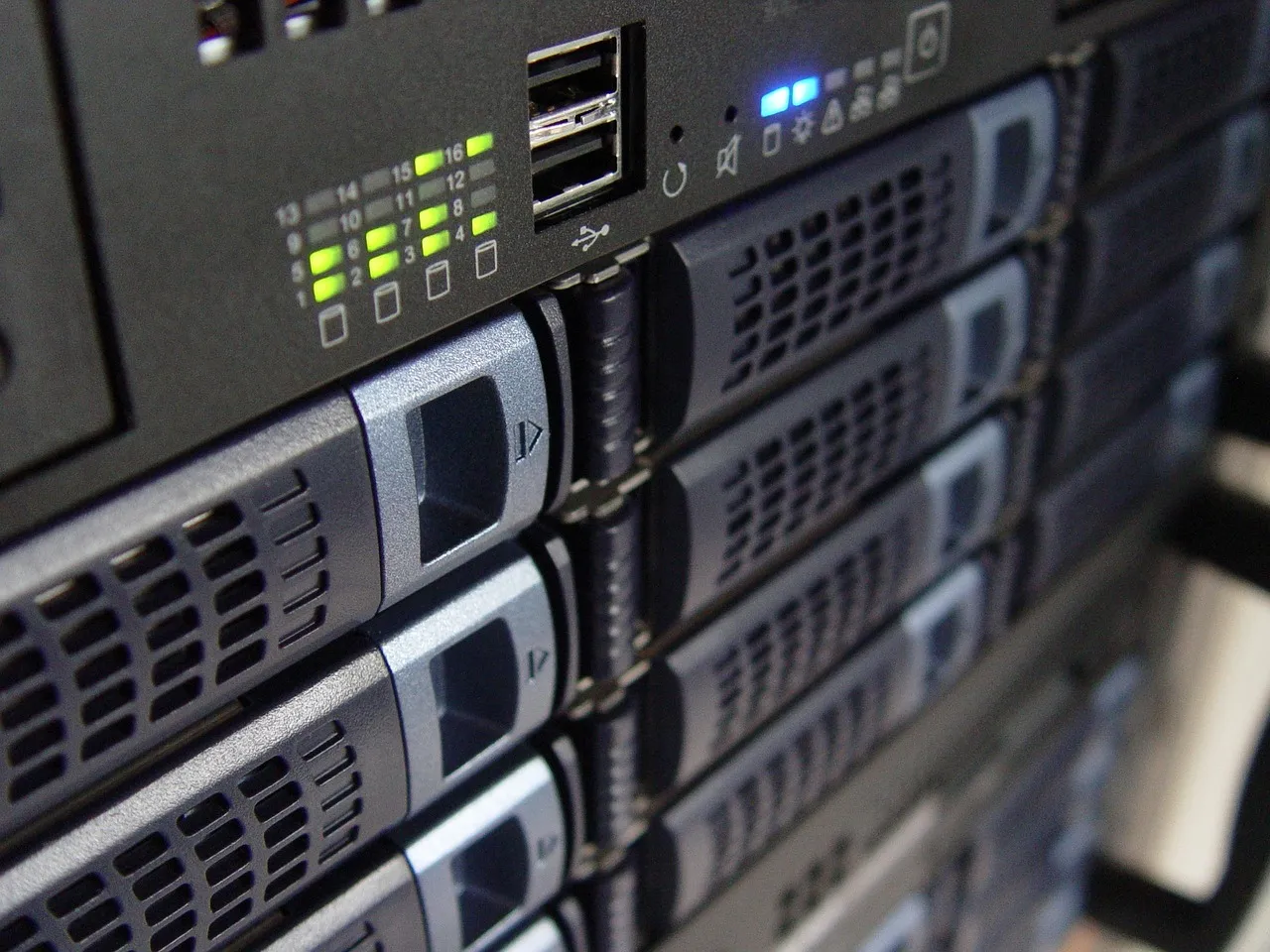
The most visible difference between AI hosting and traditional hosting is the hardware, and while the presence of GPUs is the headline, the implications of GPU-centric infrastructure extend into every subsystem of the server and the data center that houses it. A traditional web hosting server — whether a shared hosting node, a VPS hypervisor, or a dedicated server running LAMP or LEMP stacks — is built around a general-purpose CPU (typically Intel Xeon or AMD EPYC) with 64 to 128 GB of DDR5 RAM, locally attached NVMe storage in a RAID configuration, and one or two 10 Gbps or 25 Gbps network uplinks. The CPU's architecture is optimized for the kind of workloads that web servers actually run: PHP request processing, database query execution, file I/O, and network packet handling — all of which are characterized by branch-heavy code paths, frequent context switches between independent requests, and latency sensitivity that demands fast single-threaded performance. A modern Xeon or EPYC processor handles these workloads efficiently, and the entire server might draw 300 to 500 watts under load, dissipating heat through conventional air cooling with redundant fans. This architecture has been refined over two decades of web hosting evolution, and for the workloads it was designed to serve, it is extraordinarily cost-effective and reliable.
An AI hosting server replaces the CPU-centric architecture with a GPU-centric one, where the CPU functions primarily as a host processor that feeds data to the accelerators and manages I/O, while the actual computation occurs on GPUs equipped with thousands of cores designed for the parallel matrix multiplications that dominate neural network workloads. An NVIDIA H100 GPU contains 16,896 CUDA cores and 528 Tensor Cores, delivers 1,979 teraflops of FP8 compute, and is fed by 80 GB of HBM3 memory running at 3.35 TB/s — bandwidth figures that are an order of magnitude beyond what DDR5 system RAM can deliver. A single H100 draws 700 watts by itself, and a server equipped with eight H100 GPUs in an SXM form factor can draw 8 to 10 kilowatts under sustained load, requiring liquid cooling — direct-to-chip cold plates or immersion cooling — because the thermal density exceeds what air can practically remove from a rack-mounted chassis. The power delivery infrastructure must be upgraded: a rack of GPU servers can draw 40 to 80 kW, compared to 5 to 15 kW for a rack of traditional hosting servers, and the electrical provisioning, UPS capacity, and generator backup systems must scale accordingly. These are not incremental differences; they are category-level changes that mean you cannot simply add GPUs to an existing traditional hosting deployment — the physical infrastructure that supports the servers must be re-engineered, which is why AI hosting is concentrated in purpose-built data centers and why retrofitting existing colocation facilities for AI workloads is a multi-million-dollar capital project. Standards organizations including the W3C web standards body are beginning to document the infrastructure implications of AI workloads, though the practical standards for AI data center design are currently being driven more by hyperscale operator requirements than by formal specification processes.
The memory architecture difference between traditional and AI hosting deserves particular attention because GPU memory — its capacity and bandwidth — is more frequently the binding constraint on AI workload performance than raw compute throughput. Traditional hosting servers use DDR5 system RAM organized in DIMMs on memory channels connected to the CPU's integrated memory controller, delivering 50 to 80 GB/s of bandwidth per socket — sufficient for caching database query results, holding PHP opcode caches, and buffering file I/O, but orders of magnitude too slow for the memory access patterns of neural network inference. A transformer model performing autoregressive text generation must read every parameter from memory for every token it generates; a 70-billion-parameter model at FP16 precision occupies approximately 140 GB of memory, and generating 50 tokens per second requires reading 7 TB of parameters per second from GPU memory. DDR5 system RAM, even in an eight-channel configuration, cannot approach this bandwidth. HBM3 on the H100 can, which is why AI workloads run on GPUs and not on CPUs regardless of how many CPU cores are available — it is a memory bandwidth problem, not a compute throughput problem. This is a critical insight for organizations evaluating AI hosting options: the GPU SKU you select should be determined primarily by the memory capacity and bandwidth your model requires, not by the headline teraflop number, because a model that does not fit in GPU memory cannot run at all without quantization, tensor parallelism, or CPU offloading — all of which introduce performance penalties and engineering complexity that undermine the value of GPU acceleration in the first place.
What Actually Changes: The Software Stack from CUDA to Model Serving
The software stack running on an AI hosting server bears almost no resemblance to the software stack running on a traditional web hosting server, and anyone transitioning from managing LAMP, LEMP, or containerized microservice environments to provisioning AI infrastructure will encounter a software ecosystem with its own compatibility constraints, its own deployment patterns, and its own failure modes. A traditional hosting software stack is built around a web server (Apache or Nginx), a scripting runtime (PHP, Python via WSGI, Node.js), a database (MySQL, PostgreSQL, or MariaDB), and an operating system (typically AlmaLinux, Ubuntu LTS, or Debian) with a package manager that handles updates through a mature, well-documented process. This stack has been battle-tested across billions of production deployments, its failure modes are well understood, and the tooling ecosystem — configuration management with Ansible or Puppet, monitoring with Nagios or Datadog, logging with ELK or Loki — is comprehensive and mature. An engineer with standard Linux system administration skills can configure, secure, and troubleshoot a traditional hosting stack with reference to documentation that has been refined over two decades.
The AI hosting software stack begins with the NVIDIA GPU driver and the CUDA toolkit — a parallel computing platform that provides the low-level libraries (cuBLAS for matrix multiplication, cuDNN for deep neural network primitives, NCCL for multi-GPU communication) that every higher-level AI framework depends on. The CUDA driver version must be compatible with the specific version of PyTorch, TensorFlow, or JAX that the workload requires, and a CUDA driver update that would be a routine maintenance operation on a traditional server can silently break performance optimizations that a data science team spent weeks tuning — because the AI software stack has tighter coupling between its layers than the traditional web stack, where Apache and PHP versions can generally be updated independently without breaking application logic. Above the CUDA layer sits the AI framework — PyTorch dominating research and production deployments in 2026, TensorFlow retaining significant presence in the Google Cloud ecosystem, JAX gaining traction for large-scale distributed training — and above the framework sit model-serving systems like NVIDIA Triton Inference Server, vLLM, or TensorFlow Serving that handle request batching, memory allocation, and concurrent model execution for production inference workloads. Containerization, typically Docker with the NVIDIA Container Toolkit for GPU passthrough, has become the dominant deployment model for AI hosting workloads because it encapsulates the entire CUDA-driver-framework-model dependency chain into a reproducible artifact — but GPU containers introduce security and operational considerations (device node mounting, CUDA library path mapping, Multi-Instance GPU partitioning) that have no analogue in the stateless web application containers that dominate traditional hosting environments.
The operational maturity gap between traditional hosting tooling and AI hosting tooling is real and consequential. When a traditional hosting server experiences a performance issue, the diagnostic path is well established: check CPU utilization, memory consumption, disk I/O wait, and network throughput using standard Linux tools (top, iostat, netstat, vmstat) that every system administrator knows. When an AI hosting server experiences a performance issue — GPU utilization at 40% despite a queue of inference requests, or training throughput dropping 30% without any change in the model code — the diagnostic path requires GPU-specific telemetry tools (nvidia-smi, NVIDIA DCGM, PyTorch Profiler, NVIDIA Nsight) that measure tensor core utilization, GPU memory bandwidth saturation, NVLink throughput, and PCIe replay counts. The skill set required to interpret these metrics is different from traditional system administration, and the talent market for engineers who possess both traditional hosting operations skills and GPU infrastructure expertise is still nascent. Organizations transitioning from traditional to AI hosting should budget not just for the GPU hardware but for the training, hiring, or consulting investment required to build operational competence in the AI software stack — because an unmanaged GPU cluster that nobody on the team knows how to debug is a faster path to wasted infrastructure spend than the cloud cost shock horror stories that dominate DevOps conference talks. For context on how smaller hosting companies are navigating this skill-set challenge, our analysis of how small hosts compete in the AI era examines the training and partnership strategies that make AI hosting operationally accessible without hyperscale-sized engineering teams.
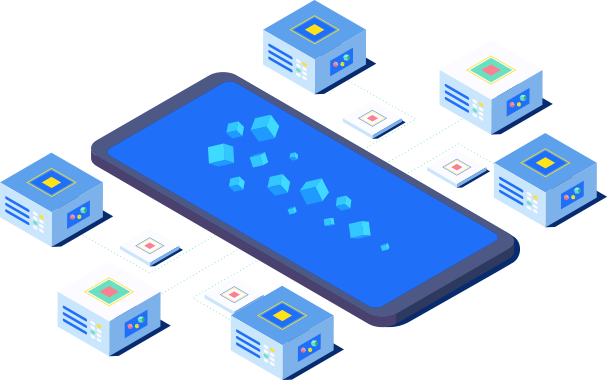
Illustration: AI Hosting vs Traditional Hosting: What Actually ChangesWhat Actually Changes: Scaling Patterns, API-First Architecture, and Networking
The scaling patterns that govern AI hosting are fundamentally different from the patterns that govern traditional hosting, and attempting to apply traditional scaling intuition to AI workloads leads to infrastructure designs that are either wastefully over-provisioned or dangerously under-capacity. Traditional web hosting workloads are predominantly stateless: each HTTP request is handled independently, session state is stored externally in Redis or a database, and horizontal scaling is achieved by adding more web server instances behind a load balancer — a pattern so well established that it is automated by every cloud platform's autoscaling service and internalized by every DevOps engineer as the default approach to handling traffic growth. If your WordPress site gets a traffic spike from a social media mention, your load balancer distributes the additional requests across your existing server pool, and if CPU utilization crosses a threshold, your autoscaling configuration provisions additional instances. The scaling unit is the request, the constraint is typically CPU or memory, and the solution is horizontal replication of stateless workers — a pattern that works because each request is independent and can be routed to any available server without coordination.
AI workloads, particularly during inference serving and model training, are deeply stateful in ways that break the stateless horizontal scaling model. A language model serving inference requests holds billions of parameters in GPU memory — typically 140 GB for a 70-billion-parameter model at FP16 — and that model state must be present on every GPU that handles inference requests for that model. You cannot distribute individual inference requests across a pool of small GPU instances the way you distribute HTTP requests across a pool of web servers, because each GPU instance must hold the full model in memory, and the model loading time (often 30 to 120 seconds for large models) makes the kind of rapid scale-out that web autoscaling enables impractical for AI inference. Scaling AI inference horizontally means adding more GPU instances that each hold a complete copy of the model, and the cost scales linearly with the number of instances — there is no equivalent of the traditional hosting pattern where adding a $20-per-month VPS instance increases capacity by a proportional share. The scaling unit for AI inference is the model replica, the constraint is GPU memory capacity, and the economics are fundamentally different: a single H100 GPU at $2.50 to $4.50 per hour can serve hundreds of concurrent inference requests for a 70B model, but adding capacity means adding entire GPUs at the same hourly rate, not adding fractional vCPU increments at marginal cost.
Training workloads introduce scaling challenges that are more extreme still. Distributed training across multiple GPUs — whether within a single node (8 GPUs connected via NVLink) or across multiple nodes (dozens to hundreds of GPUs connected via InfiniBand) — requires that every GPU synchronize gradient updates after every training step. This synchronization is an all-reduce collective operation that demands sustained inter-GPU bandwidth of 400 GB/s or higher per GPU, with tail latency above a few microseconds directly translating into idle GPU time — because all GPUs in the distributed training group must wait for the slowest participant to complete its gradient computation before the next training step can begin. The networking requirements for distributed AI training are an order of magnitude more demanding than even the most latency-sensitive traditional hosting workloads; a 200-microsecond network delay that would be imperceptible to a web application serving pages in 200 milliseconds represents 20% of a 1-millisecond gradient synchronization step, and that 20% overhead compounds across millions of training steps into days of additional training time and tens of thousands of dollars in additional GPU cost. This is why AI hosting providers that support distributed training invest in InfiniBand or RoCE fabrics with RDMA support, why the networking line item in an AI hosting budget can rival the GPU compute line item, and why "just use the existing data center network" is not a viable strategy for multi-node AI training deployments.
API-first architecture is another dimension where AI hosting diverges from traditional hosting in ways that reshape operational workflows. Traditional hosting environments are managed through control panels (cPanel, Plesh, DirectAdmin) and SSH sessions — interactive, human-driven interfaces that work well for managing a handful of servers but become bottlenecks when infrastructure needs to be provisioned, scaled, or reconfigured programmatically in response to changing workload demands. AI hosting environments are managed through REST APIs and infrastructure-as-code tooling — Terraform providers for GPU cloud platforms, Python SDKs for model deployment, CI/CD pipelines that automate model evaluation and canary deployments — because the complexity and pace of AI infrastructure operations exceed what manual, interactive management can handle. A training job that runs for three days on an 8-GPU cluster and then terminates, an inference endpoint that scales from one GPU to four during a product launch and back down afterward, a model update pipeline that evaluates a new checkpoint against a held-out test set and promotes it to production only if performance meets the threshold — these workflows require programmatic infrastructure control, and the hosting platforms that provide it (through mature APIs and Terraform providers) are the ones that support AI workloads at production scale. For readers building foundational knowledge of the virtualization technologies that underpin modern hosting, our complete beginner's guide to VPS hosting provides the core concepts that apply across both traditional and AI deployment models.
What Actually Changes: Pricing Models, Cost Structures, and Hidden Expenses
The pricing models that govern AI hosting are different in kind from the pricing models that govern traditional hosting, and organizations that bring traditional hosting budgeting assumptions to AI infrastructure procurement routinely encounter costs that are two to five times higher than their initial estimates. Traditional hosting is priced per month, per server or per instance: a shared hosting plan for $5 to $15 per month, a VPS for $20 to $100 per month, a dedicated server for $100 to $500 per month. The price is fixed and predictable, the resources are dedicated or fairly shared, and the monthly invoice matches the advertised price with rare exceptions for bandwidth overages or add-on services. This pricing model has shaped how businesses budget for hosting: an annual line item that fluctuates only when the business grows enough to justify a plan upgrade, and that can be forecasted with high accuracy twelve months out. It is a model built for workloads that run continuously at relatively steady utilization levels — websites, email servers, databases, and application backends that serve users throughout the day and night with predictable diurnal traffic patterns.
AI hosting is priced per GPU-hour, not per month, and the cost of running a GPU instance continuously — 730 hours per month — is high enough that the monthly bill for a single H100 instance at on-demand pricing ($3 to $4.50 per GPU-hour) ranges from $2,200 to $3,300. Reserved instances with one-year or three-year commitments reduce this to $1,100 to $1,800 per month, and spot or preemptible instances — which can be reclaimed by the provider with as little as 30 seconds' notice — can push the effective rate below $800 per month, but at the cost of unpredictability that makes spot instances unsuitable for production inference serving with uptime requirements. The per-hour billing model, combined with the high per-hour rate, creates a pricing dynamic where the cost of infrastructure is directly proportional to usage and where usage can spike dramatically when a training job runs longer than expected, when inference traffic exceeds forecasted volumes, or when a data scientist leaves a GPU instance running over a weekend because they forgot to terminate it. Organizations that do not implement GPU cost governance — automated shutdown policies for idle instances, spending alerts, per-team chargeback mechanisms — routinely discover that 30% to 50% of their AI hosting spend goes to instances that are provisioned but not actively utilized, a form of waste that has no equivalent in the fixed-monthly traditional hosting model.
The hidden costs of AI hosting extend beyond GPU compute into storage, data transfer, and networking line items that traditional hosting plans typically bundle into the base price. High-performance storage capable of feeding data to GPUs at the throughput they demand — parallel file systems like Lustre, WEKA, or Amazon FSx for Lustre — costs $0.10 to $0.50 per GB per month, which means a 10 TB training dataset stored on a high-performance file system generates $1,000 to $5,000 per month in storage costs alone — potentially exceeding the GPU compute cost for smaller training jobs. Data egress fees — the charges cloud providers levy for moving data out of their networks — range from $0.05 to $0.12 per GB and can accumulate into five-figure monthly charges when training datasets, model checkpoints, and inference logs are moved between cloud regions or between cloud and on-premise environments. Inter-GPU networking for bare-metal AI hosting deployments requires InfiniBand switches, cables, and transceivers that cost $60,000 to $100,000 per switch for a 64-port configuration — a capital expenditure line item that has no equivalent in traditional hosting, where a standard 25 Gbps Ethernet switch costs $5,000 to $15,000. Accurate AI hosting cost modeling must account for the entire system — compute, memory, storage, networking, data transfer, and the platform engineering labor to integrate them — rather than treating the GPU instance price as a standalone figure that can be compared directly to a traditional hosting monthly plan price. Failure to model the ancillary costs is the single most common reason that AI hosting budgets overshoot initial estimates, and it is a mistake that is entirely avoidable with disciplined cost modeling before procurement begins.
What Stays the Same: Reliability, Security, and Support Fundamentals
The differences between AI hosting and traditional hosting are significant enough that it is easy to overlook the dimensions where the fundamentals remain unchanged — and those dimensions, particularly reliability, security, and support quality, are the factors that determine whether an AI hosting deployment succeeds in production or becomes an expensive operational liability. The need for infrastructure reliability does not diminish when GPUs enter the stack; if anything, it intensifies because the cost of downtime is higher. A traditional hosting server that goes offline for an hour costs the business the revenue generated during that hour plus the harder-to-quantify cost of customer trust erosion. An AI hosting server running a training job that crashes after 72 hours of GPU compute time because of an uncorrectable memory error costs the business 72 hours of GPU rental — potentially $15,000 to $25,000 for an 8-GPU H100 cluster — plus the schedule delay for the project that depended on the trained model, plus the engineering time required to restart the training from the most recent checkpoint. The reliability engineering practices that the traditional hosting industry refined over decades — redundant power supplies, ECC memory, RAID storage with hot spares, proactive hardware health monitoring, automated failover — are equally essential in AI hosting, and the AI hosting providers that invest in these practices deliver measurably better training success rates and inference uptime than providers that cut corners on infrastructure quality to compete on headline GPU pricing.
Security in AI hosting builds on the same foundation of network segmentation, access control, encryption, and vulnerability management that secures traditional hosting environments, but it adds layers of concern that are specific to machine learning workloads. Model weight files downloaded from community hubs like Hugging Face — often serialized using Python's pickle format, which can execute arbitrary code when deserialized — introduce a supply chain attack vector that must be addressed through sandboxed model loading, cryptographic signature verification, and network policies that restrict outbound connectivity from inference containers. Models trained on proprietary or personally identifiable data can inadvertently memorize and later reproduce fragments of their training data through techniques like membership inference attacks and training data extraction, creating data leakage vectors that carry regulatory implications under GDPR, HIPAA, and emerging AI governance frameworks. The security practices that protect traditional hosting environments — regular patching, least-privilege access, network firewalls, intrusion detection — are necessary but not sufficient for AI hosting, and organizations that deploy AI workloads without extending their security program to address model-specific attack surfaces are accepting risks that their existing security controls were never designed to mitigate.
Support quality remains the dimension where the hosting provider's organizational character matters most, regardless of whether the infrastructure is traditional or AI-specialized. The core of good hosting support — a knowledgeable human being who answers quickly, diagnoses accurately, and resolves issues without escalating through script-driven tiers — is the same whether the issue involves a PHP memory limit on a shared hosting account or a CUDA out-of-memory error on a GPU instance. The difference is that AI hosting support requires domain knowledge that is still scarce: the support engineer must understand GPU architectures, CUDA toolkit compatibility, model serving framework configuration, and distributed training failure modes in addition to the Linux system administration, networking, and security fundamentals that traditional hosting support requires. Hosting providers that have invested in training their support teams on AI infrastructure — rather than simply adding GPU instances to their product catalog and relying on the customer to figure out the rest — deliver a meaningfully different support experience, and the customers who have experienced both the "here's your GPU, good luck" model and the "let me help you debug why your inference throughput dropped 40% after the CUDA update" model rarely return to the former. The AI hosting providers that will win long-term customer relationships are those that recognize that support quality, not GPU SKU count, is the durable competitive differentiator — a lesson that the traditional hosting industry learned over two decades and that the AI hosting industry is currently rediscovering.
Who Needs AI Hosting — and Who Absolutely Doesn't
The most expensive mistake in the AI hosting market in 2026 is not choosing the wrong GPU SKU or the wrong provider — it is choosing AI hosting at all when traditional hosting would serve the workload equally well at a fraction of the cost. AI hosting is necessary when your workload genuinely requires the parallel compute throughput and memory bandwidth that only GPU accelerators can deliver: serving inference for language models, image generation models, or recommendation systems at production scale; training or fine-tuning models on custom datasets; running batch inference jobs that process large volumes of data through neural networks; or hosting applications that embed real-time AI features — chatbots, semantic search, content generation, computer vision — as core product functionality. For these workloads, traditional hosting is not a cheaper alternative; it is an incapable one, because the workload simply cannot execute at acceptable latency or throughput on CPU-only infrastructure. The decision to use AI hosting for these workloads is not a cost optimization choice; it is a capability requirement, and the relevant comparison is not AI hosting versus traditional hosting but which AI hosting provider and configuration delivers the required performance at the lowest total cost.
The population of organizations that do not need AI hosting is larger than the AI industry's marketing would suggest, and it includes many businesses that are being told — by vendors, by consultants, by technology media — that they must adopt AI infrastructure to remain competitive. If your workload is a standard website — WordPress, Drupal, a static site, a custom PHP or Node.js application — serving content to human visitors, traditional hosting (shared, VPS, or dedicated, depending on scale) is not merely adequate; it is optimal, delivering the required performance at a cost that AI hosting cannot approach. If your application uses third-party AI APIs — OpenAI's GPT-4, Google's Gemini, Stability AI's image generation — rather than self-hosted models, you do not need AI hosting; the API provider runs the GPU infrastructure, and your application server, which makes HTTP calls to the API and processes the responses, runs perfectly well on traditional hosting. If you are experimenting with AI features or building a prototype, cloud-based API services and serverless GPU platforms that charge per inference rather than per GPU-hour are almost certainly more cost-effective than provisioning dedicated GPU instances that will sit idle between experimentation sessions. The discipline of AI infrastructure procurement is not about buying the most powerful hardware available; it is about matching the infrastructure to the workload with enough headroom to accommodate growth but not so much headroom that you are paying for capacity you will never use. This matching exercise starts with an honest assessment of what your application actually does, not what the technology hype cycle suggests it should do.
Between the clear "yes" and the clear "no" lies a growing population of organizations operating hybrid workloads — traditional web serving plus AI inference for specific features — where the infrastructure decision is genuinely difficult. An e-commerce platform that runs its product catalog and checkout flow on traditional hosting while using a self-hosted recommendation model to power personalized product suggestions is the canonical example. The recommendation model requires GPU infrastructure for inference, but the catalog and checkout — which represent the majority of server traffic and the revenue-critical transaction path — run perfectly well on traditional hosting. The optimal infrastructure for this workload is neither purely traditional nor purely AI; it is a hybrid architecture where traditional hosting handles the web serving and business logic while GPU instances serve the AI inference endpoints, connected through internal networking with latency low enough that the AI-powered features do not degrade the user experience. This hybrid pattern is increasingly common, and it is the infrastructure design that will define the hosting landscape for the majority of businesses that adopt AI features without becoming AI companies. Hosting providers that can deliver both traditional and AI hosting capacity with integrated management, unified billing, and low-latency interconnection between the two environments are positioned to capture this hybrid demand more effectively than providers that offer only one category or the other as disconnected product silos.
The Transition Path: From Traditional Hosting to AI Hosting
Transitioning from traditional hosting to AI hosting — or more accurately, adding AI hosting capacity alongside existing traditional infrastructure — is a journey that rewards deliberate, incremental progression and punishes big-bang migrations attempted without operational readiness. The first step is workload analysis: identify the specific AI features that require GPU infrastructure, quantify their compute and memory requirements through benchmarking on rented GPU instances before making long-term commitments, and determine whether the workload is inference (smaller, cheaper GPUs like the L40S are often sufficient), fine-tuning (mid-range GPUs with moderate memory capacity), or training (high-memory GPUs like the H100 with InfiniBand networking for multi-GPU distributed training). This analysis should produce a concrete GPU specification — model, count, memory capacity, interconnect type — rather than a vague "we need AI hosting" request that leaves the provisioning decision to guesswork. Running the actual workload on rented GPU instances — even for a few hours — provides ground-truth data about memory consumption, throughput, and latency that no specification sheet or benchmark report can replace, and the cost of this experimentation (a few hundred dollars of GPU rental) is a rounding error compared to the cost of provisioning a cluster that proves to be the wrong size or configuration.
The second step is operational preparation: ensure that the team responsible for managing the AI infrastructure has the skills, tooling, and monitoring systems in place before production workloads depend on it. This means training existing system administrators on GPU infrastructure fundamentals — CUDA toolkit management, GPU performance monitoring with nvidia-smi and DCGM, model serving framework configuration — rather than assuming that traditional hosting operations skills transfer directly. It means deploying GPU-aware monitoring (NVIDIA DCGM integrated with the existing observability stack, whether that is Prometheus and Grafana, Datadog, or a cloud-native monitoring service) so that GPU utilization, memory pressure, and thermal throttling are visible alongside the CPU, memory, and disk metrics that the team already monitors. It means implementing GPU cost governance — automated shutdown of idle instances, spending alerts at configurable thresholds, per-project or per-team cost attribution — before the first production GPU instance is provisioned, because retrofitting cost controls onto an already-running AI hosting environment is far more difficult and politically fraught than building them in from the start. Organizations that skip operational preparation and provision GPU instances as soon as the budget is approved invariably spend the first several months of their AI hosting journey in reactive firefighting mode — debugging CUDA version conflicts, investigating surprise bills, and explaining to stakeholders why the AI feature that was supposed to differentiate the product is instead generating infrastructure incidents.
The third step is architectural integration: designing the network topology, authentication layer, and data pipeline that connects the AI hosting environment to the existing traditional hosting infrastructure. GPU instances serving inference endpoints should be reachable from the application servers with latency measured in single-digit milliseconds — which typically means deploying them in the same data center or the same cloud region, connected through private networking (VPC peering, direct interconnect, or a private VLAN) rather than through the public internet. The authentication mechanism that controls access to inference endpoints should integrate with the existing identity provider — the GPU instances should not require a separate set of credentials that create a parallel access management burden. The data pipeline that feeds the AI models — product catalogs for recommendation systems, customer interaction logs for personalization models, content repositories for generation models — should move data from the traditional hosting environment to the AI hosting environment efficiently, with attention to the data transfer costs and latency characteristics discussed earlier. These integration decisions, made thoughtfully during the transition planning phase, determine whether the AI hosting capacity functions as a seamless extension of the existing infrastructure or as an isolated island that creates operational friction every time data or requests cross the boundary between the two environments. HostingCaptain's consulting experience with organizations navigating this transition suggests that architectural integration is the step most frequently underinvested — teams focus on GPU procurement and model development while deferring infrastructure integration, only to discover that connecting the AI environment to the existing stack requires rework that could have been avoided with upfront planning.
Cost Comparison: Traditional Hosting vs AI Hosting at Different Scales
Direct cost comparison between traditional hosting and AI hosting is complicated by the fact that they serve fundamentally different workloads, but understanding the cost structures at typical scale points helps organizations budget realistically and identify the thresholds where each model becomes economically rational. At the small-project scale — a personal website, a small business site with 10,000 monthly visitors, a freelance developer's portfolio — traditional shared hosting at $5 to $15 per month or a basic VPS at $12 to $30 per month provides all the compute capacity the workload requires. AI hosting at this scale is almost never justified; even a modest L40S GPU instance at $0.80 to $1.50 per hour would cost $580 to $1,100 per month if run continuously, and the workload simply does not need the parallel compute capacity that the GPU provides. The only exception is a GPU instance used intermittently — a few hours per week for model experimentation or batch processing — where the per-hour billing model means the monthly cost might be $50 to $150, competitive with traditional hosting at the high end of the VPS range. But for continuous, always-on workloads, traditional hosting is the economically correct choice at this scale by a margin of 10x to 50x.
At the mid-range scale — a SaaS application serving hundreds to thousands of users, an e-commerce store with moderate traffic and AI-powered search or recommendations, a content platform with AI-generated features — the cost comparison becomes workload-dependent. Traditional hosting for the web serving and business logic layer (a few VPS instances or a mid-range dedicated server at $100 to $400 per month) plus AI hosting for the inference endpoints (a single L40S or A100 GPU instance at $600 to $1,500 per month if run continuously, or less with spot and reserved pricing) produces a combined monthly infrastructure cost of $700 to $1,900. This is a meaningful line item for a mid-range business, but it is the cost of delivering AI features that differentiate the product — and the alternative of using third-party AI APIs (OpenAI, Google, Anthropic) typically costs $0.01 to $0.10 per inference request, which at mid-range scale (hundreds of thousands to millions of requests per month) can exceed the cost of self-hosted GPU infrastructure. The break-even point between API-based and self-hosted AI inference depends on request volume, model size, and GPU utilization, but for workloads exceeding approximately 500,000 inference requests per month, self-hosted AI hosting on a single GPU instance is often cheaper than API services — and it provides lower latency, data residency control, and freedom from API rate limits and pricing changes.
At the enterprise scale — a platform serving millions of inference requests per day, a research lab running distributed training on multi-GPU clusters, a large SaaS company with AI features embedded across its product suite — the cost of AI hosting becomes a major line item that demands dedicated infrastructure management. An 8-GPU H100 cluster for distributed training costs $176 to $264 per hour at on-demand pricing ($4,200 to $6,300 per day, $128,000 to $192,000 per month at continuous utilization). Reserved pricing reduces this to roughly $70,000 to $110,000 per month, and spot pricing can push it lower still for fault-tolerant training workloads. At this scale, the decision between cloud AI hosting and on-premise GPU infrastructure becomes financially material: an on-premise 8-GPU H100 cluster costs $400,000 to $600,000 in capital expenditure (servers, networking, installation), and if utilized at 70% or higher over a three-year lifecycle, the total cost of ownership ($400K to $600K capex plus power, cooling, and maintenance) is typically 40% to 60% lower than equivalent cloud GPU rental over the same period. However, the on-premise path requires the capital, the data center infrastructure, and the operational team to support it — and for organizations that cannot commit to sustained high utilization or that need the flexibility to scale capacity up and down, cloud AI hosting remains the pragmatically correct choice despite the higher per-hour cost. The enterprise AI hosting decision is fundamentally a utilization and flexibility trade-off, and the right answer depends on workload predictability, capital availability, and operational maturity — factors that are specific to each organization and that resist generic "cloud is always cheaper" or "on-premise is always cheaper" generalizations.
For the majority of organizations between the small-project and mid-range scales — the zone where most HostingCaptain readers operate — the cost-optimal strategy is typically a hybrid approach: traditional hosting for the web serving and business logic layer, a single GPU instance (L40S or A100, depending on model size) for AI inference, and API-based AI services for experimentation, prototyping, and workloads that do not yet justify dedicated GPU infrastructure. This hybrid model provides the cost efficiency of traditional hosting for the workloads where it excels, the capability of AI hosting for the features that require it, and the flexibility of API services for the development and experimentation phase — all within a combined monthly budget that, at $200 to $1,500 for the typical mid-range deployment, is accessible to businesses that are serious about AI adoption but not operating at the venture-capital-funded scale that makes six-figure monthly GPU bills sustainable. The key to making this hybrid model work is the architectural integration discussed in the transition path section: the traditional and AI hosting environments must function as a single, coherent infrastructure from the perspective of the application and the operations team, not as two separate systems that happen to share a billing relationship.
Frequently Asked Questions
What is the single biggest difference between AI hosting and traditional hosting?
The single biggest difference is the compute hardware architecture: AI hosting uses GPUs (or TPUs, or custom AI accelerators) designed for the parallel matrix multiplications that neural networks require, while traditional hosting uses CPUs designed for sequential, branch-heavy workloads like web request processing and database queries. This hardware difference cascades into differences in software stacks (CUDA and PyTorch versus Apache and PHP), memory architecture (HBM3 at 3.35 TB/s bandwidth versus DDR5 at 50-80 GB/s), power and cooling requirements (liquid cooling for 8-10 kW per GPU server versus air cooling for 300-500W traditional servers), and pricing models (per-GPU-hour billing versus fixed monthly plans). The hardware choice determines every other aspect of the hosting infrastructure, which is why organizations should start their AI hosting evaluation by understanding what GPU specification their workload actually requires rather than beginning with provider comparisons or pricing negotiations.
Can I just add a GPU to my existing traditional hosting server and call it AI hosting?
Technically, you can install a GPU in a server that runs a traditional hosting stack, but doing so does not produce a production-ready AI hosting environment for several reasons. Consumer-grade GPUs (like NVIDIA GeForce RTX cards) lack the ECC memory, high-bandwidth interconnects, and sustained thermal design that enterprise AI workloads require for reliability. The traditional hosting software stack (Apache, PHP, MySQL) does not leverage GPU compute, so the GPU sits idle unless you install the CUDA toolkit, AI frameworks, and model serving software — which introduces compatibility constraints and operational complexity that a traditional hosting support team may not be equipped to handle. The server's power supply, cooling system, and physical chassis were likely not designed for the sustained 300-700W draw of a GPU accelerator, creating thermal throttling and reliability risks. Purpose-built AI hosting servers from providers like Lambda Labs, CoreWeave, or the major cloud platforms are engineered for GPU workloads at every layer of the hardware and software stack. Adding a GPU to a traditional server is suitable for experimentation and development but not for production inference serving with uptime requirements. For a deeper understanding of what production AI hosting infrastructure looks like, our guide to AI hosting fundamentals covers the hardware and software architecture in detail.
Does my business actually need AI hosting, or can I just use AI APIs?
Most businesses that are adding AI features to their products in 2026 should start with AI APIs (OpenAI, Google Gemini, Anthropic Claude, Stability AI, and others) rather than AI hosting, and should transition to self-hosted AI infrastructure only when specific conditions are met. AI APIs eliminate GPU infrastructure management entirely, charge per inference request rather than per GPU-hour, and allow you to experiment with AI features without upfront infrastructure investment. The conditions that justify transitioning from APIs to AI hosting include: inference request volume exceeding approximately 500,000 per month, at which point self-hosted GPU infrastructure is typically cheaper than API per-request pricing; latency requirements below 100 milliseconds that API round-trip times cannot satisfy; data residency or privacy requirements that prohibit sending data to third-party API providers; or the need to run fine-tuned or custom models that API providers do not offer. Until those conditions are met, AI APIs are the pragmatically correct choice for most businesses, and the money saved on GPU infrastructure can be invested in improving the AI features themselves rather than in managing the servers that run them.
How much more expensive is AI hosting compared to traditional hosting?
At the hardware level, AI hosting is substantially more expensive: a single H100 GPU instance costs $2.50 to $4.50 per hour ($1,800 to $3,300 per month at continuous use), compared to $20 to $100 per month for a traditional VPS or $100 to $500 per month for a dedicated server. However, the comparison is apples-to-oranges because the workloads are different — a traditional server cannot run AI inference at production scale regardless of price. At the mid-range, a hybrid deployment with traditional hosting for web serving ($100 to $400 per month) and a single L40S or A100 GPU instance for AI inference ($600 to $1,500 per month) costs $700 to $1,900 per month total. At the enterprise scale, an 8-GPU H100 cluster costs $128,000 to $192,000 per month at on-demand cloud pricing, or $70,000 to $110,000 with reserved pricing, with on-premise ownership reducing three-year total cost of ownership by 40% to 60% for organizations that can achieve sustained high utilization. The cost question to ask is not "is AI hosting more expensive than traditional hosting" — it always is — but "does the AI capability that AI hosting enables generate enough business value to justify the infrastructure cost." For many organizations, the answer is yes; for others, AI APIs provide the capability at lower cost; and for some, AI features are not yet justified at any infrastructure price point.
What stays the same between AI hosting and traditional hosting?
Several fundamentals remain constant across both hosting categories. Reliability engineering — redundant power supplies, ECC memory, proactive hardware monitoring, automated failover — is equally essential for AI and traditional hosting, and the providers that invest in it deliver measurably better uptime. Security fundamentals — network segmentation, access control, encryption, vulnerability patching, least-privilege access — apply to both environments, though AI hosting adds model-specific security concerns (supply chain integrity for model weights, training data extraction risks, inference endpoint abuse) that extend the security perimeter beyond what traditional hosting environments protect. Support quality — knowledgeable engineers who diagnose accurately and resolve quickly — is the durable competitive differentiator in both markets, and the hosting providers (traditional or AI-specialized) that invest in support training and staffing outperform those that compete on price alone. The importance of matching infrastructure to workload — not over-provisioning resources that will sit idle, not under-provisioning resources that will become bottlenecks — is a principle that governs both traditional and AI hosting procurement decisions. And the value of transparency in pricing, clear documentation, and honest communication about what a hosting service can and cannot deliver is as important in the AI hosting market as it has always been in traditional hosting — perhaps more so, given the higher stakes and higher costs involved.
What is the transition path from traditional hosting to AI hosting for a growing business?
The recommended transition path follows three phases. Phase one — experimentation — uses AI APIs and serverless GPU platforms (RunPod, Replicate, Modal) to prototype AI features without dedicated GPU infrastructure, building confidence in the feature's value before committing to infrastructure investment. Phase two — initial deployment — provisions a single GPU instance (typically an L40S or A100, selected based on the model's memory requirements determined during phase one benchmarking) deployed in the same data center or cloud region as the existing traditional hosting infrastructure, connected through private networking. The traditional hosting environment continues to serve web traffic and business logic; the GPU instance serves AI inference endpoints that the application calls over the private network. Phase three — scaling — adds GPU instances horizontally as inference demand grows, migrates from API-based AI services to self-hosted models for additional features as utilization economics justify the transition, and optionally evaluates on-premise GPU infrastructure if sustained utilization exceeds 70% and the capital expenditure can be justified against three-year cloud GPU rental costs. This phased approach minimizes the risk of overinvestment, builds operational competence incrementally, and ensures that each infrastructure expansion is justified by demonstrated demand rather than by optimistic projections. For additional strategic context on navigating the AI hosting landscape, our analysis of how small hosts compete in the AI era and our VPS hosting fundamentals guide provide complementary perspectives on the infrastructure decisions involved.
Arjun Mehta is a cloud infrastructure consultant specializing in bare-metal architectures, network routing, and high-traffic database clustering.
Frequently Asked Questions
This guide covers the practical decision points — pricing, performance, and when it makes sense for your situation — based on current 2026 data.
Pricing varies by provider and plan tier; see the cost breakdown section above for current ranges and what's actually included at each price point.
Look closely at uptime guarantees, renewal pricing (not just the first-year discount), and how responsive support actually is — all covered in detail in this article.
Hosting Captain has been exceptional for my e-commerce store in Pune. The NVMe SSD speed is
noticeable, and their support team responds within minutes. Highly recommended for any
Indian business!
Ryan John, Pune
Great Value for Money
Switched from a US-based host to Hosting Captain and my website loads 3x faster for Indian
visitors. The free SSL and cPanel are great, and the pricing is unbeatable. Very satisfied
customer!
Priya Mehta, Mumbai
Reliable VPS Hosting
I've been using their VPS plan for 2 years now. 99.9% uptime is not just a claim — it's
reality. My client projects run without interruption. The KVM virtualization gives me full
control I need.
Amit Kumar, Bangalore
Excellent 24/7 Support
The support team helped me migrate my entire WordPress site at 2 AM without any downtime.
This level of service is rare in Indian hosting. Worth every rupee!
Sunita Patel, Ahmedabad
Perfect for Startups
As a startup, budget matters. Hosting Captain's Business plan covers everything we need —
multiple websites, free SSL, daily backups — at a fraction of what international hosts
charge.
Vikram Singh, Delhi
Professional Dedicated Server
Our high-traffic news portal needed a dedicated server. Hosting Captain's DS Business plan
handles 100K+ daily visitors effortlessly. Their team provisioned everything within 4 hours!
Meena Krishnaswamy, Chennai
Trusted Technologies & Partners
Start Your Website with Hosting Captain
From personal blogs to enterprise solutions, we've got you covered!